Fewer redundant coding edits
Google emphasizes less hedging and fewer unnecessary changes than 3.5 Flash—suited to day-to-day feature work and iterative coding.
Gemini 3.6 Flash is Google’s Flash workhorse from July 2026, aimed at coding, agents, and web app development. Versus Gemini 3.5 Flash, Google highlights fewer redundant edits and leaner output; when you need Pro-tier precision, look at Gemini 3.1 Pro. On iMini Agent, pick Gemini 3.6 Flash to use it.
Coding efficiency, leaner output, and agent loops—the changes to check before making it your everyday pick.
Google emphasizes less hedging and fewer unnecessary changes than 3.5 Flash—suited to day-to-day feature work and iterative coding.
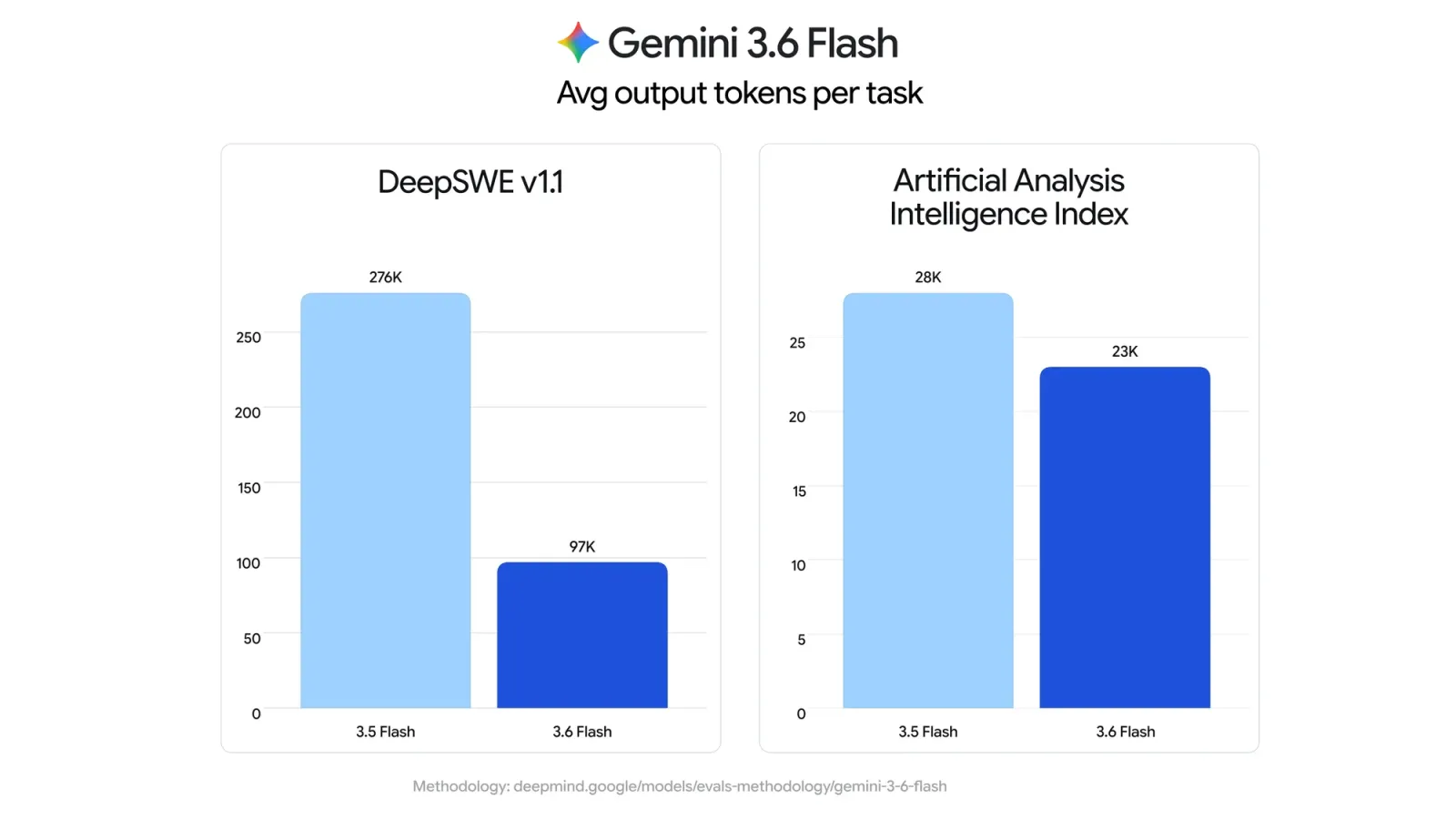
Writes tokens more tightly while still finishing the job—suited to high-turnaround agent loops and batch tool calls.
Supports thinking, function calling, code execution, and search grounding—suited to web and app development workflows.
Text, images, video, audio, and PDFs can enter the same task—handy when you push UI screenshots and docs together.
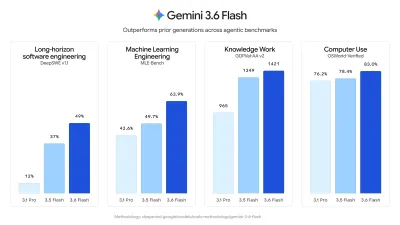
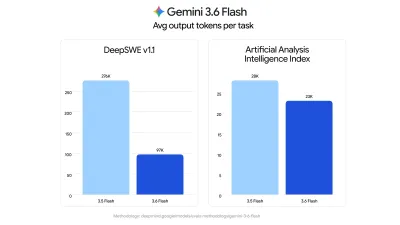
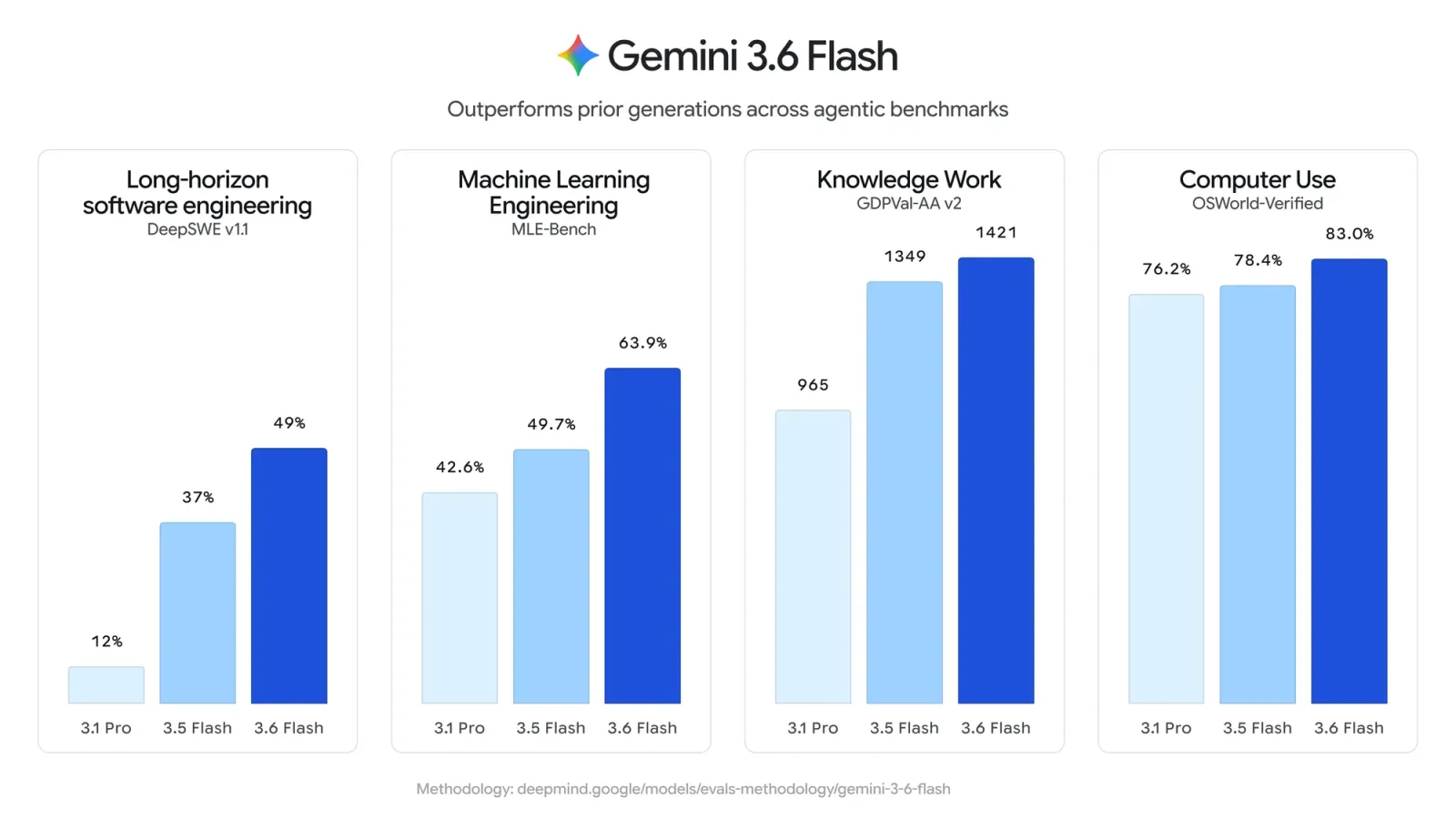
Scores Google published with the Gemini 3.6 Flash launch, shown against Gemini 3.5 Flash and Gemini 3.1 Pro—covering long-horizon software engineering, ML engineering, knowledge work, and computer use, plus output-token efficiency.
Gemini 3.6 Flash fits high-turnaround coding and tool collaboration.
For feature work, fixes, and checks with code execution. A strong fast coding pick on the Google stack.
For function calling, search grounding, and short-to-mid automation. Write clear success criteria and stop conditions.
For UI changes from screenshots, reading document PDFs, and organizing multimodal materials.
All three are Gemini 3. The gap is mainly generation efficiency and the Pro ceiling.
| Criterion | Gemini 3.6 Flash | Gemini 3.5 Flash | Gemini 3.1 Pro |
|---|---|---|---|
| Context | 1M tokens | 1M tokens | 1M tokens |
| Reasoning | Adjustable thinking levels | Adjustable thinking levels | Pro-tier reasoning ceiling |
| Coding & agents | Faster coding & agents | Near-Pro fast coding | Heavier agents & complex workflows |
| Long-horizon tools | High-turnaround agent loops | Still usable, a bit less efficient | Favors reliability & orchestration |
| Speed posture | Faster, leaner output | Faster replies | Favors precision |
| Prefer when | New fast coding & agent work | Workflows still locked on 3.5 | You need higher precision |
Free quota, model naming, key specs, and how it differs from 3.5 Flash and 3.1 Pro.
Million-token context, multimodal input—suited to efficient coding and agents.
Open Gemini 3.6 FlashNo Google API key required.