Deep thinking on out of the box
Deep thinking is built in: it organizes constraints and a path before acting. Tune depth when you need more or less. Complex jobs see fewer “write first, discover problems later” failures.
Claude Opus 5 is Anthropic’s Opus flagship, released in July 2026. It’s built for work you can’t half-finish: changing features in a large repo, hunting root causes, and driving tools step by step until the job is done. Deep thinking is built in; context and output are sized for long jobs; tune depth when you need more or less. Versus Claude Opus 4.8, long-horizon coding, multi-step tools, and knowledge work are steadier, with fewer half-finished patches. On iMini Agent, pick Claude Opus 5 to use it.
Out-of-the-box behavior, long-horizon completion, context, and multi-step tools—the four changes to understand before making it your everyday primary.
Deep thinking is built in: it organizes constraints and a path before acting. Tune depth when you need more or less. Complex jobs see fewer “write first, discover problems later” failures.
On cross-file features, large refactors, and root-cause work, it leaves fewer unfinished changes and fewer symptom-only fixes—better as an everyday engineering primary.
Long specs, multi-turn history, and tool traces can stay in one conversation. Large-repo changes and long migration plans don’t need to be fragmented early.
On jobs that call tools repeatedly and finish end to end, it holds goals and abort conditions better—fewer mid-run drifts or half stops—suited as an Agent primary.
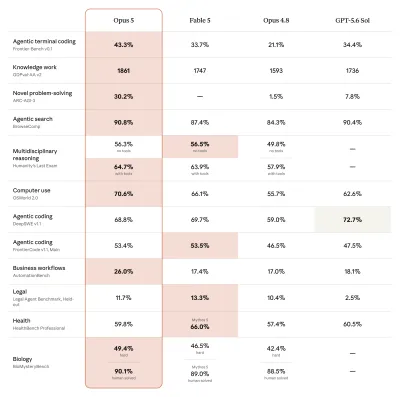
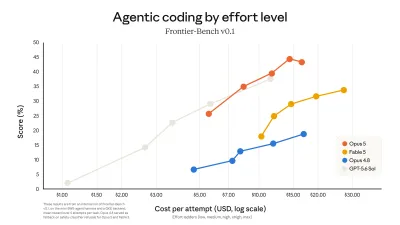
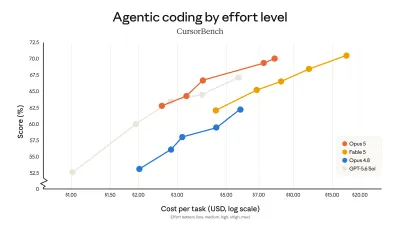
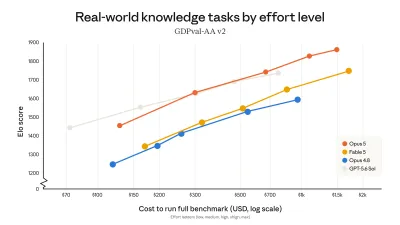
Evaluations and alignment results Anthropic published with Claude Opus 5—covering software engineering, knowledge work, business automation, and behavioral audits.
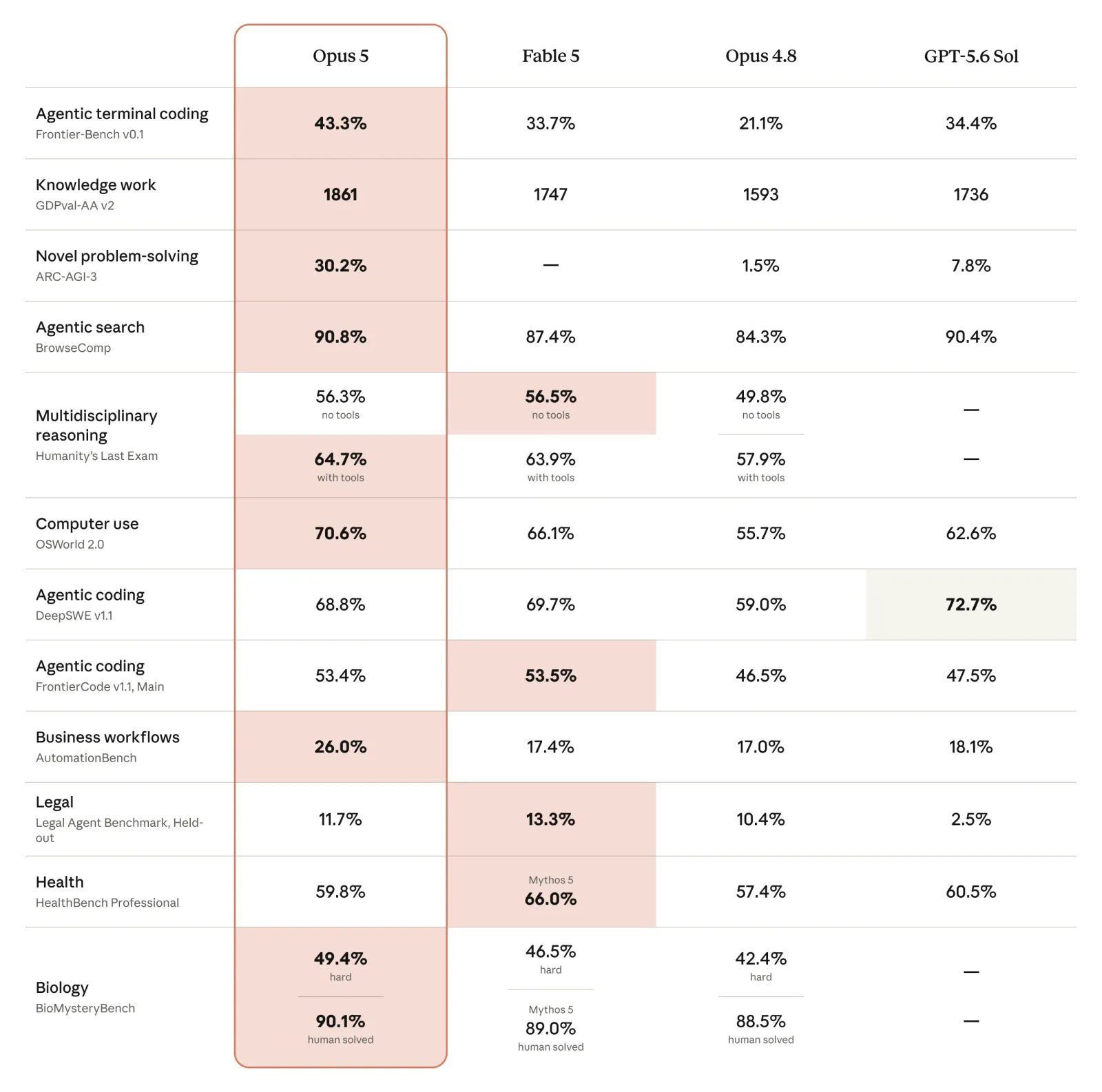
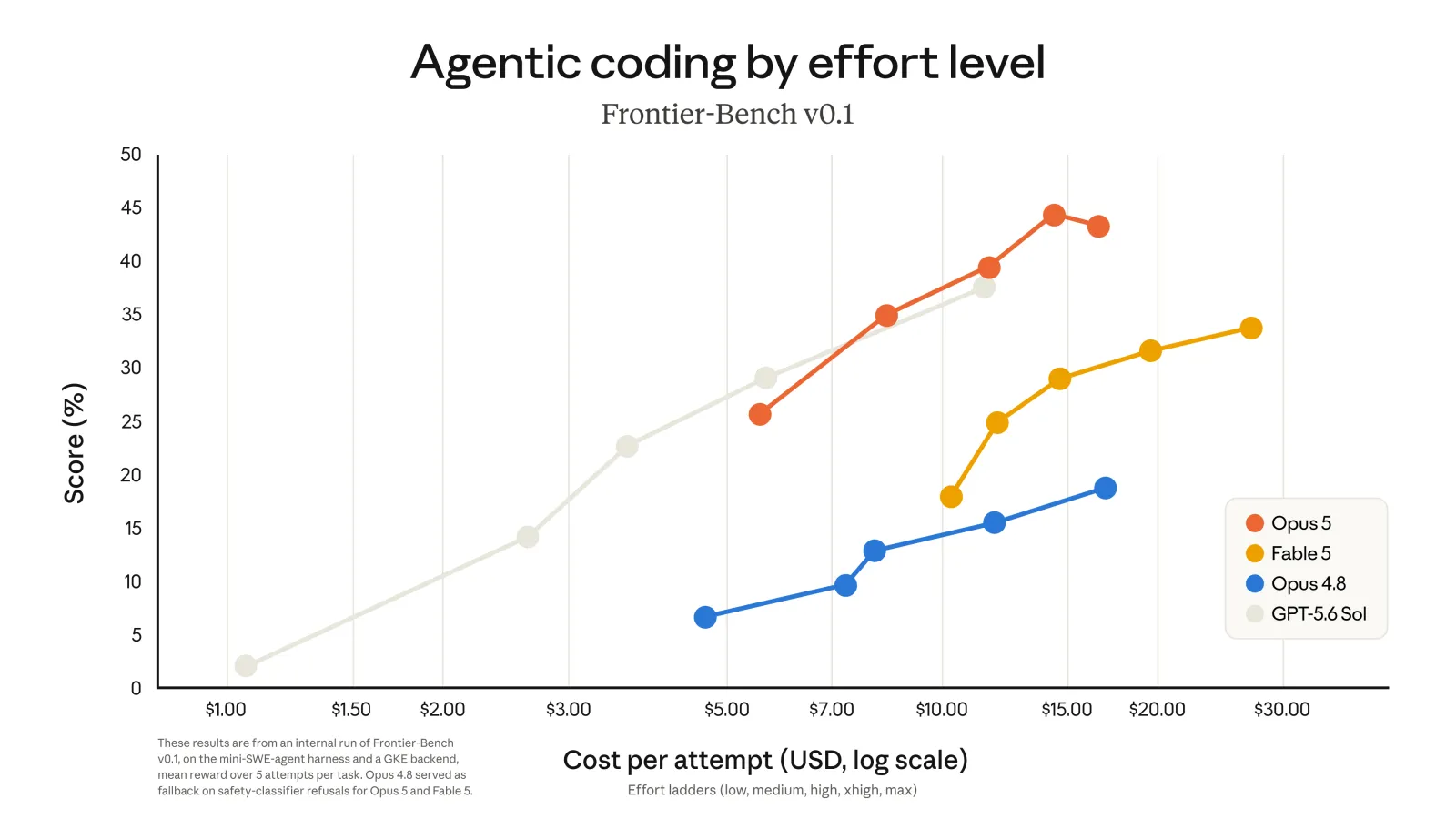
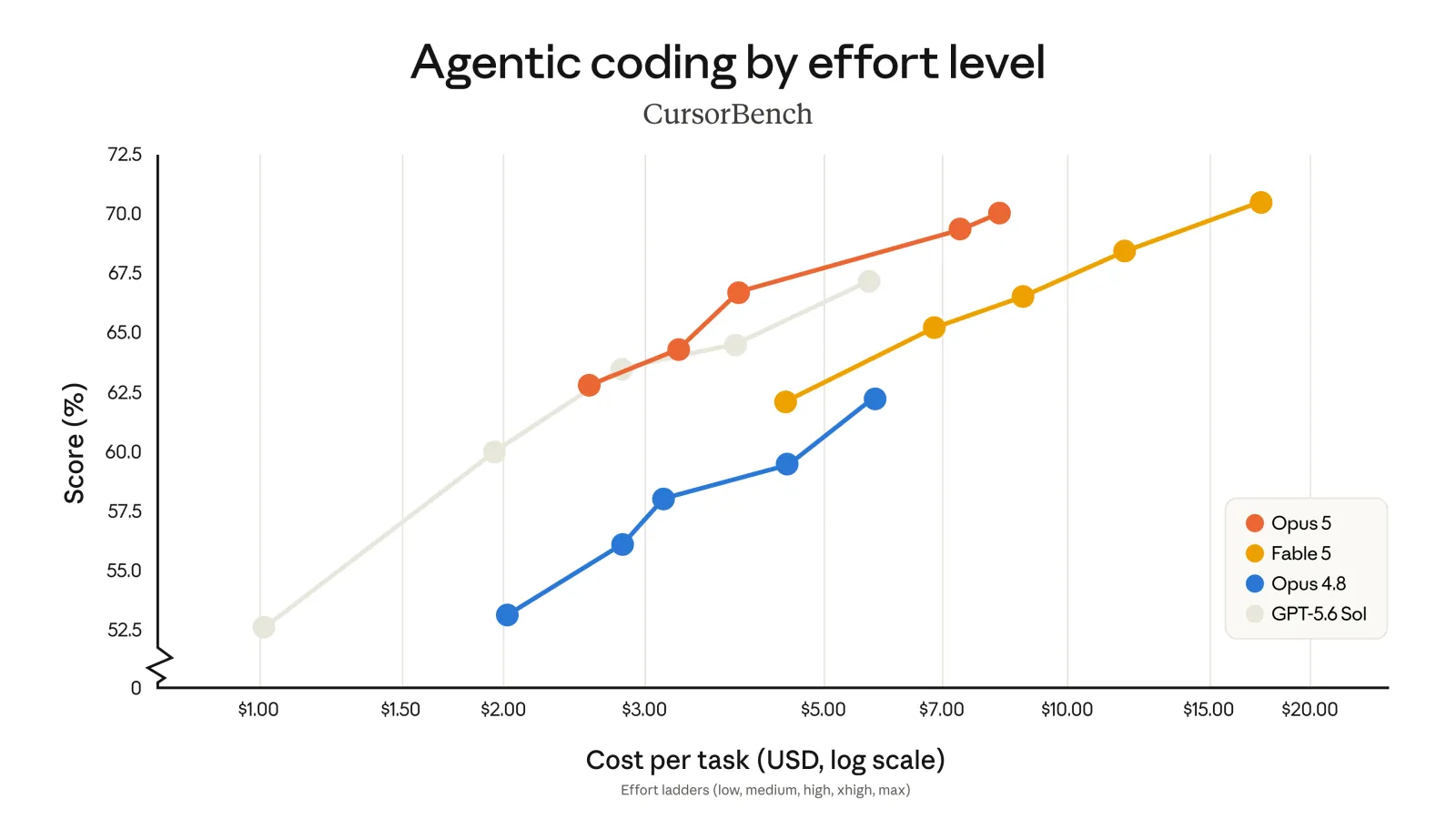
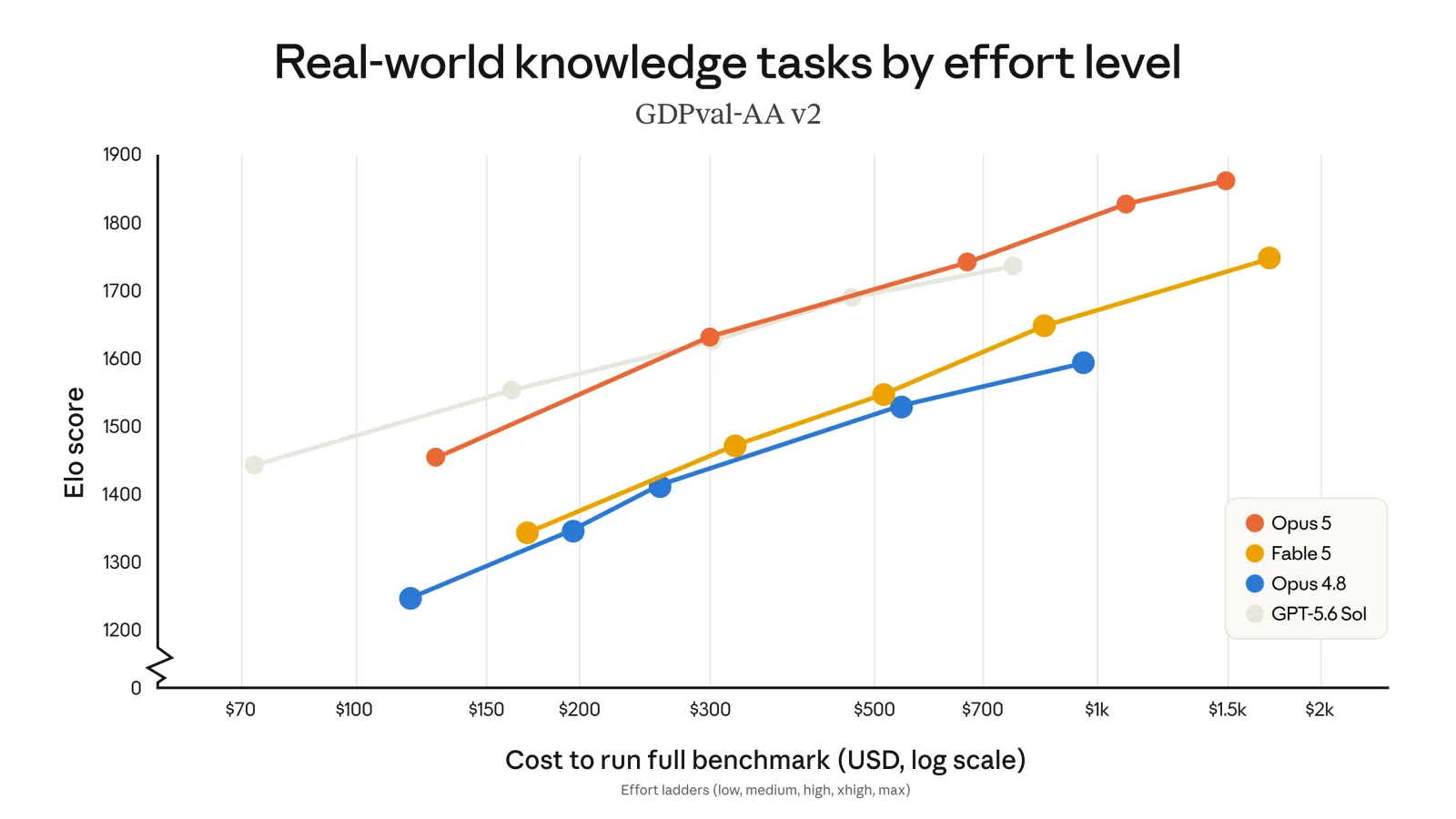
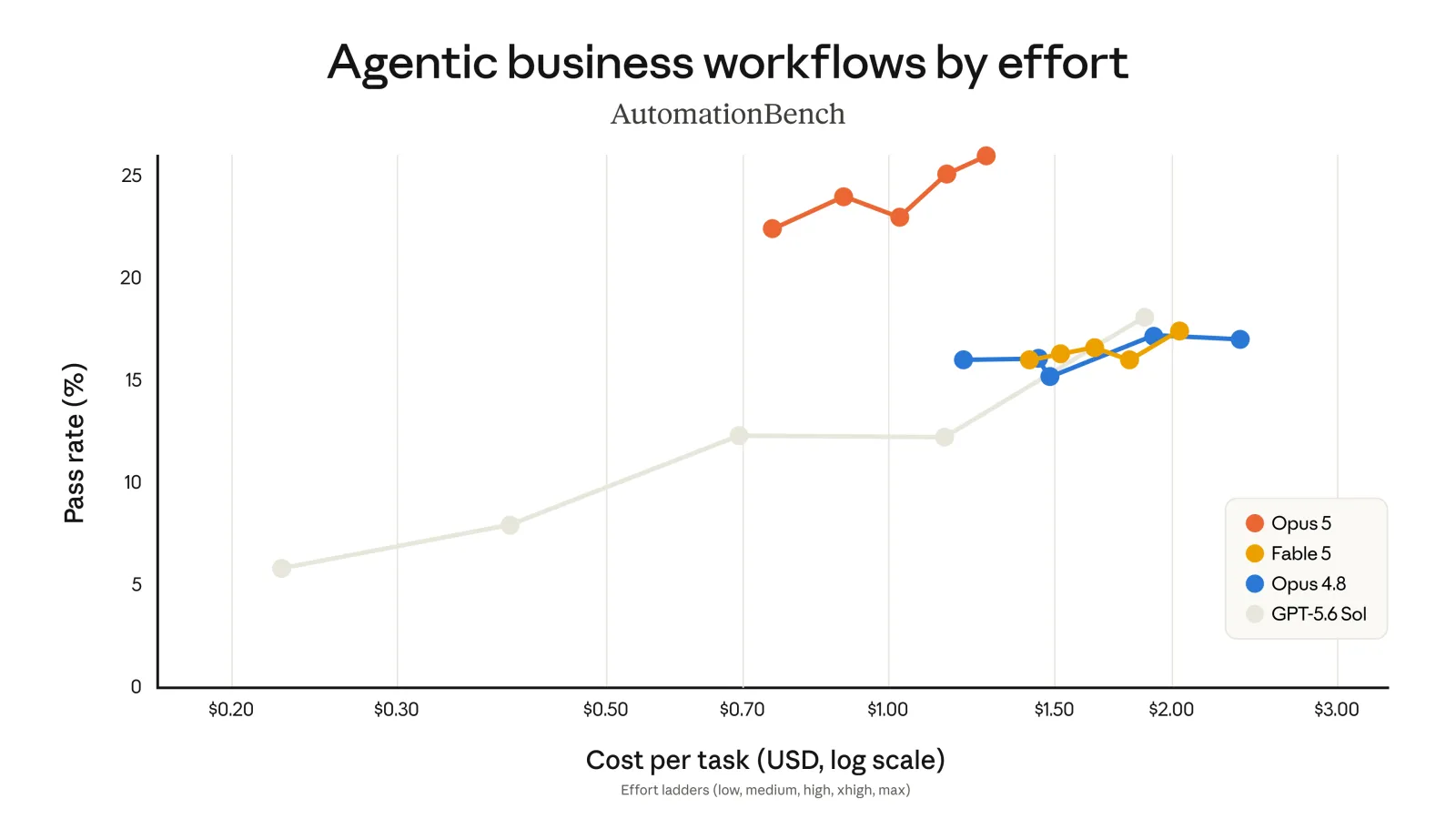
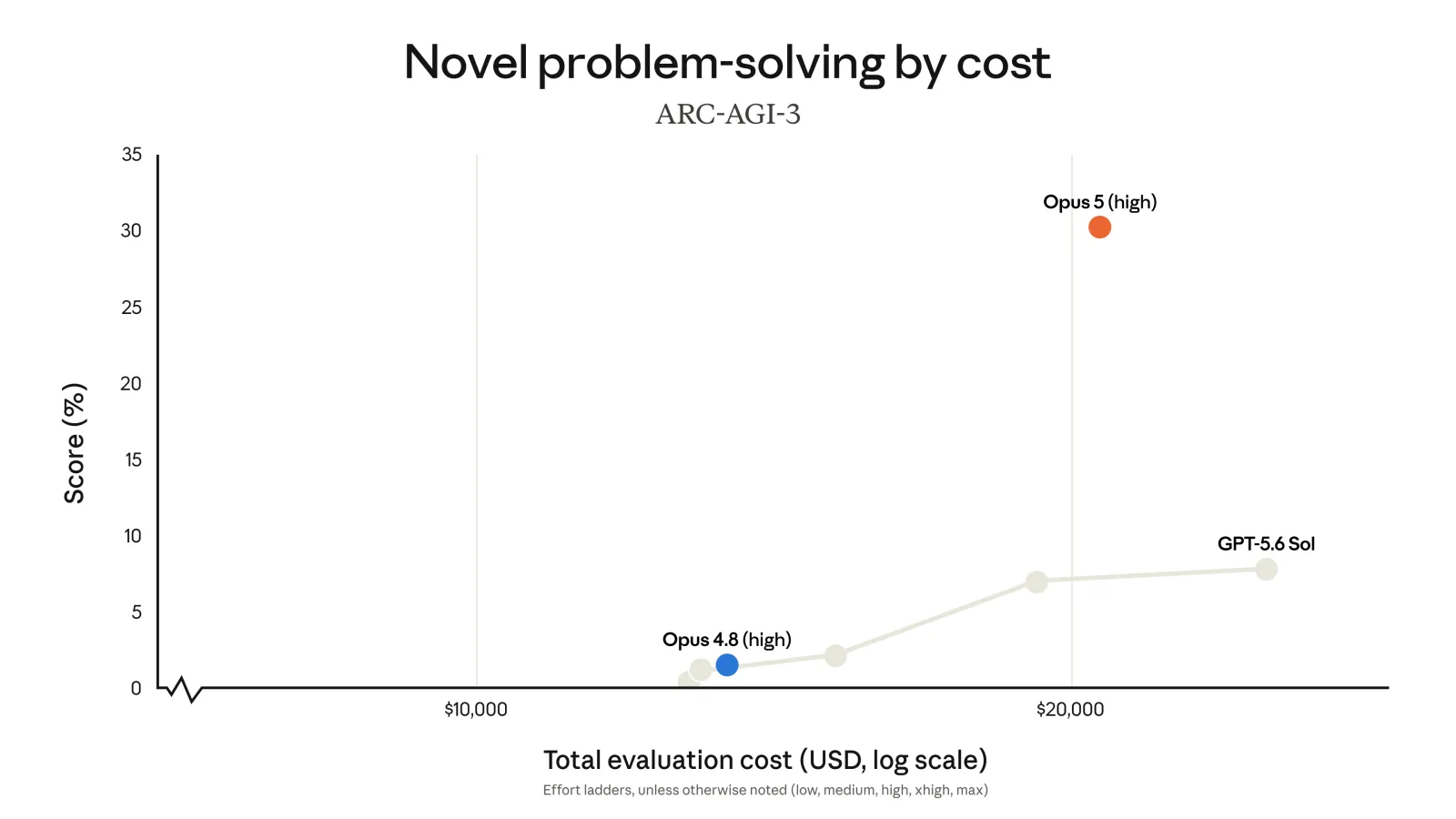
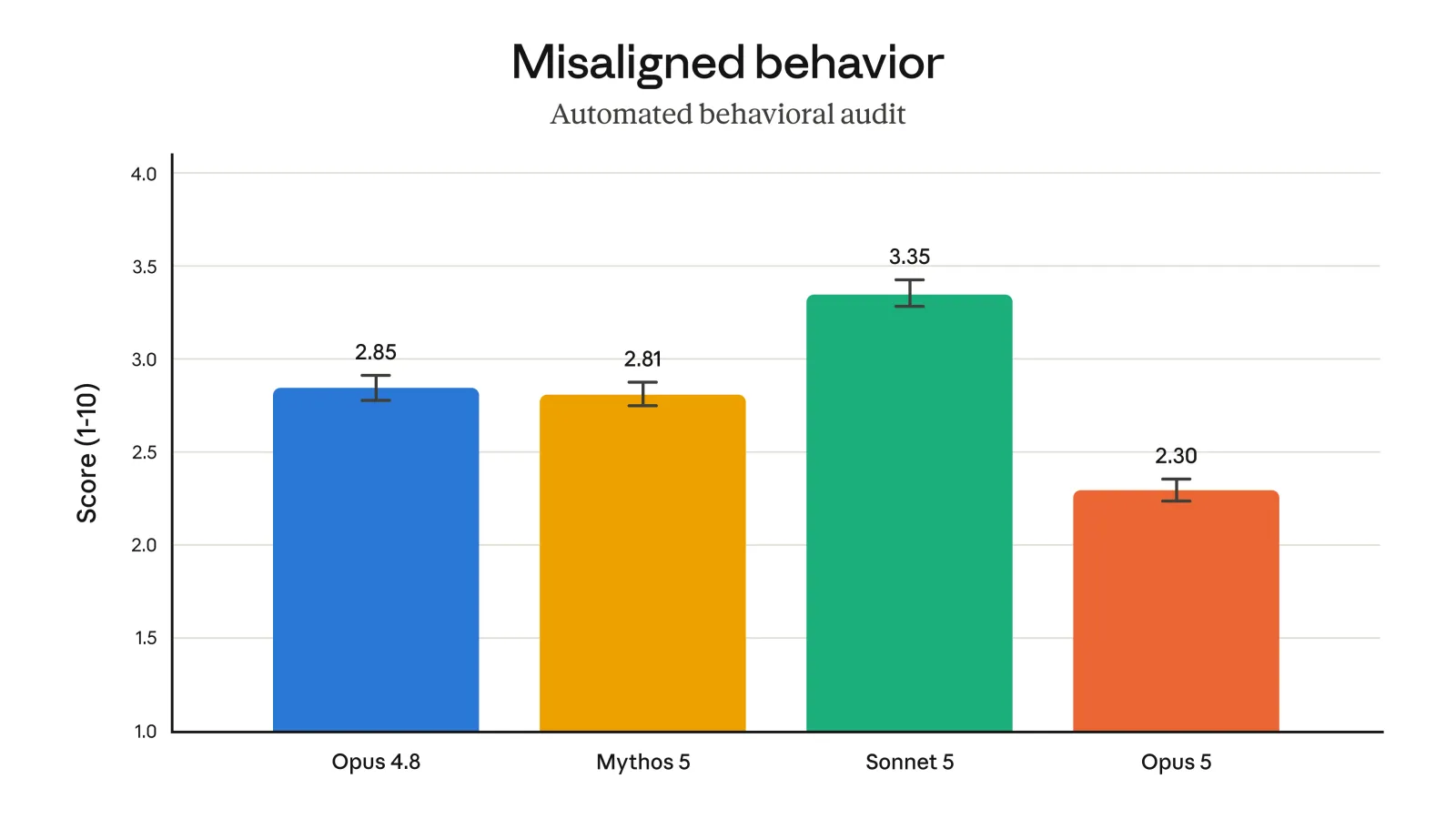
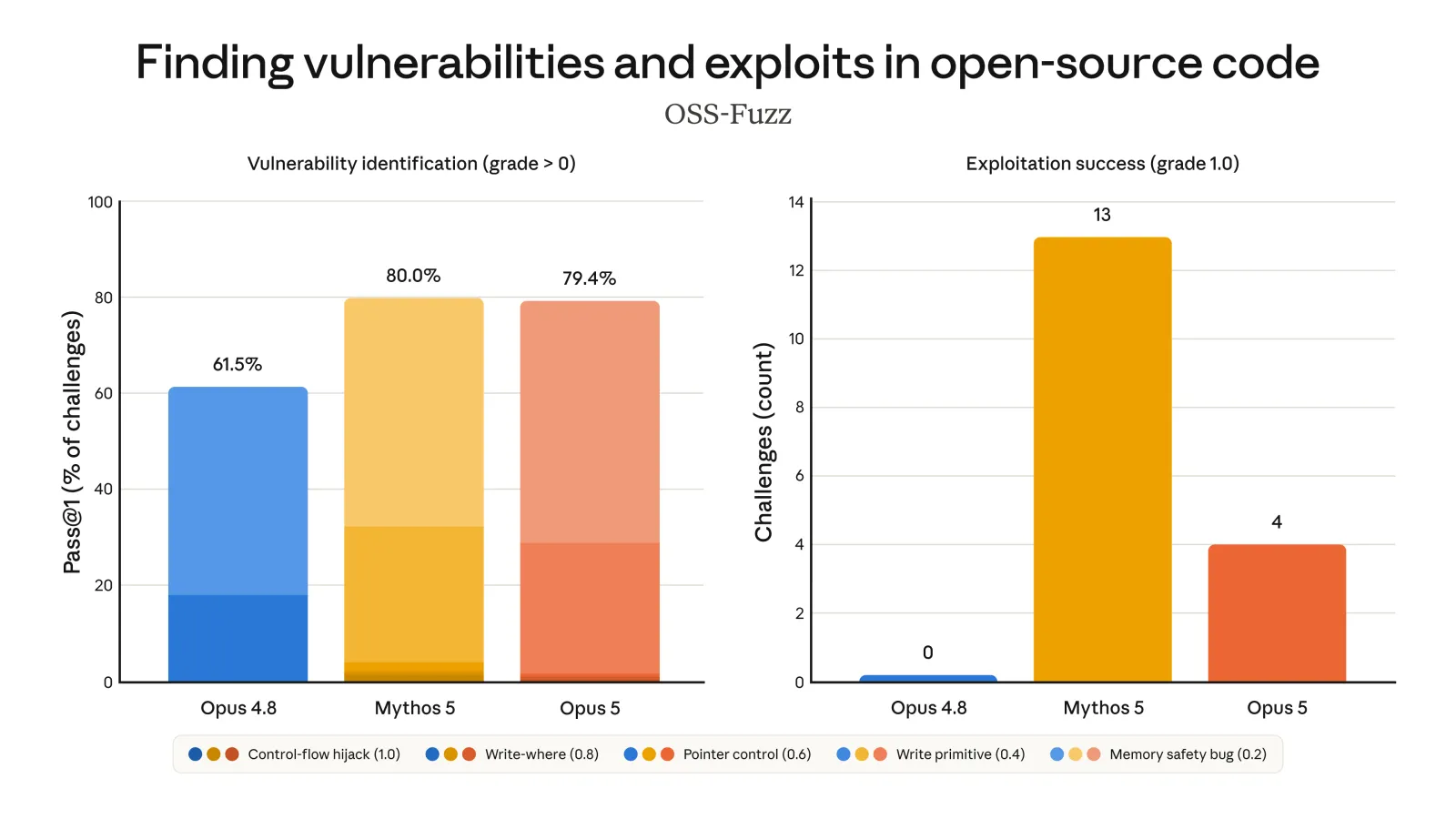
Claude Opus 5 fits work that must keep moving and end with a deliverable result.
For cross-file feature work, hard-to-reproduce bugs, and evidence-based PR review. The point isn’t a fast opinion—it’s clear root cause, blast radius, and verification so merges don’t bounce back.
For collapsing long materials into a one-page decision: the problem, options, recommendation, and risks. Suited to knowledge work with tables, numbers, and explicit constraints.
For workflows that call tools repeatedly and advance step by step to a result. Agree inputs, done criteria, and stop conditions per step so the job can run end to end.
All three are current flagships. The differences are out-of-the-box depth, product stack, and which jobs you run most.
| Dimension | Claude Opus 5 | Claude Fable 5 | GPT-5.6 Sol |
|---|---|---|---|
| Context | 1M tokens | Top Claude long-context tier | OpenAI Sol flagship context |
| Reasoning | Deep thinking built in, tunable | Top of the Claude capability ladder | OpenAI maximum-depth tier |
| Coding / agents | Everyday primary for long-horizon coding & multi-step agents | When you need top-of-Claude capability | Better when the team is bound to OpenAI’s depth stack |
| Long tool runs | Stronger goal holding and completion | Heavier, top-tier agent scenarios | Available on iMini Agent; stack leans OpenAI |
| Speed posture | Completion quality and stability first | Heavier; cost and latency usually higher | Maximum depth first |
| Prefer when | New long-horizon coding, multi-step agents, knowledge work | Top-of-Claude capability and you can accept higher load | Org standard is already OpenAI Sol |
Free quota, model naming, key specs, and how it differs from Claude Fable 5 and GPT-5.6 Sol.
Million-token context, deep thinking built in, tunable depth tiers.
Open Claude Opus 5No Anthropic API key required.