More affordable million-token context
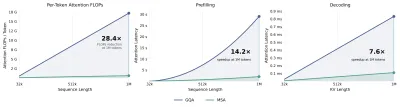
Sparse-attention design makes long-material reasoning more affordable—for large repos and long specs.
MiniMax M3 is MiniMax’s open-weight flagship from June 2026. Official materials stress frontier coding, million-token context, and native multimodal together. Versus MiniMax M2.7, long-context efficiency and coding benches rise sharply. Pick MiniMax M3 in iMini Agent to use it.
Long-context efficiency, coding ceiling, and multimodal—the changes to check before you make M3 your workhorse.
Sparse-attention design makes long-material reasoning more affordable—for large repos and long specs.
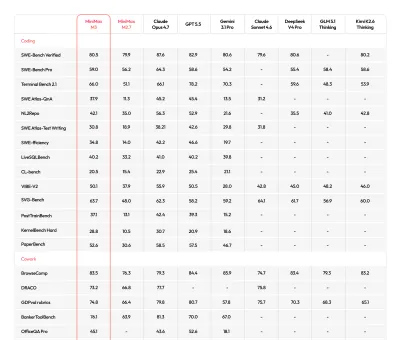
Official SWE-Bench Pro and peers show higher completion—fit as an engineering workhorse.
Text, image, and video join the same job—for demos and UI materials mixed together.
Open weights for research and private deploy evaluation; you can still run it on iMini online.
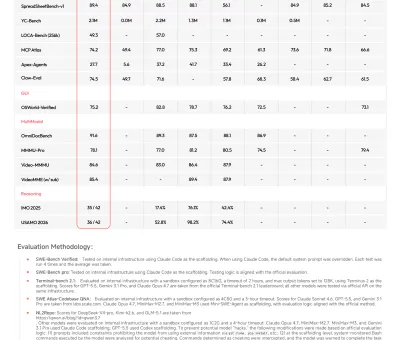
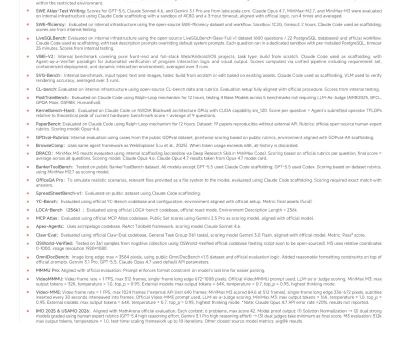
Aggregate tables and efficiency charts from the MiniMax-M3 model card—coding, collaborative Agents, GUI, multimodal, and long-context efficiency.
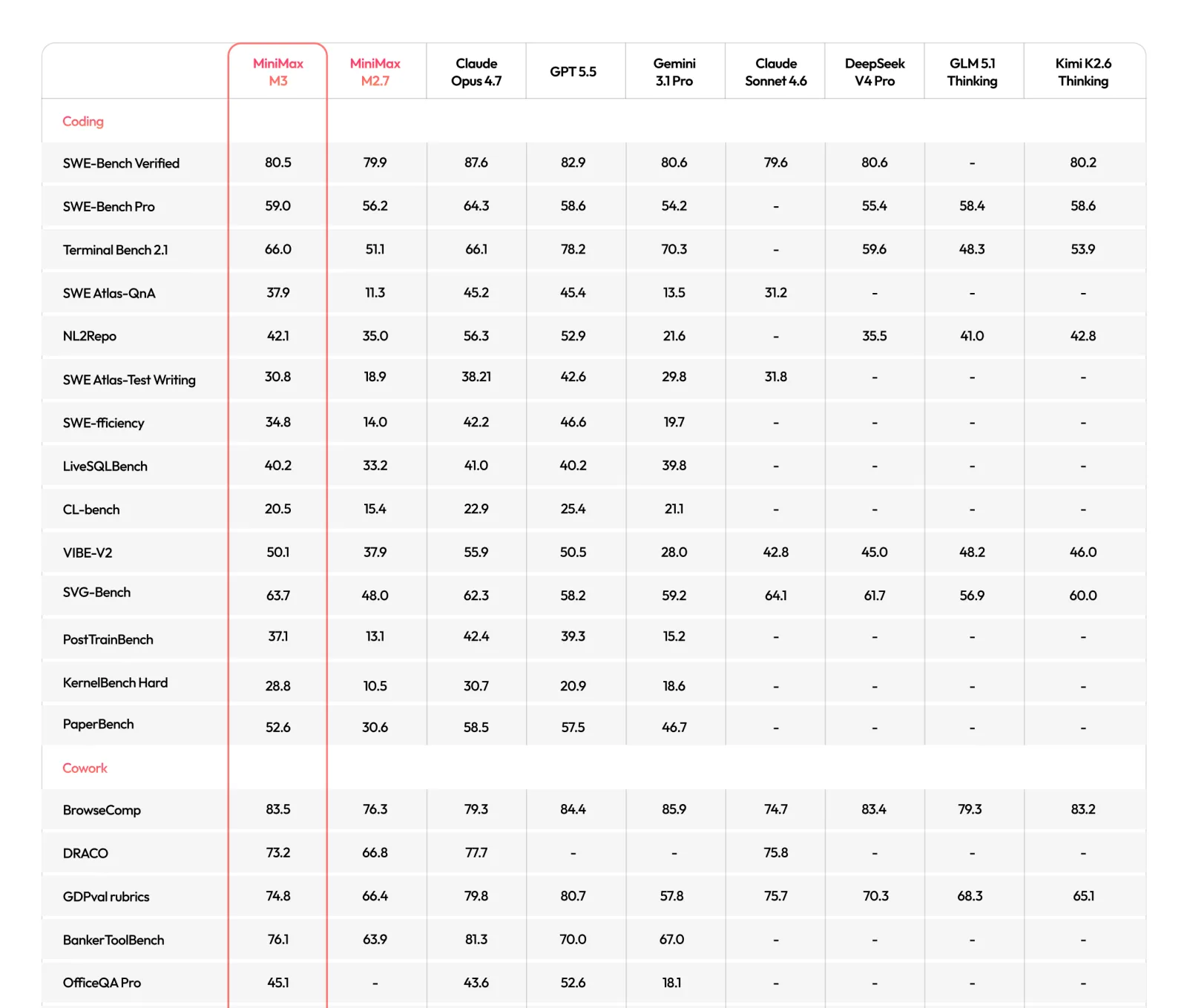
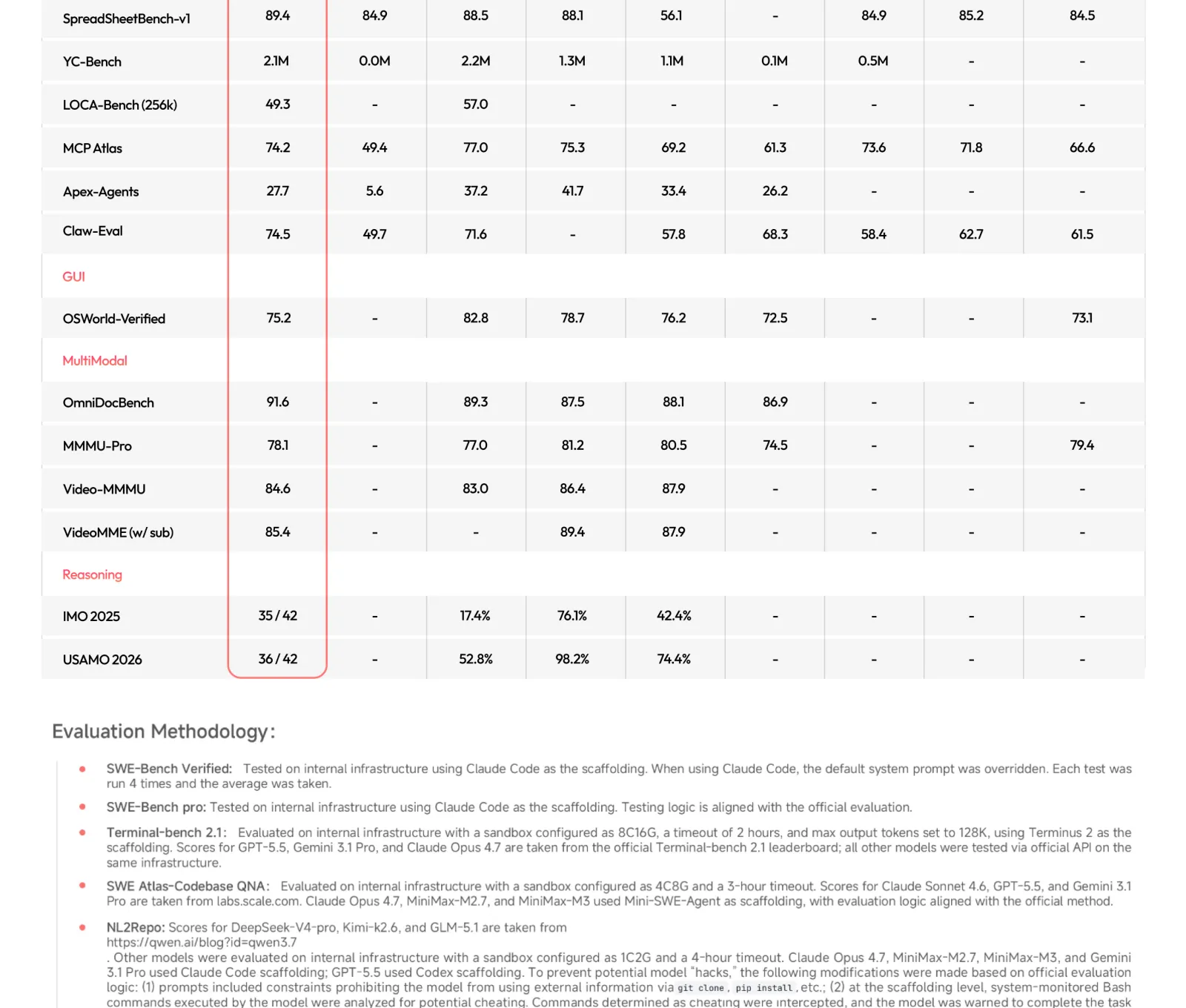
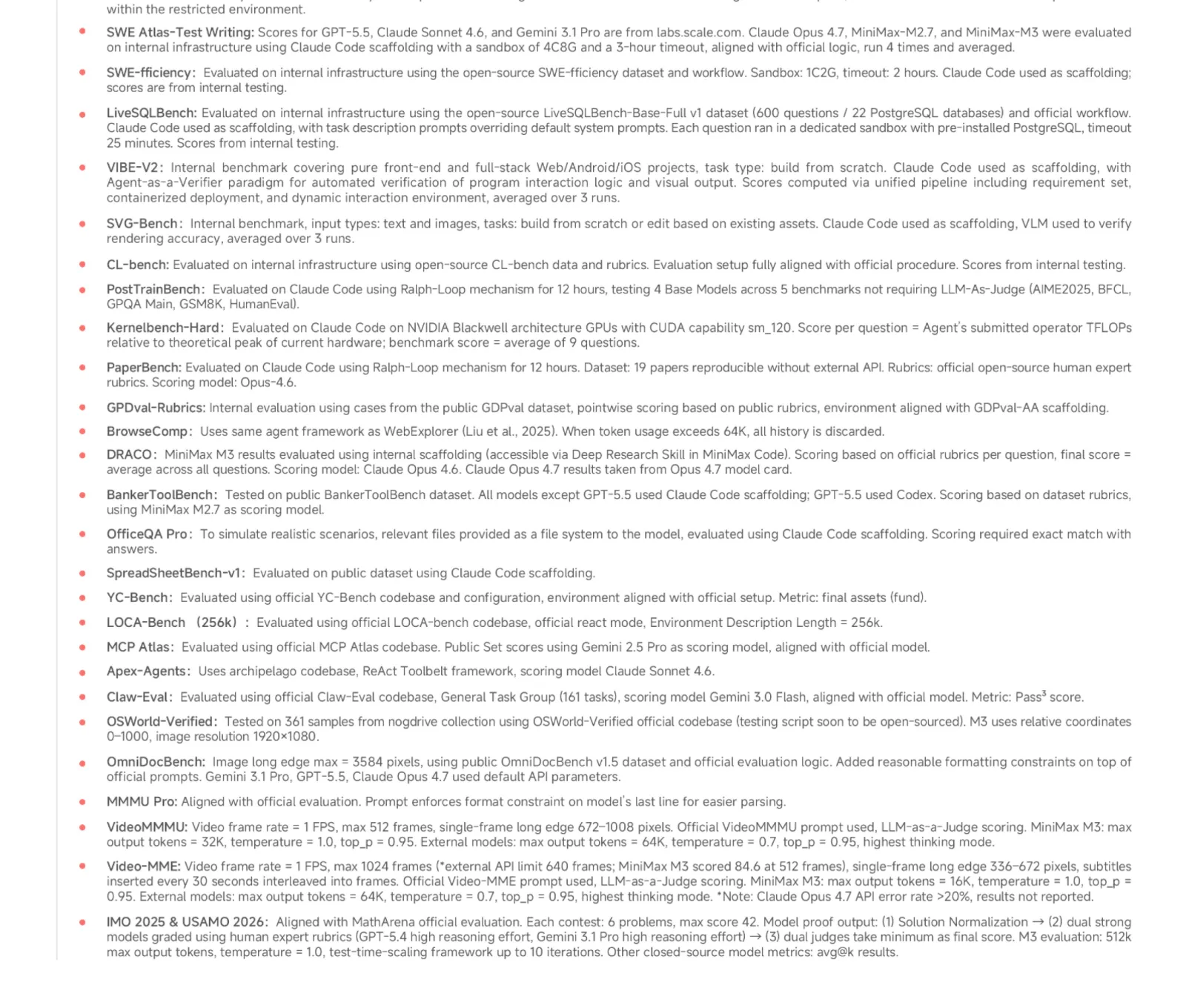
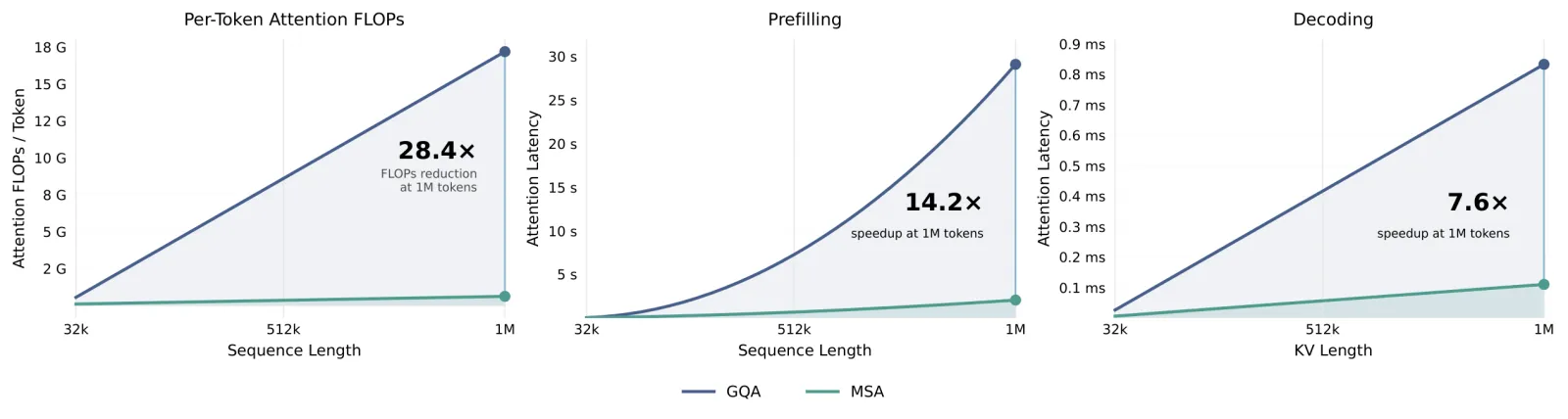
MiniMax M3 fits flagship load on the MiniMax stack.
Multi-file features, hard fixes, and test loops.
Million-token specs and multi-source document synthesis.
Advance jobs from screen recordings or screenshots.
All three are China-available flagships. Gaps are modality, open-weight path, and product stack.
| Dimension | MiniMax M3 | Kimi K3 | Qwen3.7 Max |
|---|---|---|---|
| Context | 1M tokens | 1M tokens | 1M tokens |
| Reasoning | Coding & multimodal focus | Deep · tunable | Hybrid thinking · peak |
| Coding / Agents | MiniMax coding flagship | Kimi long-horizon coding flagship | Qwen peak text |
| Long tool runs | Long-context multimodal | Vision + long threads | Tools & structured output |
| Speed posture | Completion quality first | Lower tier for speed | Peak quality first |
| Prefer when | Tied to MiniMax | Tied to Kimi flagship | Tied to Qwen peak text |
Free quota, model identity, key specs, and how it differs from Kimi and Qwen.
Million-token context and multimodal input—for a coding flagship workhorse.
Open MiniMax M3No MiniMax API key required.