Maximum-depth reasoning available
GPT-5.6 adds a maximum-depth tier that gives hard tasks more room to reason. For tight constraints, tough evals, and high failure cost, turn depth up first, then ship.
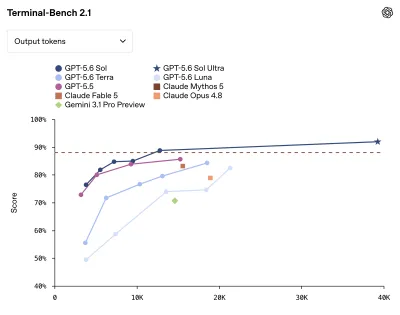
GPT-5.6 Sol is OpenAI’s GPT-5.6 flagship tier, released in July 2026 for broader availability. It takes the heaviest work in the family: hard reasoning, multi-step coding, quantitative biology, and long-horizon security research agents. Versus GPT-5.5, OpenAI reports higher completion and a stronger performance–efficiency frontier on Terminal-Bench, GeneBench, ExploitBench, and related evals. The same generation also ships balanced Terra and speed-oriented Luna—don’t treat them as Sol. On iMini Agent, pick GPT-5.6 Sol to use it.
Depth ceiling, long-horizon agent completion, terminal software engineering, and clear tiering—what to check before making Sol your OpenAI depth workhorse.
GPT-5.6 adds a maximum-depth tier that gives hard tasks more room to reason. For tight constraints, tough evals, and high failure cost, turn depth up first, then ship.
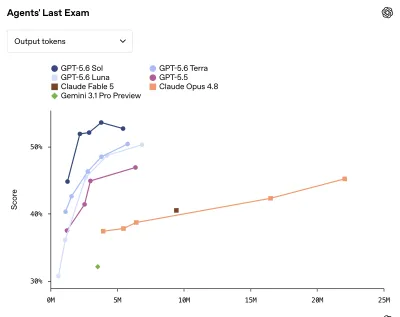
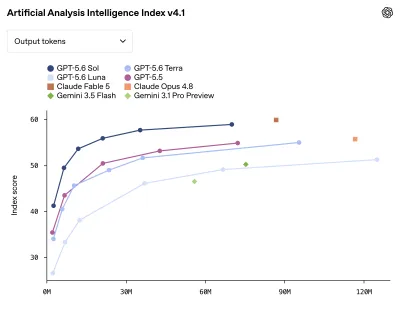
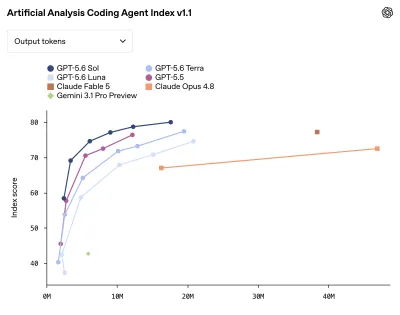
On multi-step flows such as terminal coding, long genomics jobs, and vulnerability research, OpenAI reports gains over GPT-5.5—and in some settings reaches similar or better results with fewer output tokens.
ultra can schedule sub-agents in one job to push complex work in parallel—suited to repo-scale changes, long migrations, and engineering loads that need split verification.
Sol takes the heaviest jobs; Terra targets near–GPT-5.5 day-to-day load; Luna takes high-turnover, low-cost drafts. Pick by task weight first, then prompts and workflow.
Results OpenAI published with GPT-5.6. The shared x-axis is output-token volume, covering agent workflows, coding, retrieval, knowledge work, and security research.
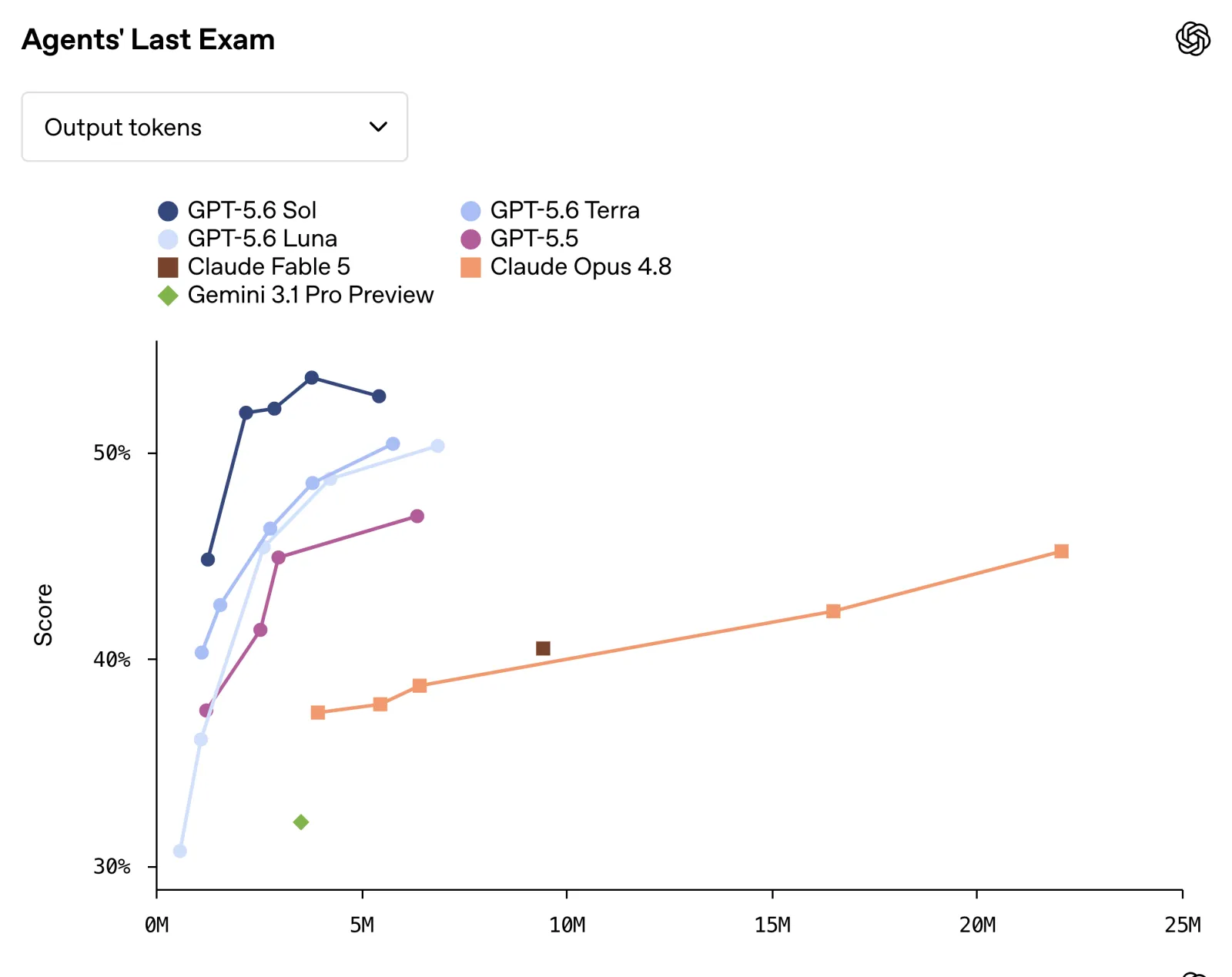
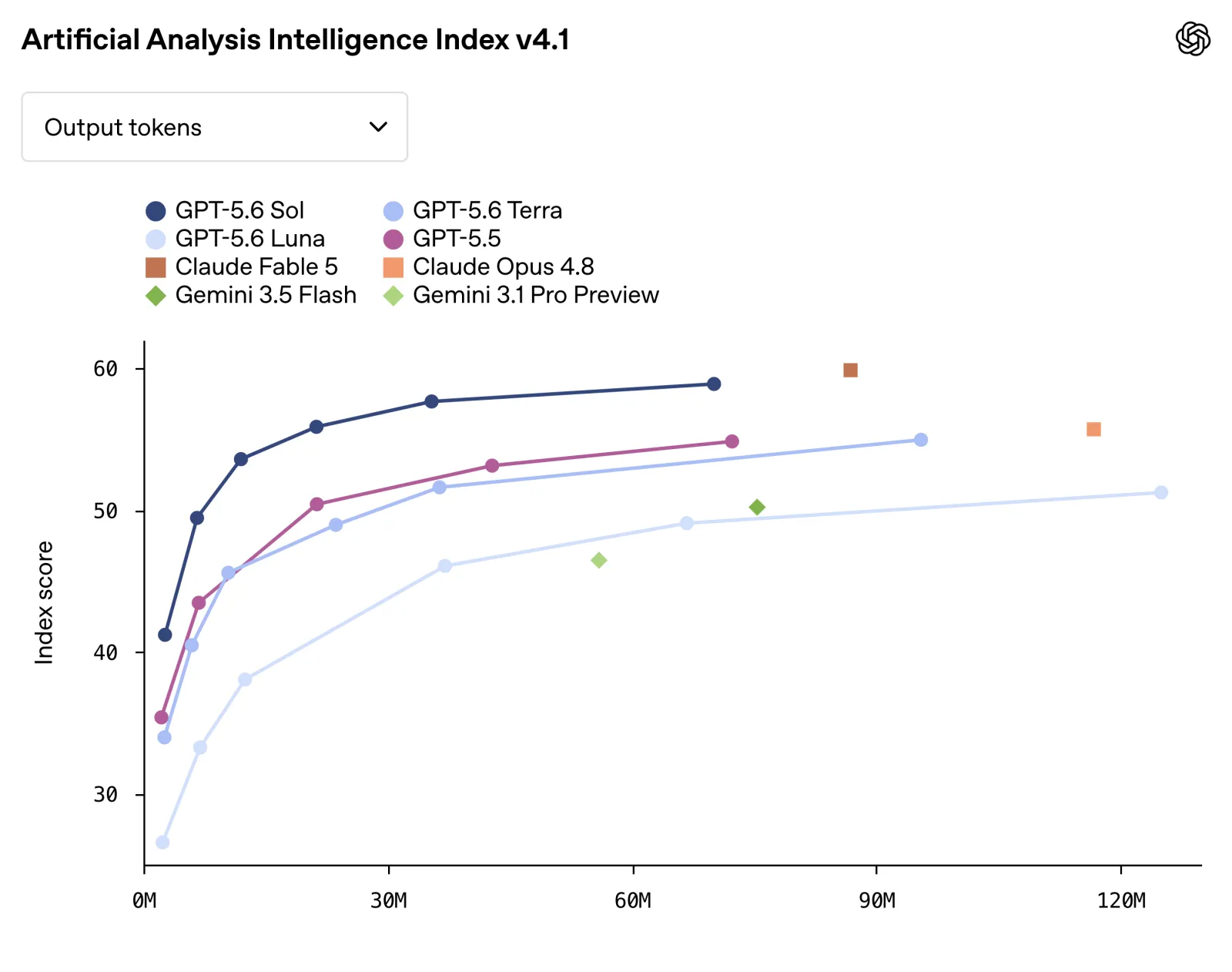
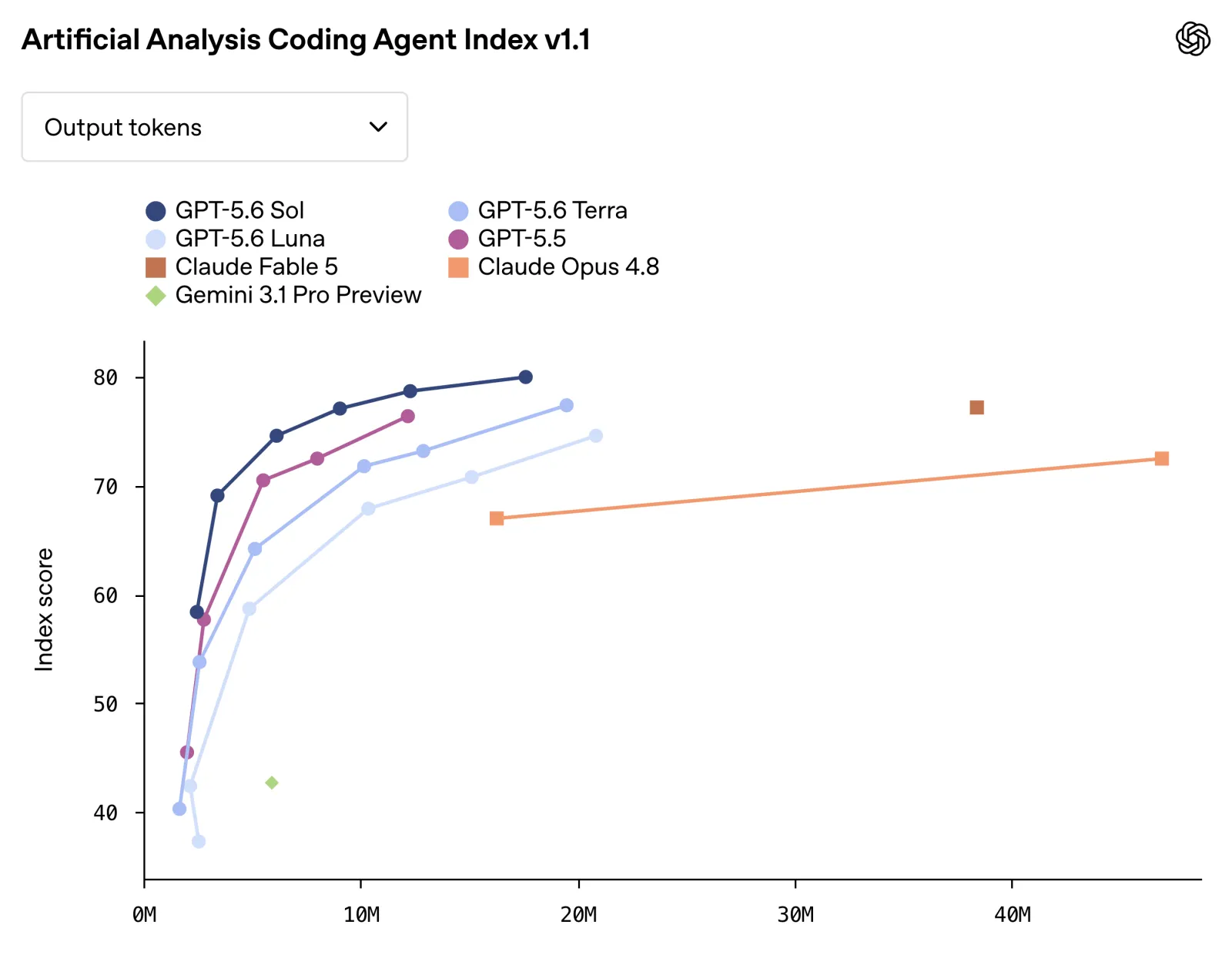
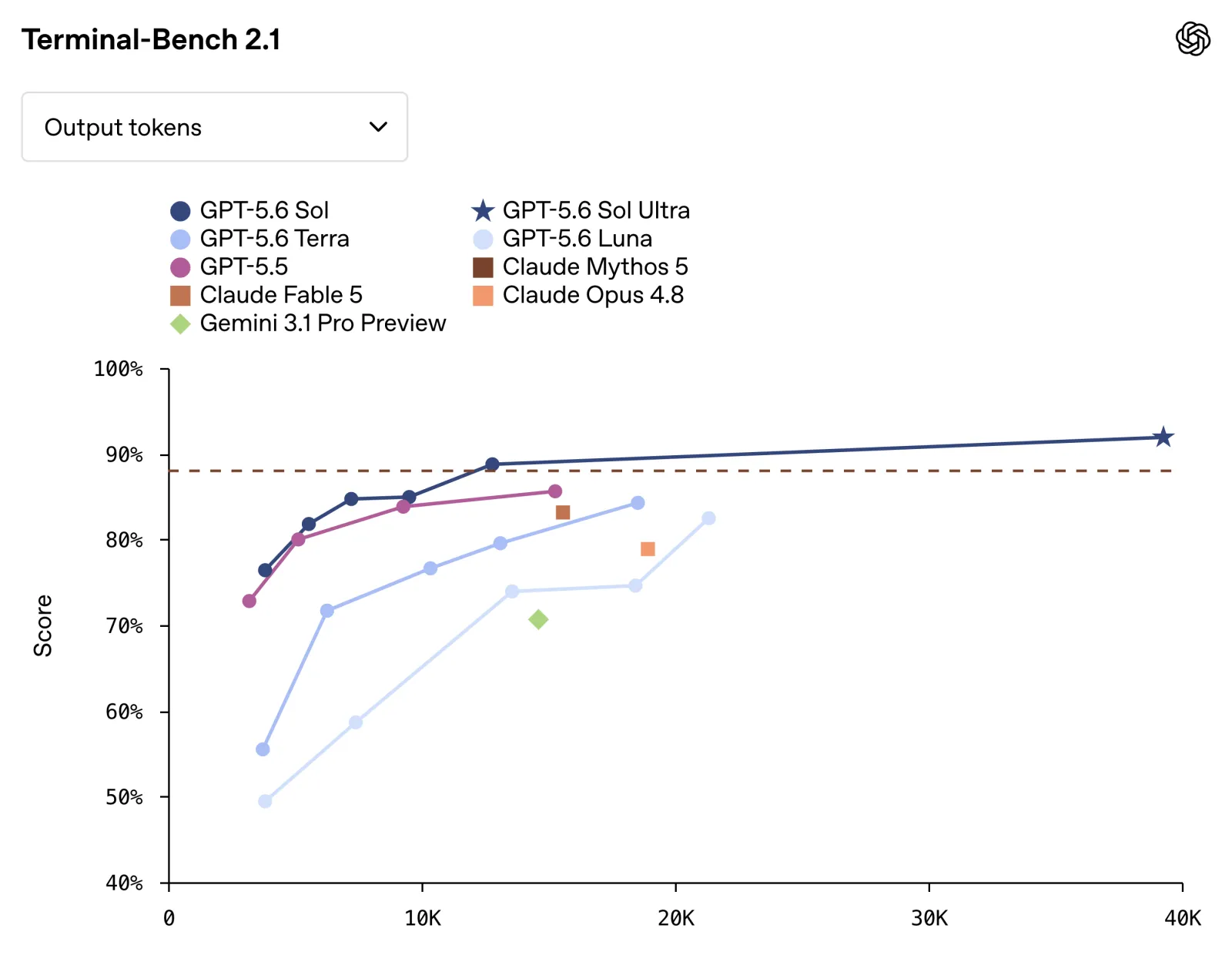
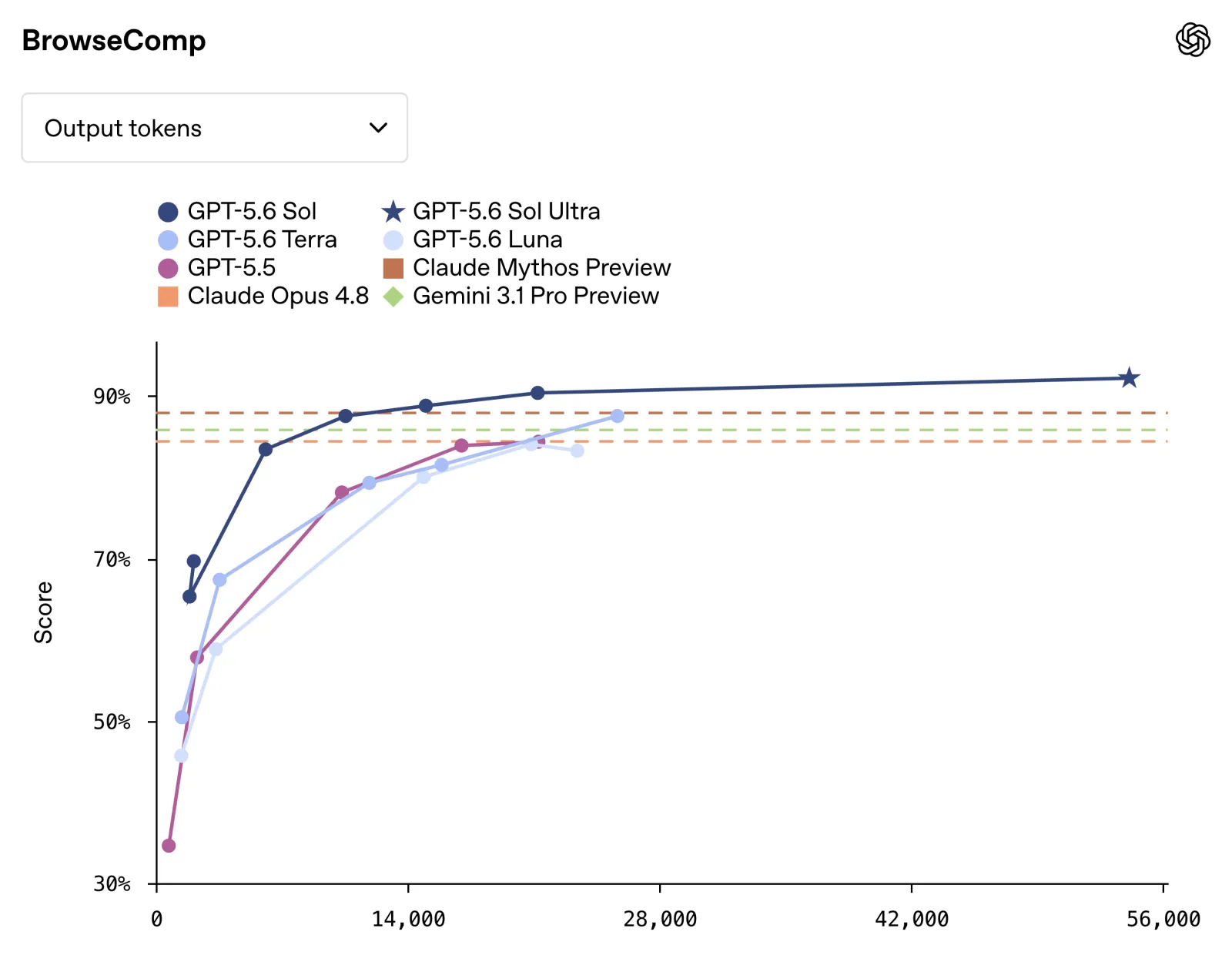
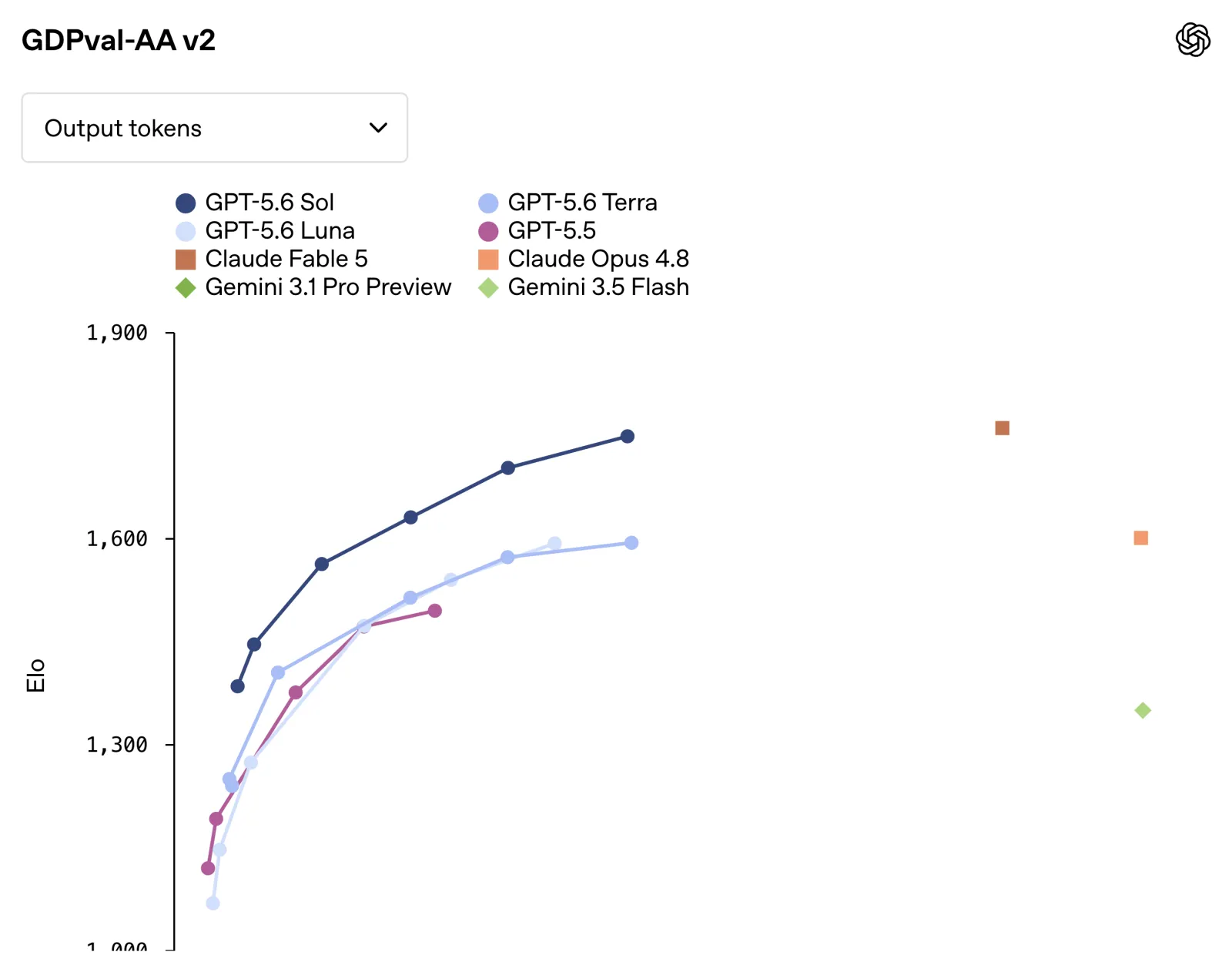
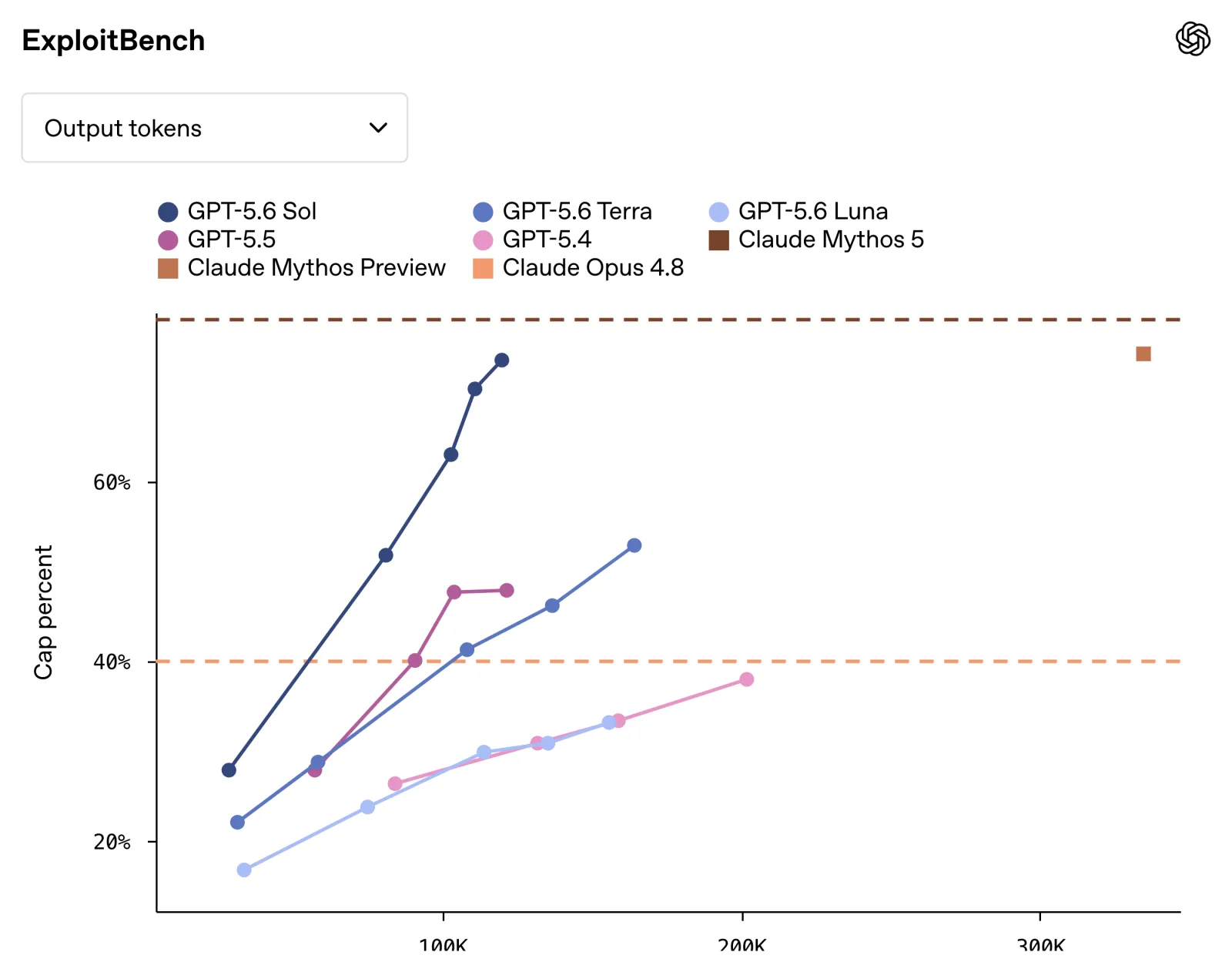
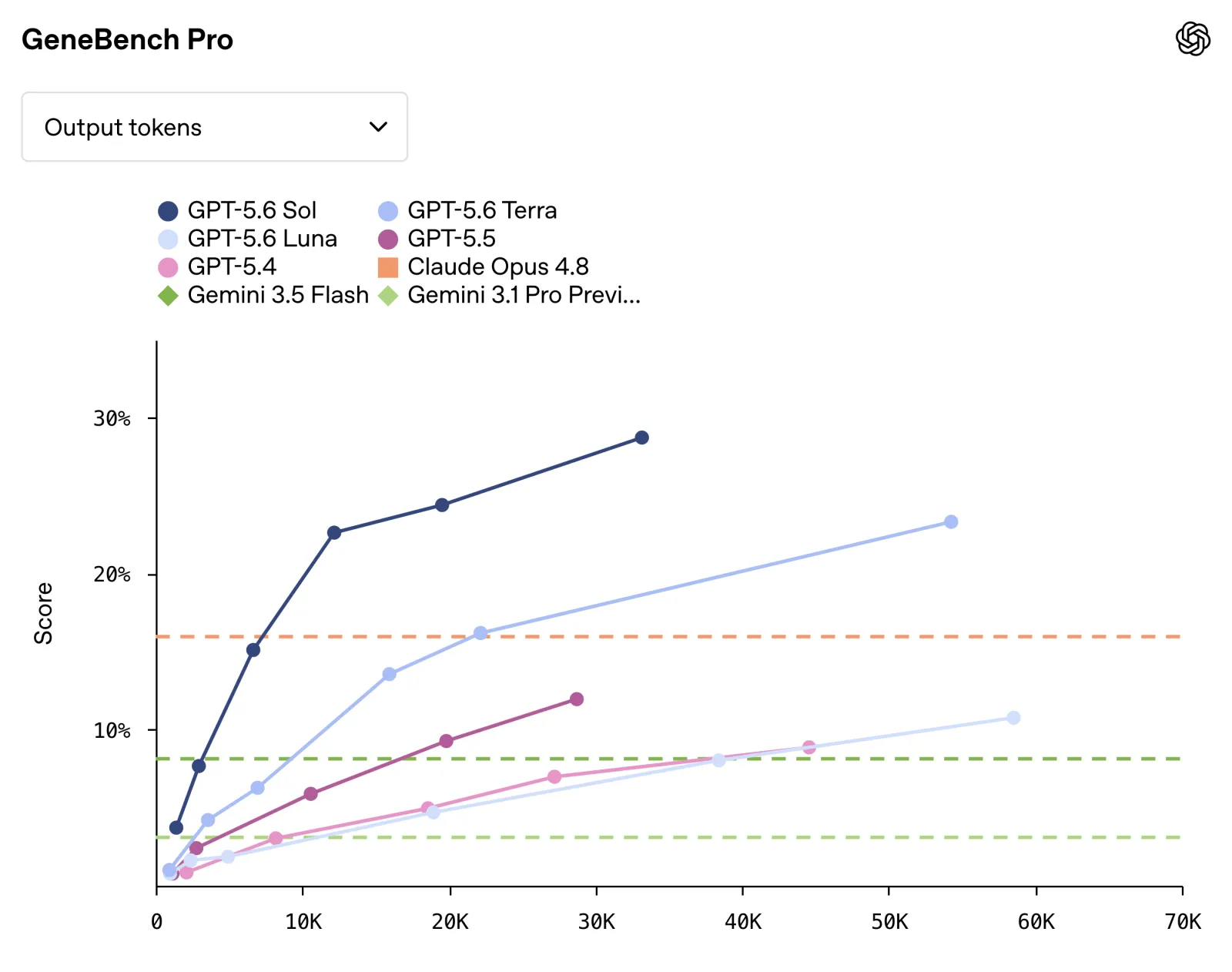
GPT-5.6 Sol is built for high failure cost and work that must hold a goal for a long time.
For multi-step coding, test repair, and repo-scale changes in a command-line environment. Pin success checks and abort conditions so the agent can finish changes in a long thread.
For vulnerability research, injection-defense checks, and security flows that need strict verification. Focus on clear findings, impact, and reproducible steps.
For collapsing long specs and multi-source material into a decision page: problem, options, recommendation, and risks. Suited to professional work with hard numbers and explicit constraints.
All three are current workhorses. The differences are depth ceiling, tiering within a family, and which product stack you already run.
| Dimension | GPT-5.6 Sol | GPT-5.6 Terra | Claude Opus 5 |
|---|---|---|---|
| Context | 1M tokens | Same long-context tier in GPT-5.6 | 1M tokens |
| Reasoning | Max depth · ultra available | Balanced depth, efficiency-oriented | Thinking built in, tunable |
| Coding / agents | Heaviest OpenAI long-horizon coding & agents | Day-to-day coding & high-volume work | Primary go-to for long-horizon coding & multi-step agents |
| Long tool runs | Flagship depth + ultra multi-agent | More balanced throughput and completion | Stronger goal holding and completion |
| Speed posture | Completion quality and depth first | Faster, leaner everyday primary | Completion quality and stability first |
| Prefer when | New heaviest reasoning, coding, and security-style long jobs | Near–GPT-5.5 quality without stepping up to Sol | Team already standardized on Claude |
Free quota, model naming, key specs, and how it differs from GPT-5.6 Terra and Claude Opus 5.
Million-token context, maximum-depth reasoning, ultra to accelerate hard jobs.
Open GPT-5.6 SolNo OpenAI API key required.