
AI Prediction Models: GPT-5.6 Sol, Gemini 3.5 Pro, and World Models
July 27, 2026
AI model news is starting to move beyond chatbots. The next wave is about prediction: models that forecast weather, simulate worlds, price future events, and help creators decide which model rumors are worth turning into content. For creators, this matters because the traffic opportunity is no longer just “new model released.” It is the ability to explain what a model changes before the rest of the market catches up.
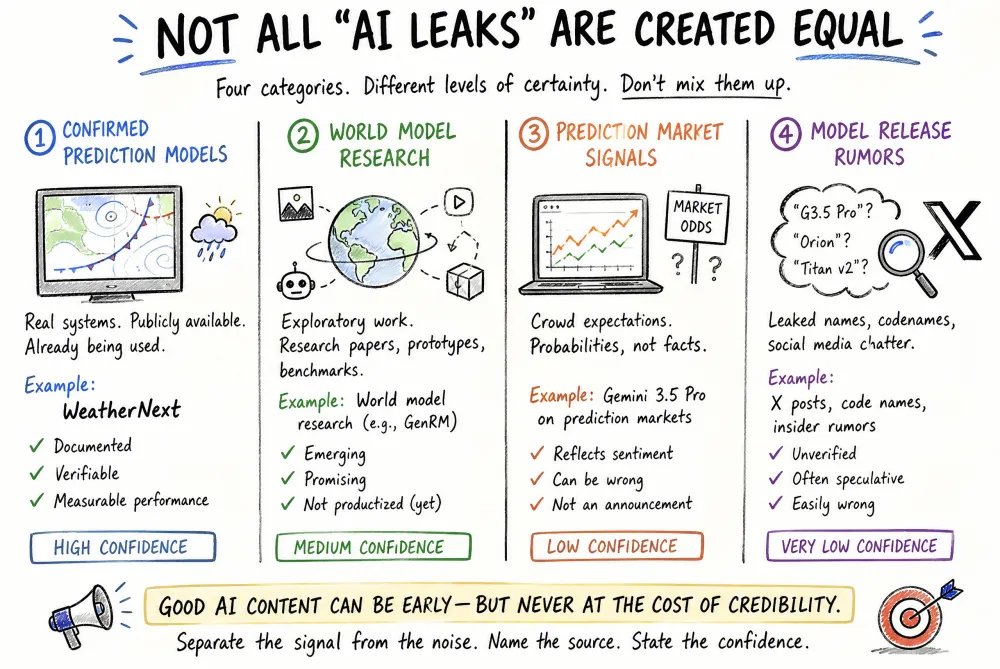
This article separates confirmed prediction models from world-model research, prediction-market signals, and model-release rumors. That distinction is important. A confirmed system like WeatherNext should not be written the same way as a Gemini 3.5 Pro prediction-market signal or a leaked model name on X. Good AI content earns attention by being early, but it keeps trust by being precise.
Why Prediction Models Matter Now
Generative AI taught users to expect text, images, video, and code on demand. Prediction models push the story in a different direction. They are not only generating assets; they are estimating what may happen next in weather, markets, simulations, games, robotics, research, and model release timelines.
That is why creators should watch this category closely. Prediction models create explainable content angles: what is confirmed, what is likely, what is speculative, what changes for creators, and what viewers should prepare for. This is also where iMini Agent becomes useful, because the workflow is not just writing a summary. It is turning scattered signals into scripts, visuals, comparisons, Shorts, and localized posts.
Confirmed: AI Weather Forecasting Is Already Here
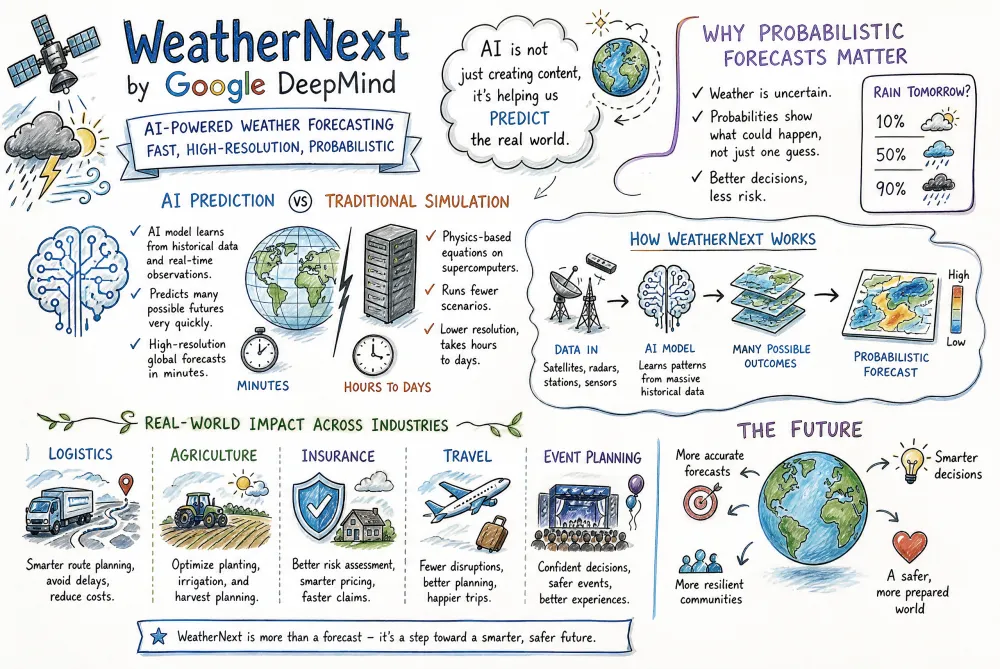
Google DeepMind’s WeatherNext is one of the clearest examples of prediction-focused AI. It uses AI to produce fast, high-resolution, probabilistic weather forecasts. For a mainstream audience, this is easy to understand: AI is not only making content; it is helping forecast the physical world.
The creator angle is strong because weather is familiar. A video or article can explain why AI forecasting is different from traditional simulation, why probabilistic forecasts matter, and how this pattern may spread into logistics, agriculture, insurance, travel, and event planning.
World Models: Prediction Inside Simulated Environments
Google’s explanation of Project Genie and world models points to another direction: systems that learn how environments behave and predict what happens after an action. This is not the same as a chatbot answering a question. A world model tries to understand state, movement, cause, and consequence.
For creators, world models are a rich topic because they connect AI with games, education, design, robotics, and interactive media. The best content angle is not “world models will replace everything.” A more credible angle is: world models may make AI-generated environments more interactive, testable, and useful for planning.
Prediction Markets Are Becoming AI News Signals
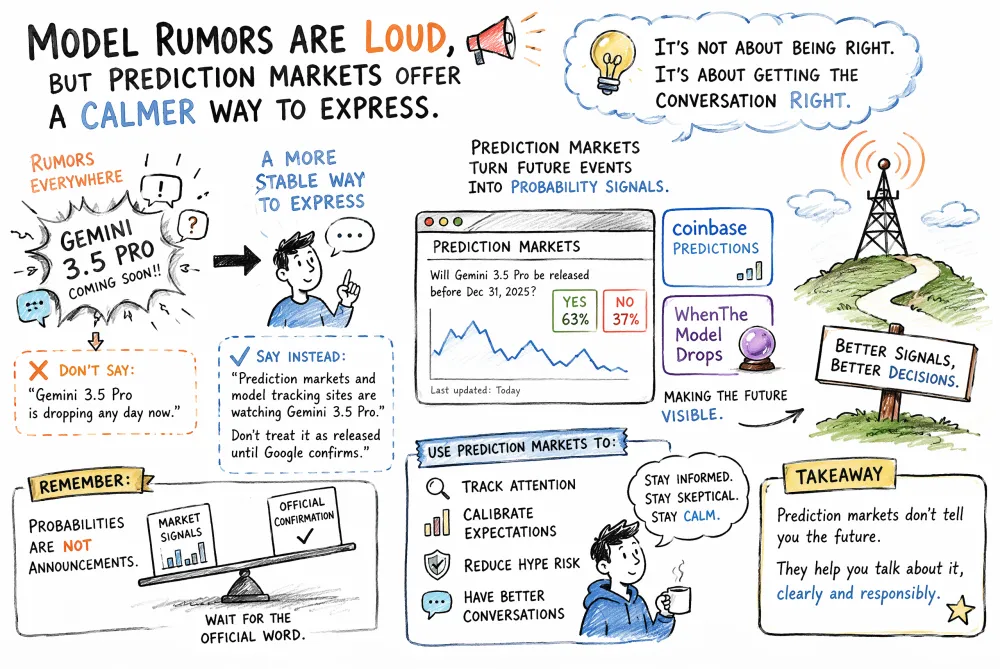
Model-release speculation is noisy, but prediction markets give creators a way to talk about uncertainty without pretending to know the future. Pages such as Coinbase Predictions and model-tracking sites like When The Model Drops have turned upcoming AI launches into visible probability signals.
The point is not that prediction markets are always right. The point is that they help structure the conversation. Instead of saying “Gemini 3.5 Pro is launching soon,” a better creator line is: “Prediction markets and tracking sites are watching Gemini 3.5 Pro, but there is no need to treat that as an official release until Google confirms it.”
GPT-5.6 Sol and the Problem With Leaks
Leaked or reported model names can attract fast traffic, but they are risky. Reports around GPT-5.6 Sol and unreleased model testing, including coverage from Tom’s Hardware, show why creators need careful language. A leaked name, a testing incident, or a benchmark screenshot is not the same as a stable public product.
The safe framing is to separate three layers: what has been officially released, what has been reported by media, and what is circulating in community channels. This protects the article from sounding outdated or misleading when the actual product name, timing, or capability changes.
Open-Weight Models Add Another Forecasting Layer
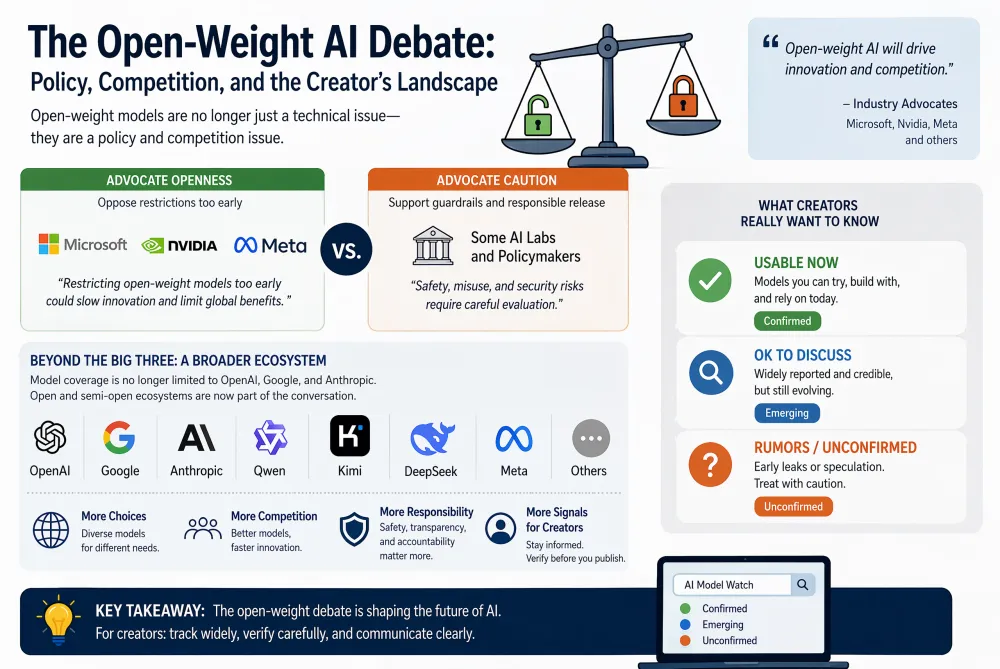
The open-weight debate also matters. Companies including Microsoft, Nvidia, Meta, and others have pushed back against premature restrictions on open-weight AI, while some labs remain more cautious. Business Insider has covered how open-weight models are becoming a policy and competition issue, not only a technical one.
For creators, this means model watching is no longer just OpenAI versus Google versus Anthropic. It also includes Kimi, Qwen, DeepSeek, Meta, and other open or semi-open ecosystems. The traffic angle is clear: viewers want to know which models they can actually use, which ones are safe to discuss as confirmed, and which ones are still only rumor.
How Creators Should Cover These Signals
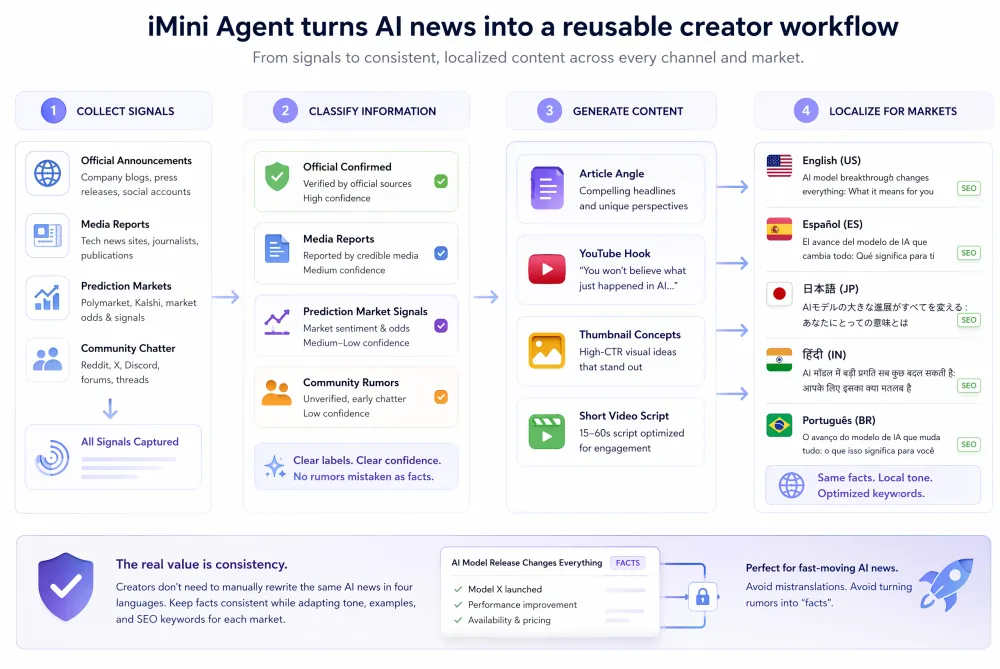
The best AI model content in 2026 will probably follow a four-layer structure: confirmed release, credible report, prediction-market signal, and community rumor. Each layer deserves a different tone. Confirmed releases can be explained directly. Credible reports should be attributed. Prediction markets should be described as probability signals. Community rumors should be framed as watchlist items.
This approach gives creators a practical advantage. They can move early without overclaiming. They can use high-search terms such as prediction models, world models, Gemini 3.5 Pro, GPT-5.6 Sol, DeepSeek, Kimi, and open-weight AI, while still keeping the article accurate.
How iMini Agent Turns This Into a Workflow
iMini Agent can turn model news into a repeatable creator workflow. First, collect the signals. Then ask the agent to classify each one as confirmed, reported, predicted, or rumored. Next, generate article angles, YouTube hooks, thumbnail concepts, short-form scripts, and localized versions for different markets.
The real value is consistency. Instead of rewriting the same AI news manually in four languages, creators can keep the facts stable and adapt tone, examples, and SEO keywords for each market. That is especially useful for topics where the news changes quickly and mistranslation can make a rumor sound like a fact.
About iMini
iMini is an AI creation platform for turning ideas into images, videos, text, and repeatable creator workflows. For AI news and model-watch content, iMini helps creators move from raw signals to usable assets: article structures, visual placeholders, prompt packs, social posts, thumbnails, and localized versions. The goal is not to chase every rumor, but to turn the right signals into clear, useful content faster.
Conclusion
Prediction models are becoming one of the most interesting AI themes to watch in 2026. Weather forecasting, world models, prediction markets, open-weight competition, and leaked model names all point to the same shift: AI is not only generating content; it is helping people reason about what may happen next.
For creators, the winning move is not to publish every rumor. It is to build a clear model-watch workflow: verify the source, label uncertainty, explain the creator impact, and turn the signal into useful content before the conversation becomes crowded.