Quality close to GPT-5.5
OpenAI positions Terra to compete with GPT-5.5 on performance—suited to moving a large share of former single-flagship traffic onto a more balanced choice.
GPT-5.6 Terra is OpenAI’s balanced GPT-5.6 model, released in July 2026. It targets everyday coding, reasoning, and agents: OpenAI positions it to compete with GPT-5.5 performance while sitting between Sol and Luna on cost and throughput. Keep the heaviest, longest jobs on Sol; high-turnover drafts and short-turn automation fit Luna better. On iMini Agent, pick GPT-5.6 Terra to use it.
Family roles, everyday primary cost, and the shared tool surface—what to check before making Terra your day-to-day go-to.
OpenAI positions Terra to compete with GPT-5.5 on performance—suited to moving a large share of former single-flagship traffic onto a more balanced choice.
Depth and cost land between Sol and Luna. For new work, ask first whether Sol is worth it—or whether Terra is already steady enough.
Context and output ceilings match the family’s flagship tier, so long specs, multi-turn history, and tool traces can stay in one conversation.
Shares reasoning, tool use, and multi-agent surfaces with the generation—so Agent workflows can switch among Sol / Terra / Luna by task weight.
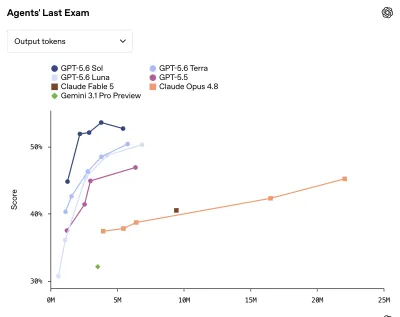
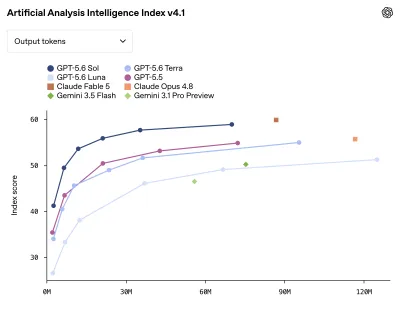
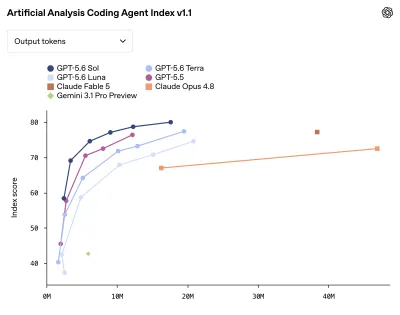
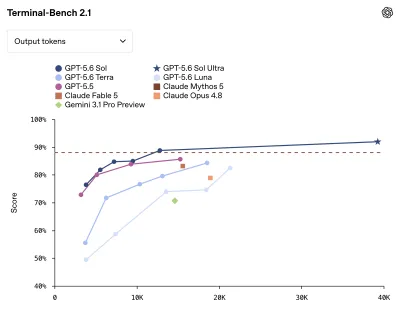
Results OpenAI published with GPT-5.6. The shared x-axis is output-token volume. Terra’s story: clearly fewer tokens for scores close to Sol.
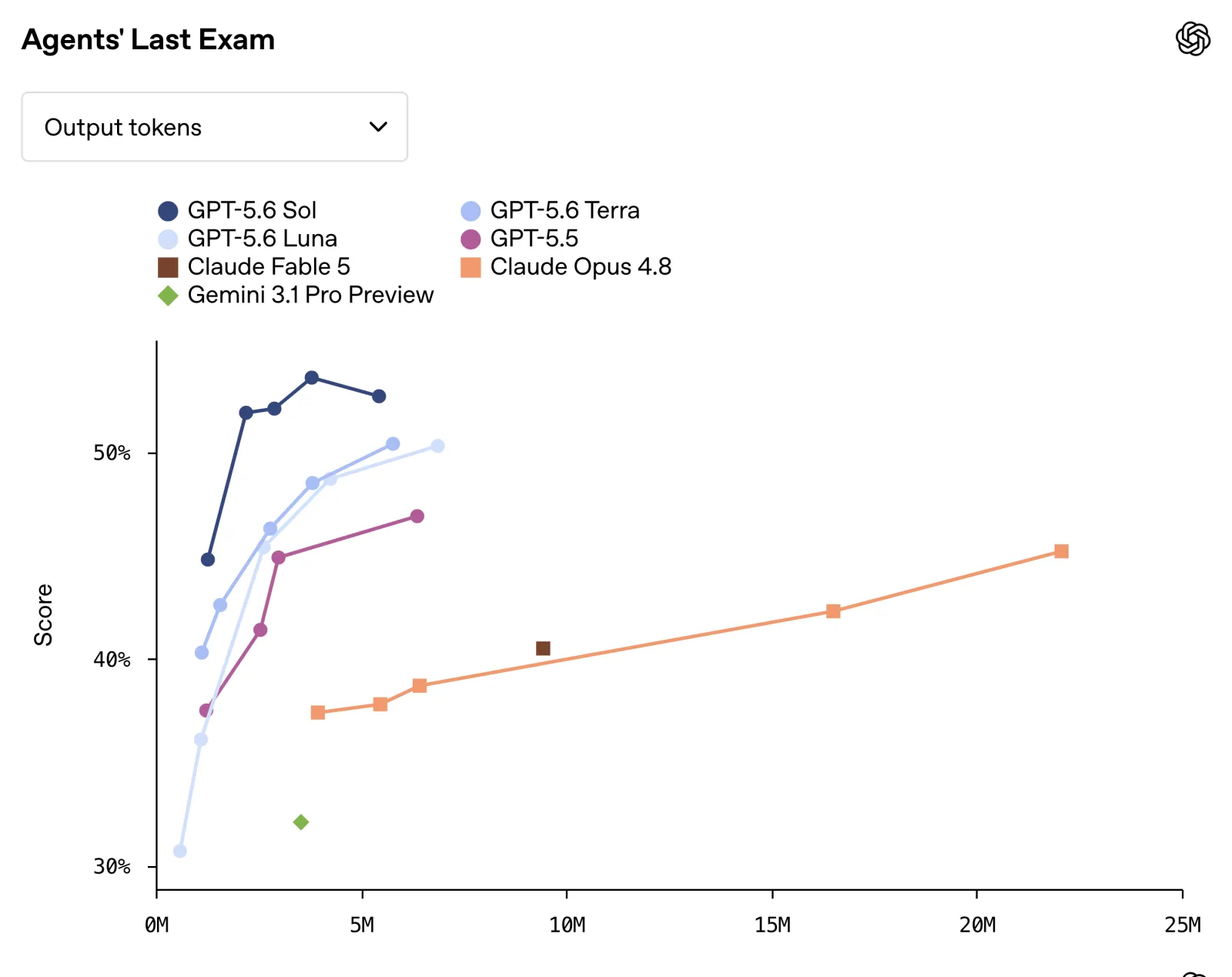
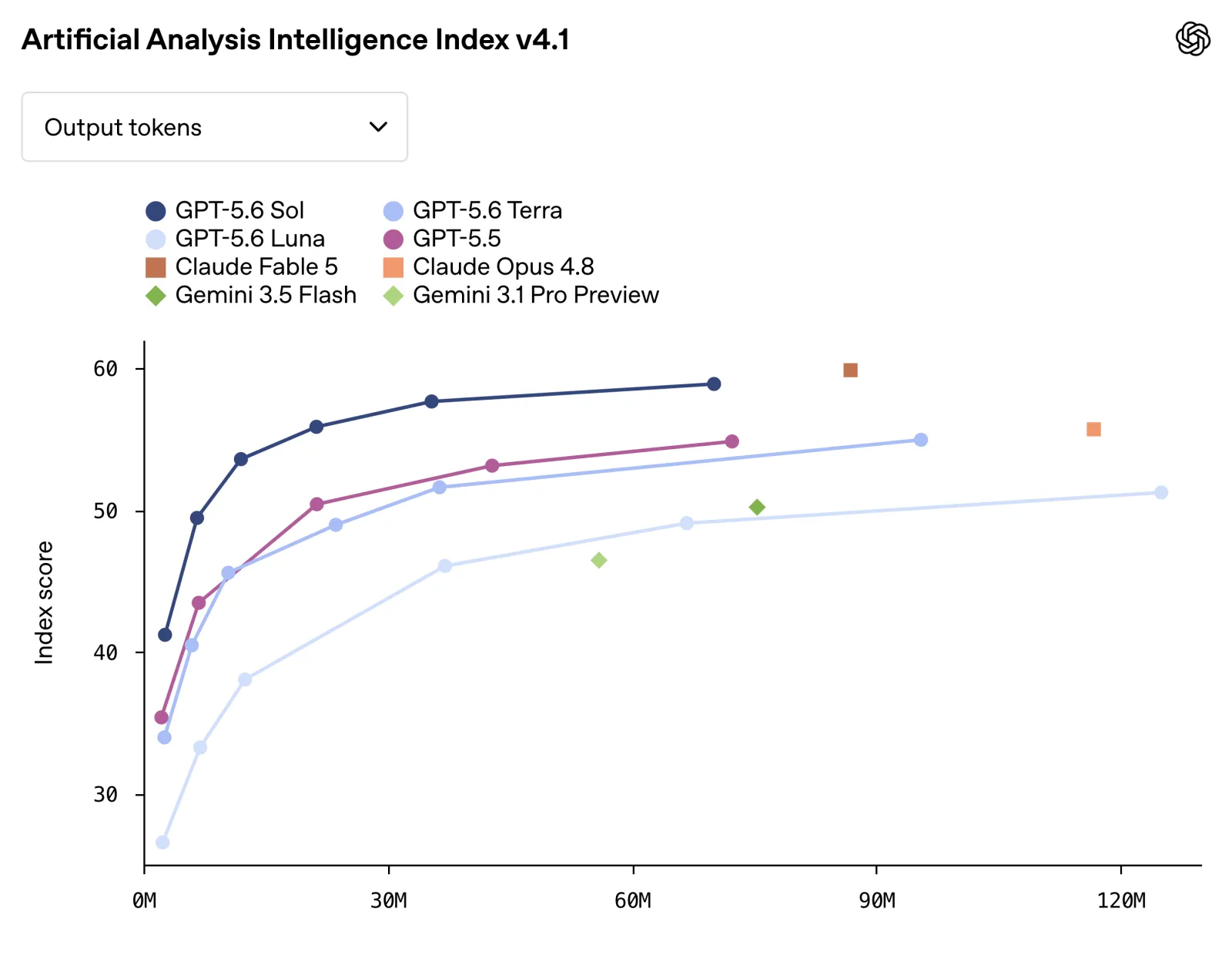
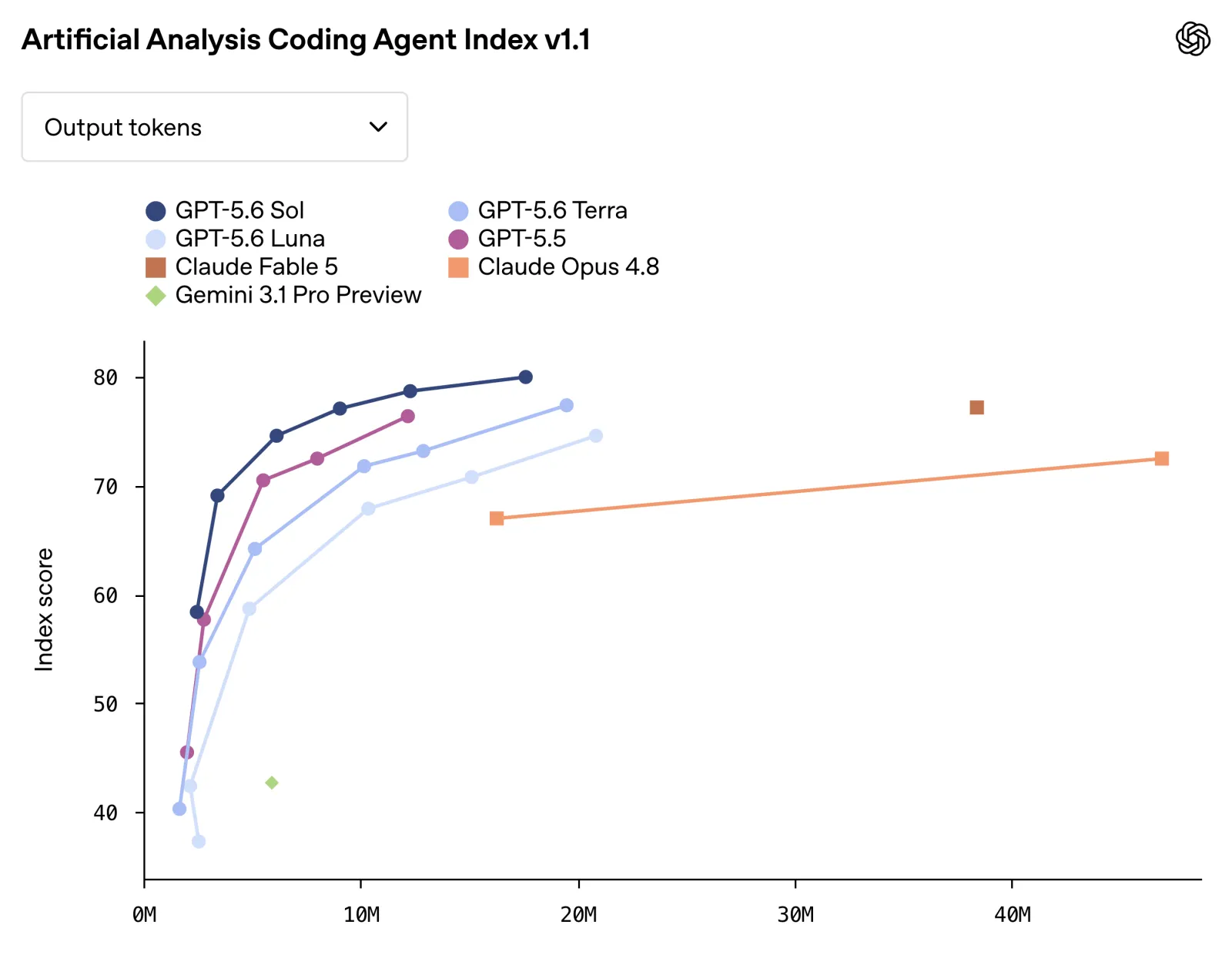
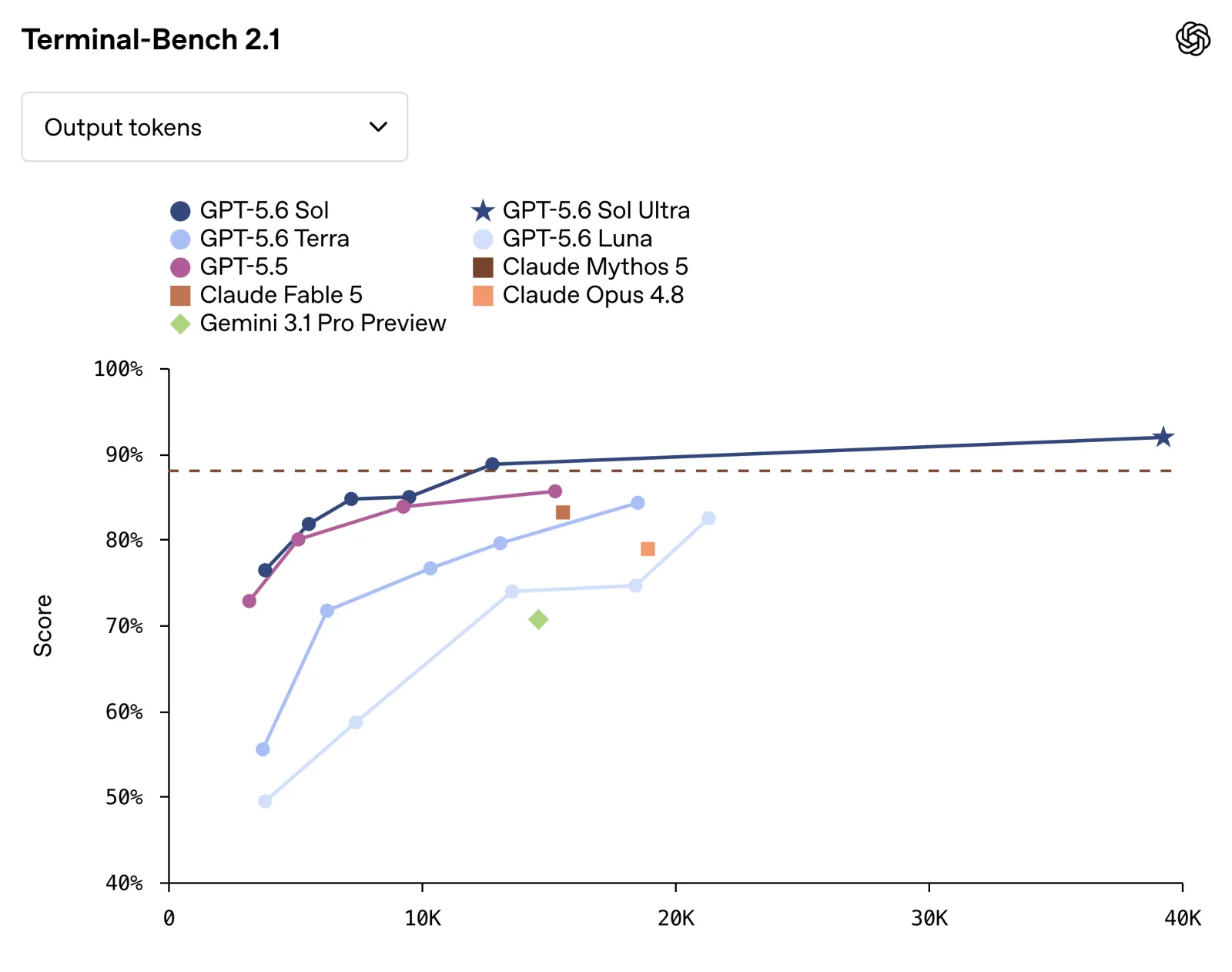
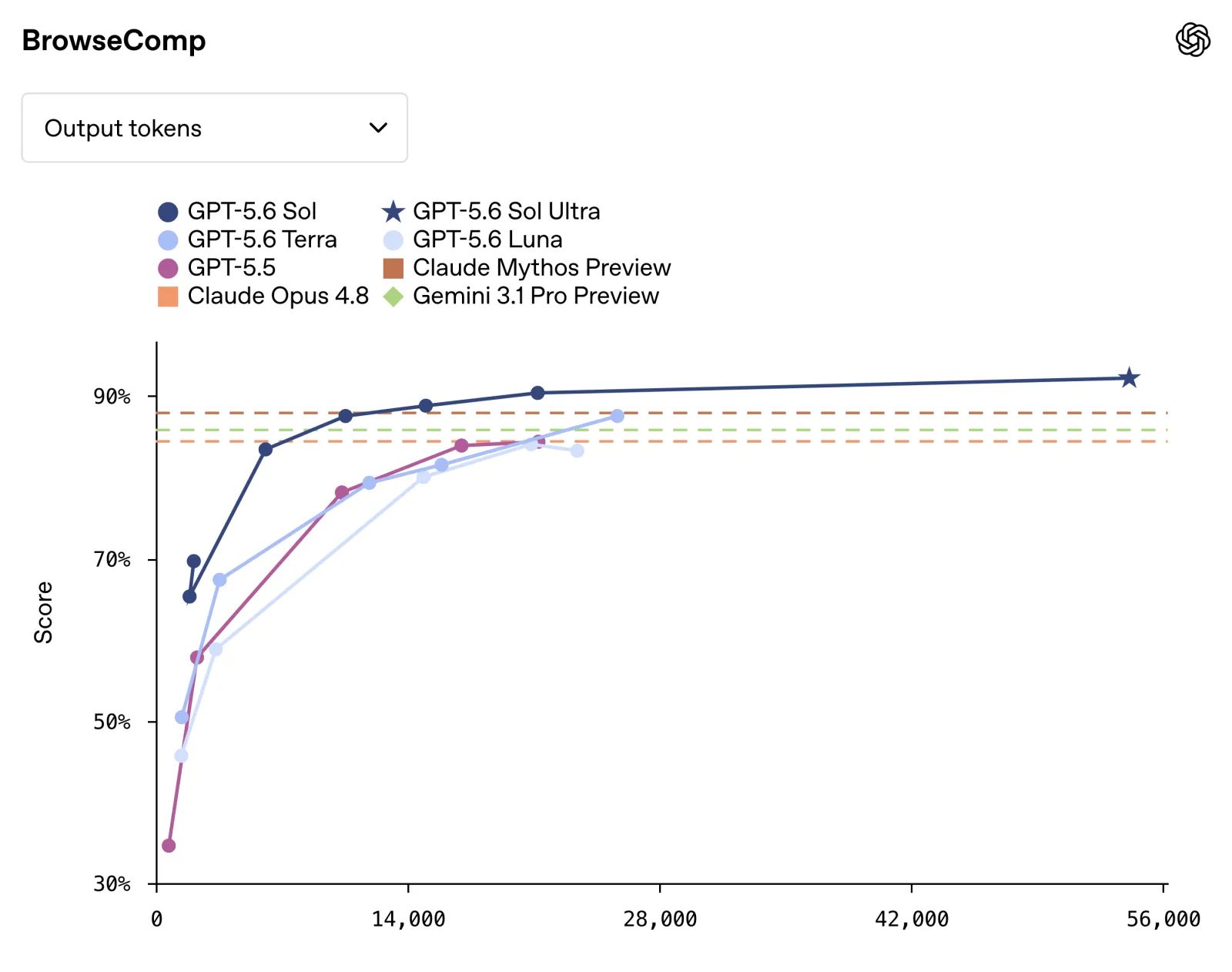
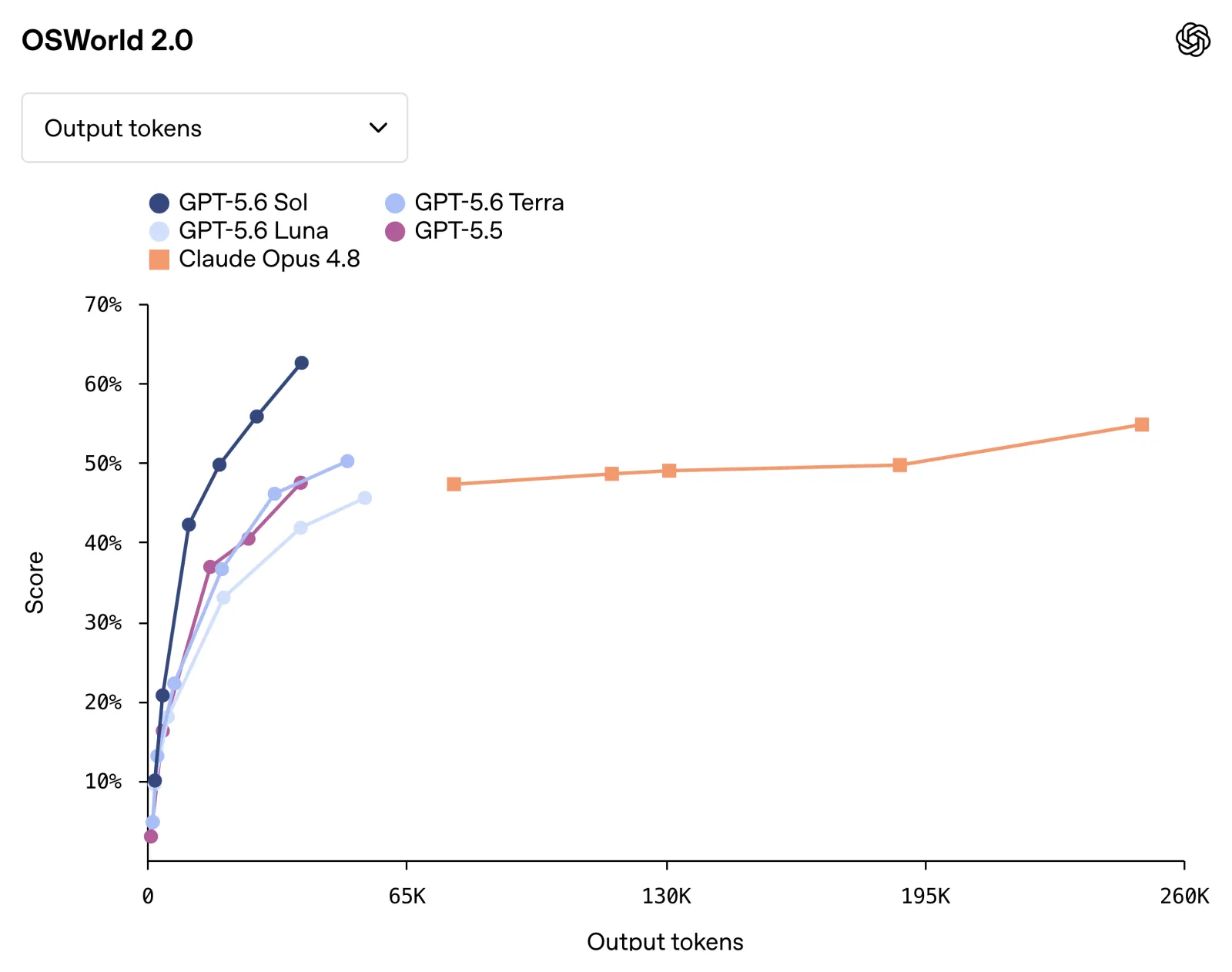
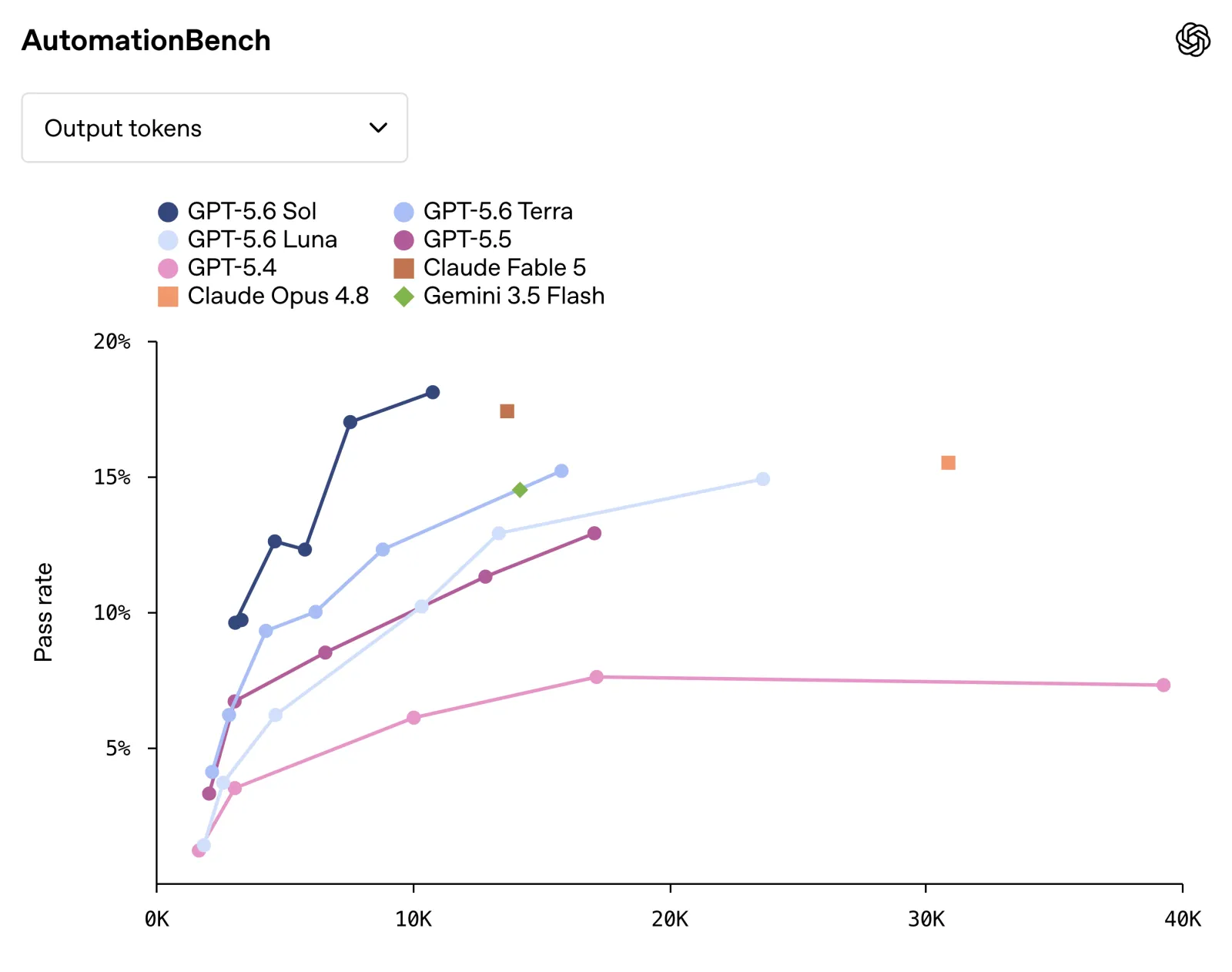
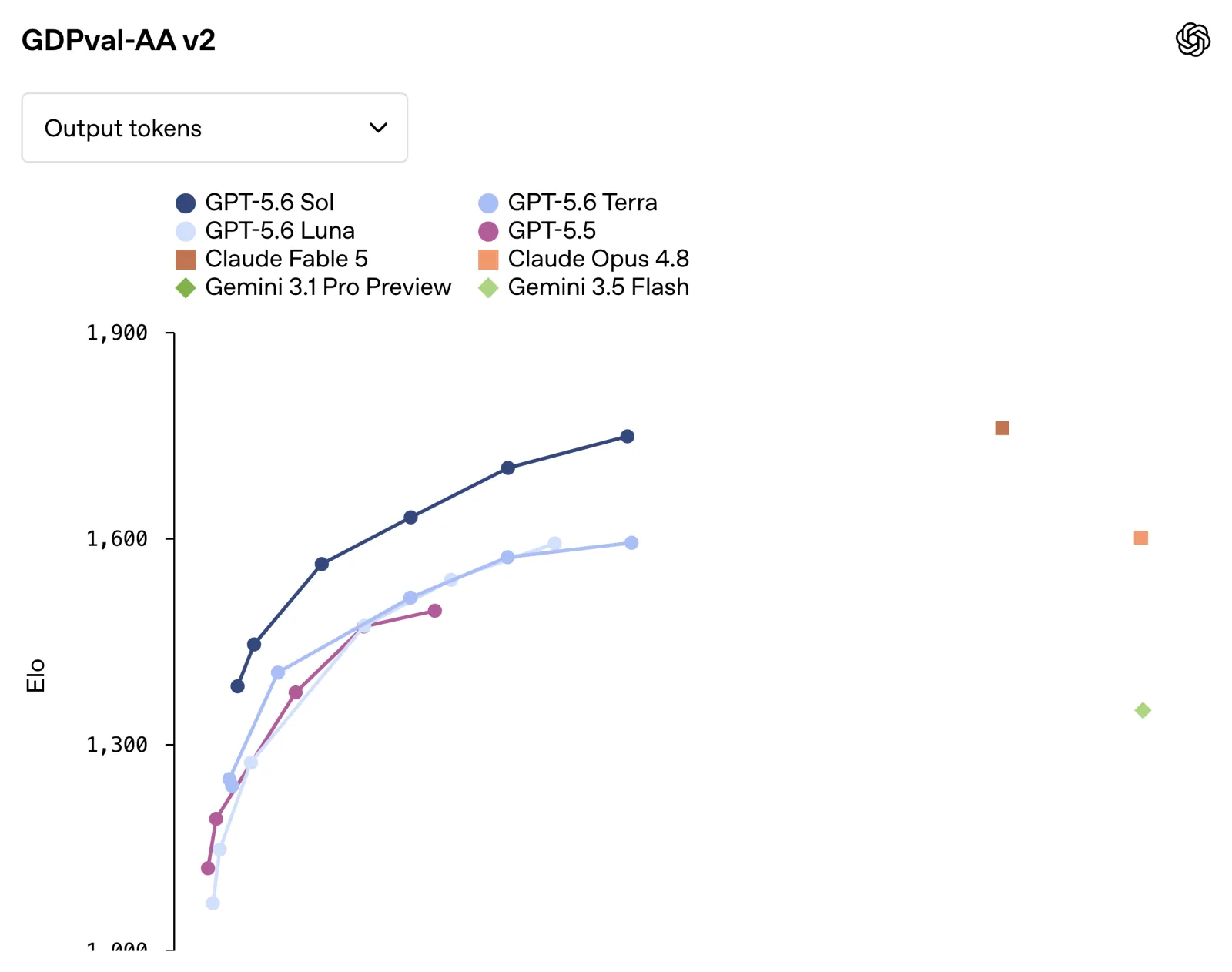
GPT-5.6 Terra is built as an everyday primary, leaving the heaviest minority of jobs for Sol.
For routine feature work, PR review, and test repair. Focus on stable, checkable changes and verification advice—hand truly hard long-horizon refactors to Sol.
For support drafts, internal tool docs, contracts, and long-document summaries. Suited to high throughput that still needs reliable reasoning.
For multi-step tool use that stays within a controlled number of turns. Pin completion criteria so not every request burns flagship depth.
Three tiers in one generation. The differences are depth ceiling, throughput, and failure cost.
| Dimension | GPT-5.6 Terra | GPT-5.6 Sol | GPT-5.6 Luna |
|---|---|---|---|
| Context | 1M tokens | 1M tokens | 1M tokens |
| Reasoning | Balanced depth | Max depth · ultra available | Lighter and faster |
| Coding / agents | Day-to-day coding & mid-weight agents | Heaviest long-horizon coding & security research | Short-turn automation & drafts |
| Long tool runs | More balanced completion and throughput | Flagship depth + ultra | High turnover, shorter threads |
| Speed posture | Everyday primary favors balance | Completion quality and depth first | Responsiveness and cost first |
| Prefer when | New everyday coding and high-volume business work | Highest failure-cost, heaviest jobs | Drafts, classification, and short-turn automation |
Free quota, model naming, key specs, and how it differs from Sol and Luna.
Million-token context, near-flagship quality, built as an everyday primary.
Open GPT-5.6 TerraNo OpenAI API key required.