Faster and leaner in the family
OpenAI positions Luna as the fastest, most affordable GPT-5.6 option—suited to moving large volumes of short jobs off heavier models.
GPT-5.6 Luna is OpenAI’s speed-oriented GPT-5.6 model, released in July 2026. It targets chat drafts, classification, summarization, and short-turn automation: within the family it prioritizes responsiveness and throughput, while still clearly stronger than earlier lightweight generations. Everyday balanced work belongs on Terra; the heaviest long-horizon jobs belong on Sol. On iMini Agent, pick GPT-5.6 Luna to use it.
Speed, throughput, and the shared family surface—boundaries to know before putting Luna in a pipeline.
OpenAI positions Luna as the fastest, most affordable GPT-5.6 option—suited to moving large volumes of short jobs off heavier models.
Context and output ceilings match the family, so short-turn jobs can still carry longer materials without jumping to Terra or Sol first.
Classification, summarization, drafts, and routing can run on Luna first; escalate to Terra or Sol when deeper checking is needed.
Hooks into GPT-5.6 reasoning and tool-use capabilities so Agent flows can switch tiers step by step.
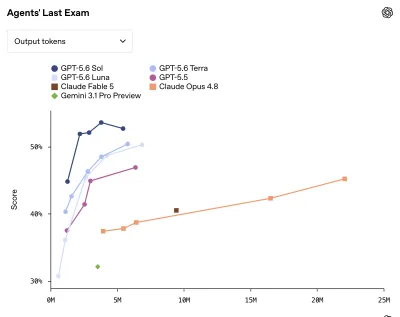
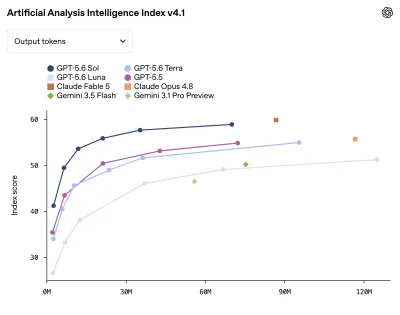
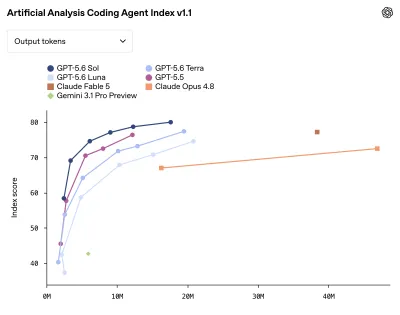
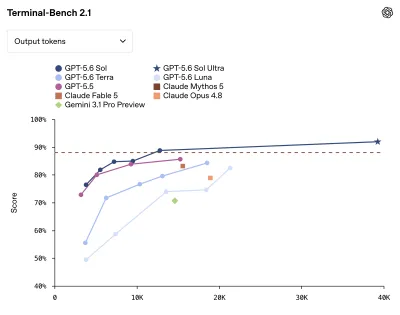
Results OpenAI published with GPT-5.6. The shared x-axis is output-token volume. Luna is the family’s fastest tier, yet several scores still sit above the prior flagship.
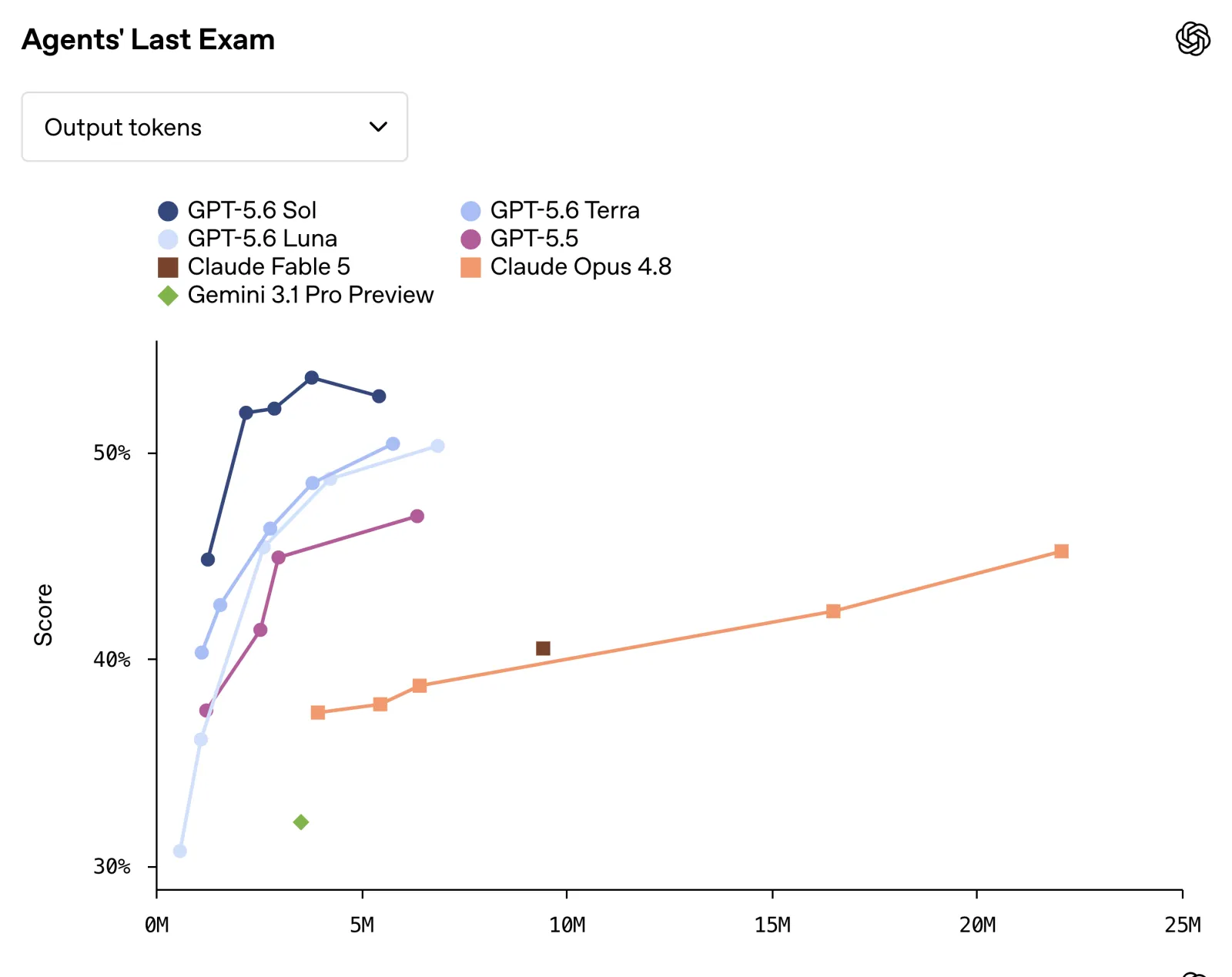
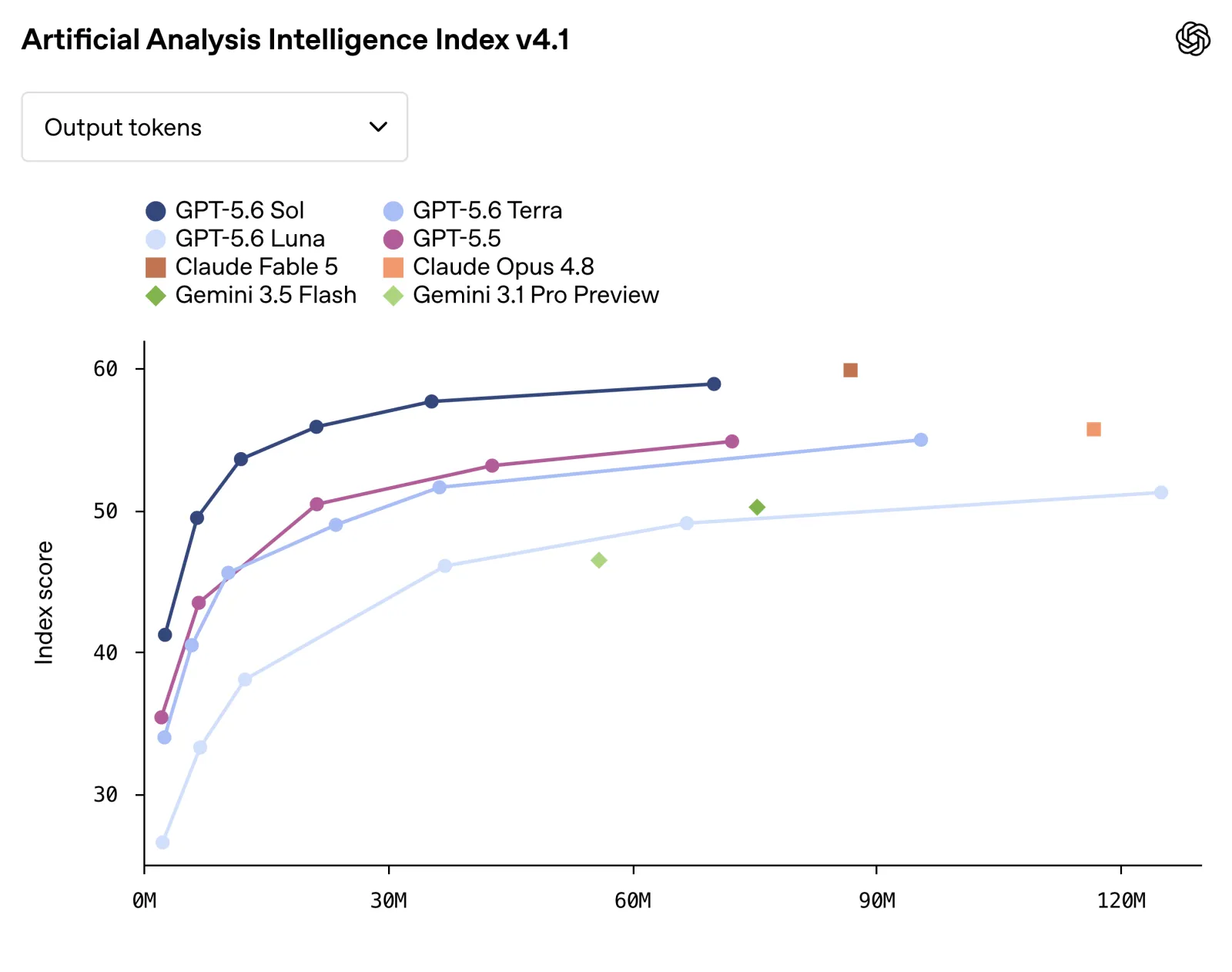
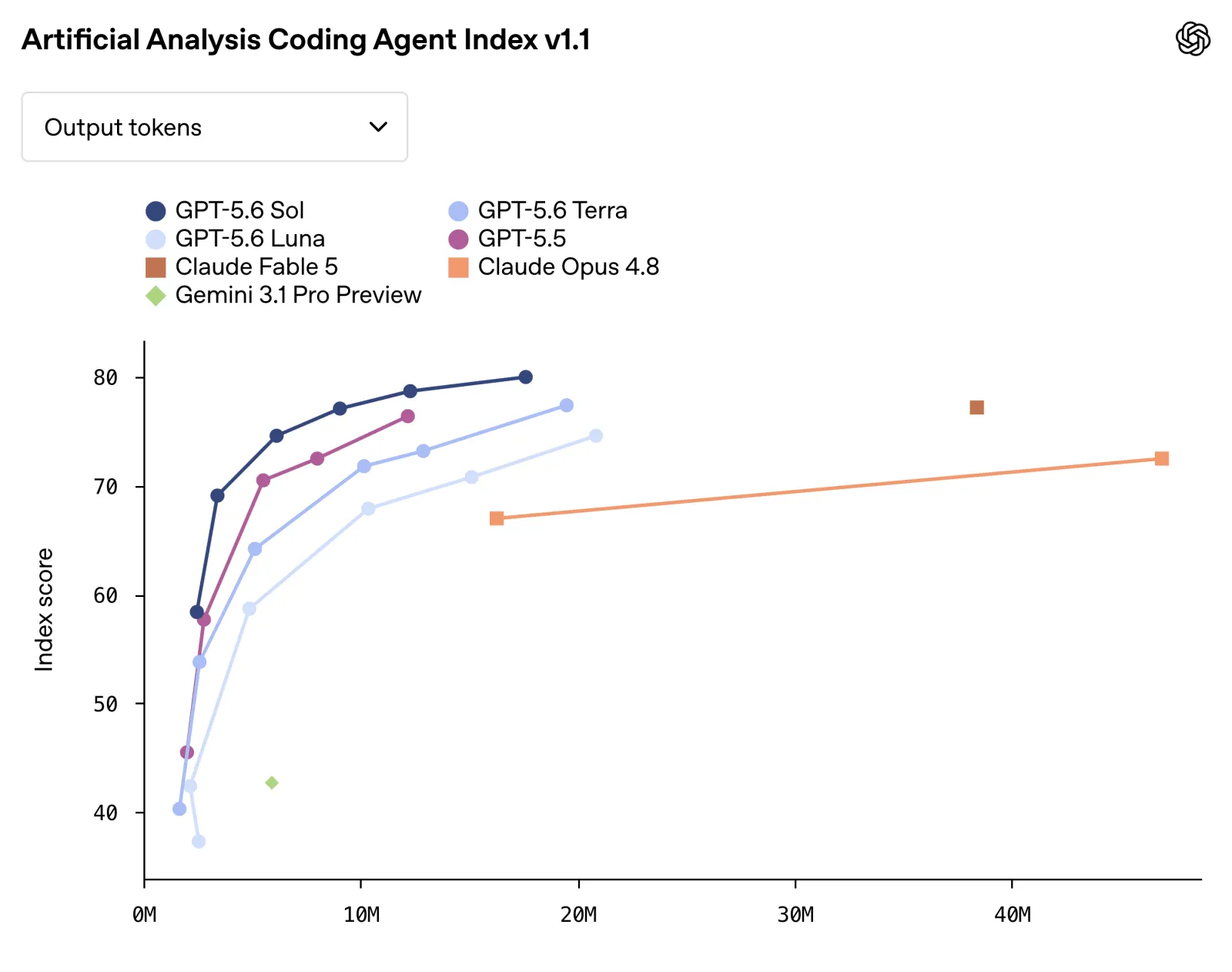
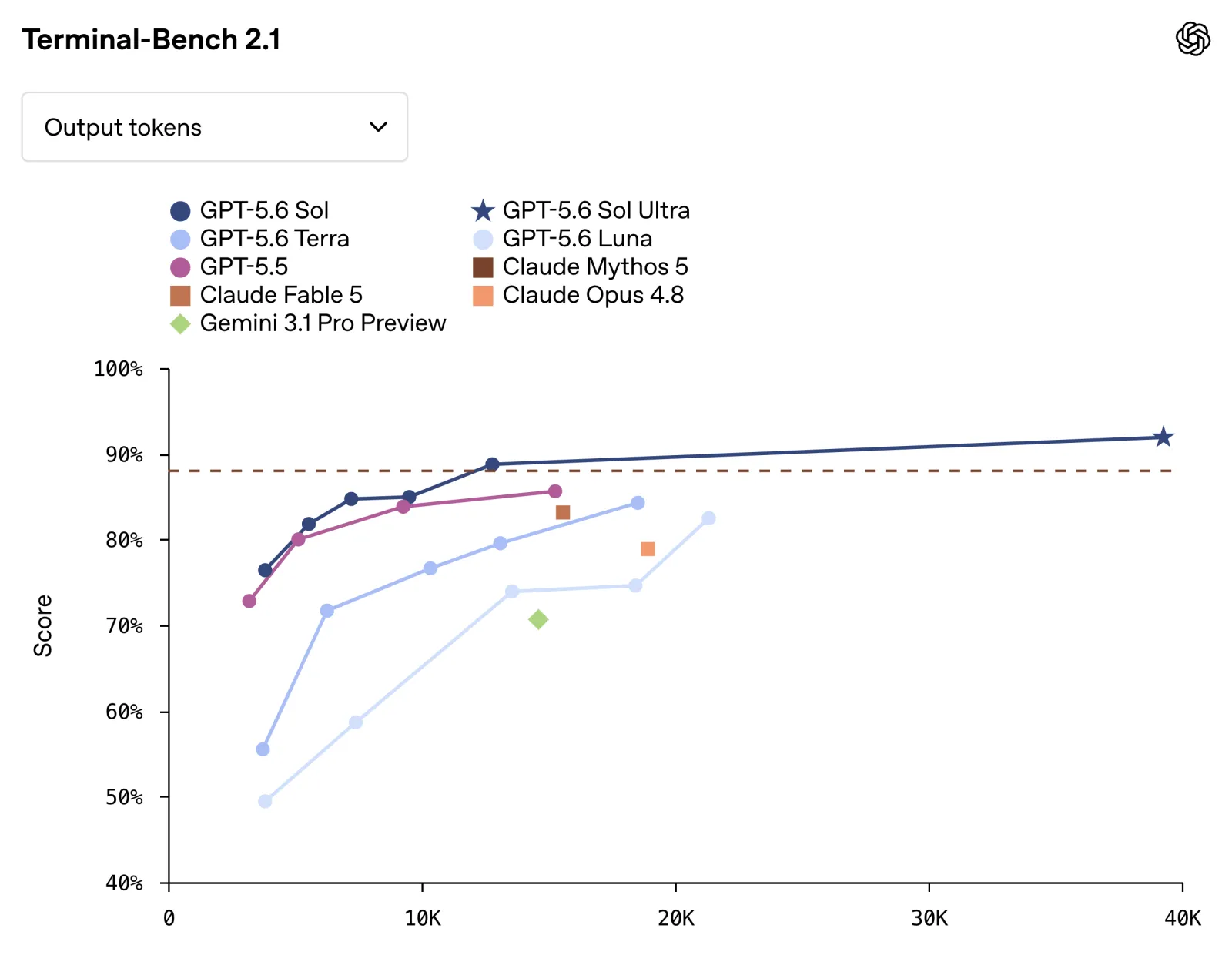
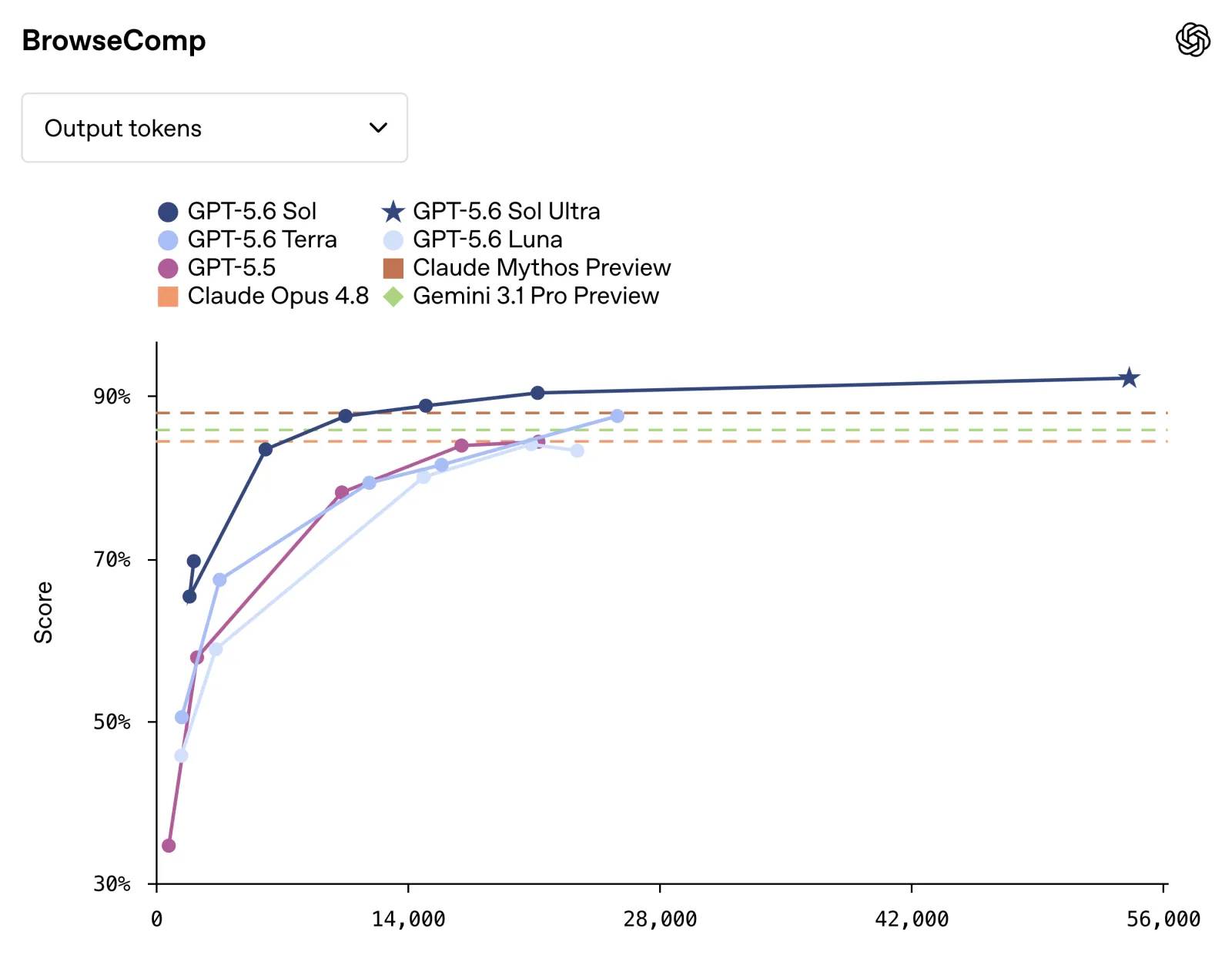
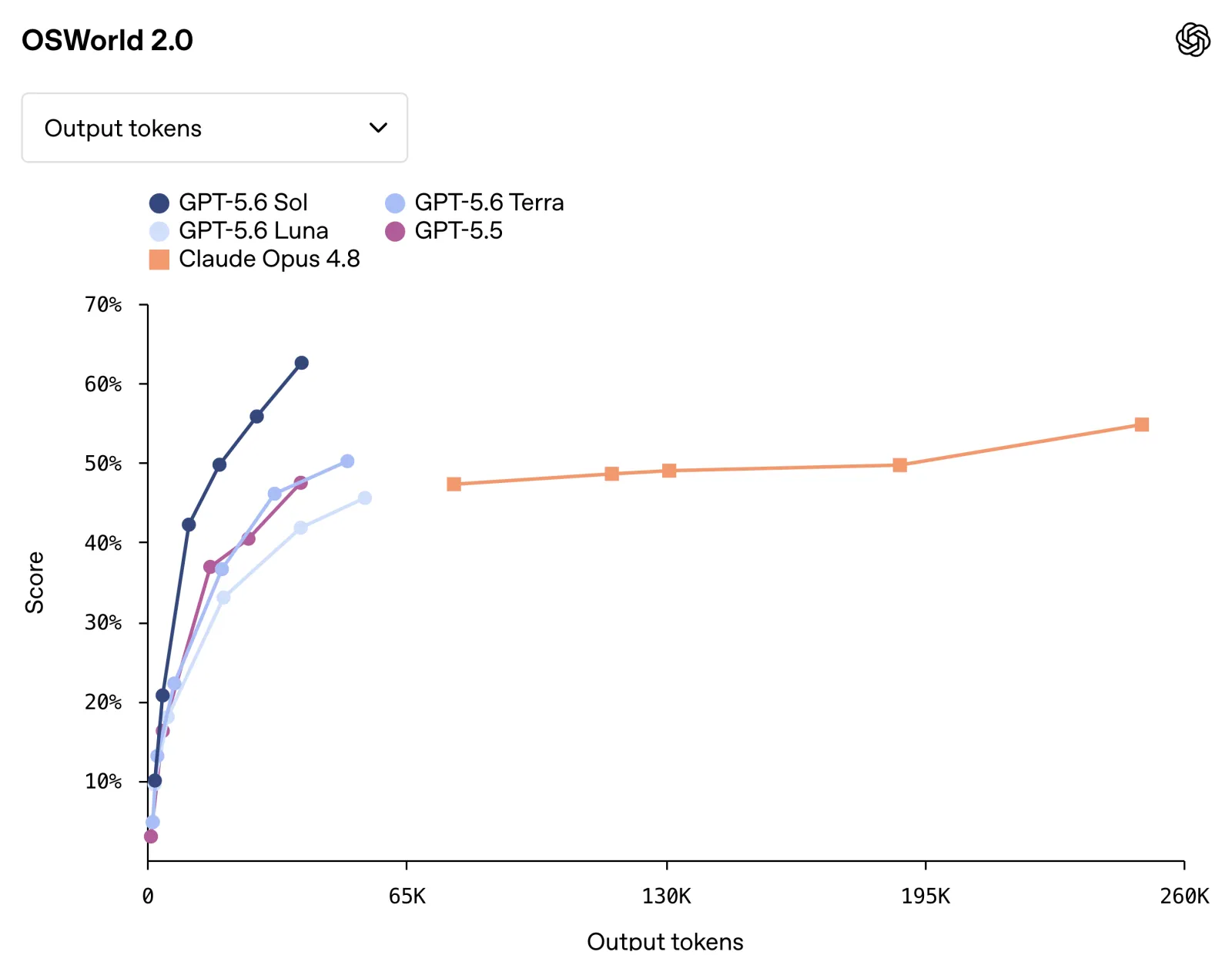
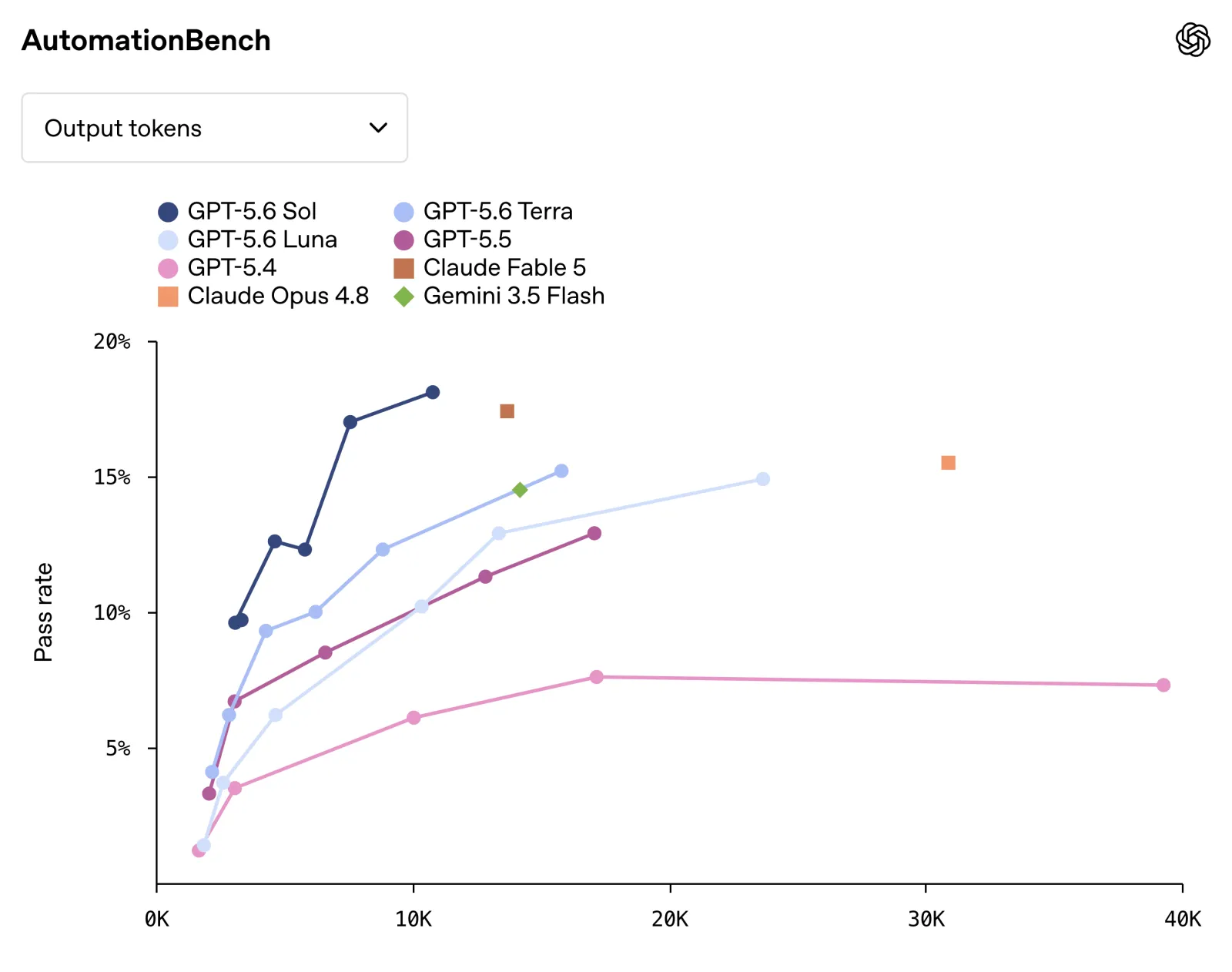
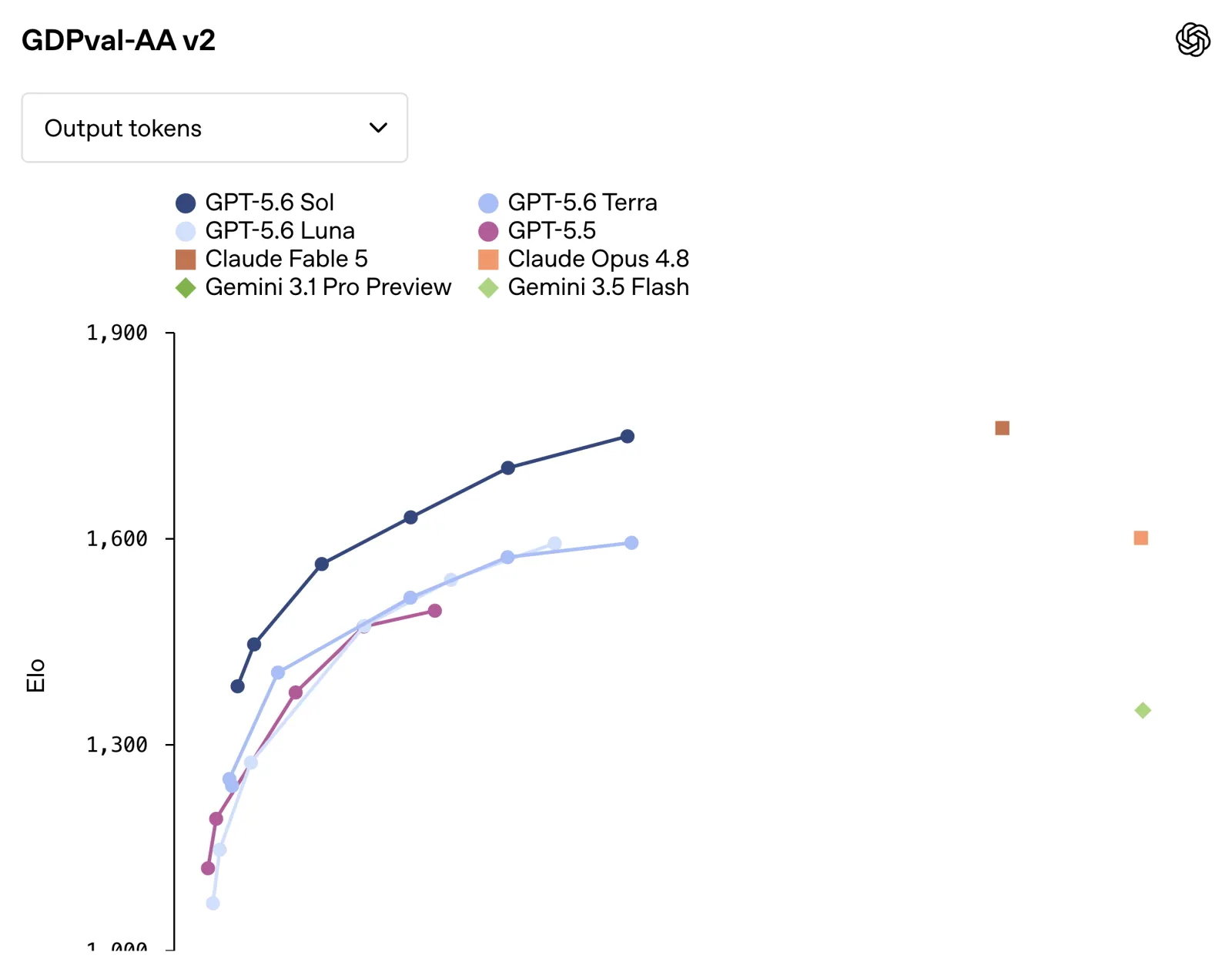
GPT-5.6 Luna fits short turns, high concurrency, and relatively controllable failure cost.
For first drafts and tone rewrites of email, explainers, and product copy. Ship a draft quickly, then proof critical spots on a heavier model.
For labels, field extraction, and meeting-note summaries. Focus on stable formats and high throughput.
For tool calls with few steps and a clear goal. Hard-code success criteria; send root-cause work and repo-scale changes to Sol.
Three tiers in one generation. The differences are depth, throughput, and the failure cost you can accept.
| Dimension | GPT-5.6 Luna | GPT-5.6 Terra | GPT-5.6 Sol |
|---|---|---|---|
| Context | 1M tokens | 1M tokens | 1M tokens |
| Reasoning | Lighter and faster | Balanced depth | Max depth · ultra available |
| Coding / agents | Short-turn drafts & light automation | Day-to-day coding & mid-weight agents | Heaviest long-horizon coding |
| Long tool runs | High turnover, shorter threads | More balanced completion and throughput | Flagship depth + ultra |
| Speed posture | Responsiveness and throughput first | Everyday primary favors balance | Completion quality first |
| Prefer when | Drafts, classification, and short-turn automation | Everyday coding and high-volume business | Highest failure-cost, heaviest jobs |
Free quota, model naming, key specs, and how it differs from Terra and Sol.
Million-token context, faster responses, built for high-turnover work.
Open GPT-5.6 LunaNo OpenAI API key required.