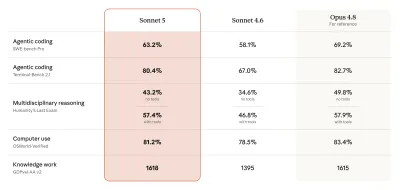
Large jump in agent capability
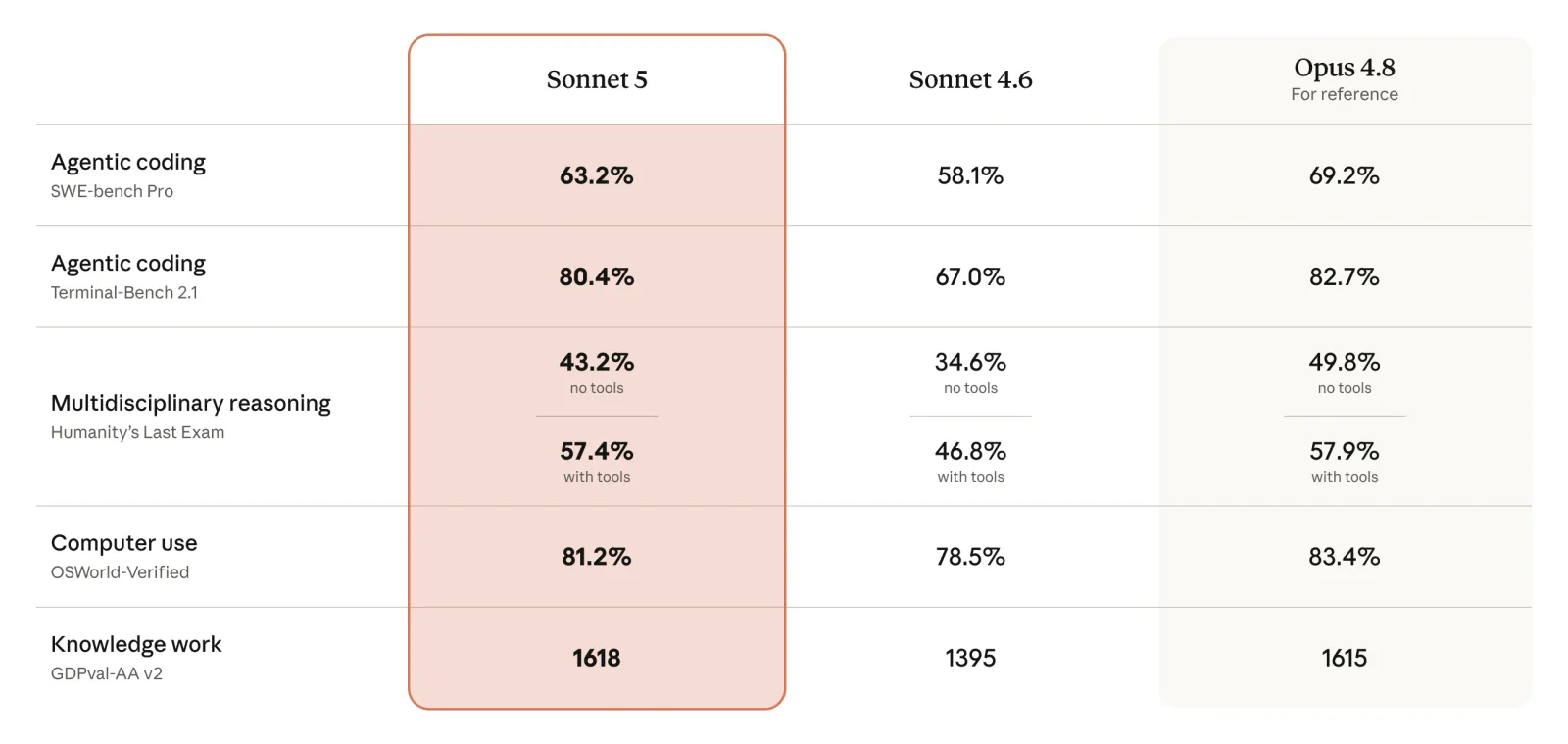
Reasoning, tool use, coding, and knowledge work all lift versus 4.6; at the right depth, some jobs approach Opus 4.8 completion.
Claude Sonnet 5 is Anthropic’s Sonnet released in June 2026. It’s built for scaled agents: planning, browser and terminal tools, and driving to a result. Anthropic reports clear gains over Claude Sonnet 4.6 on many agent evals, and at some depth settings it can approach Claude Opus 4.8. When you need the Opus ceiling, look at Claude Opus 5; for single ultra-long, ultra-hard jobs, compare Claude Fable 5. On iMini Agent, pick Claude Sonnet 5 to use it.
Agent completion, cost–performance range, and tool collaboration—what to check before making Sonnet your primary.
Reasoning, tool use, coding, and knowledge work all lift versus 4.6; at the right depth, some jobs approach Opus 4.8 completion.
Complex jobs stop mid-way less often and self-check outputs more often—suited to multi-step tool flows as an everyday primary.
Multiple depth tiers cover efficient through high-completion choices, so one product line can tune by task weight without sending everything to Opus.
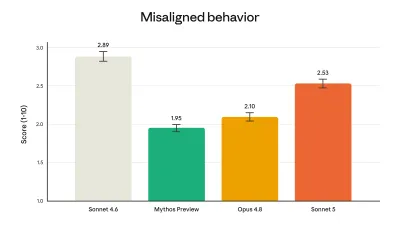
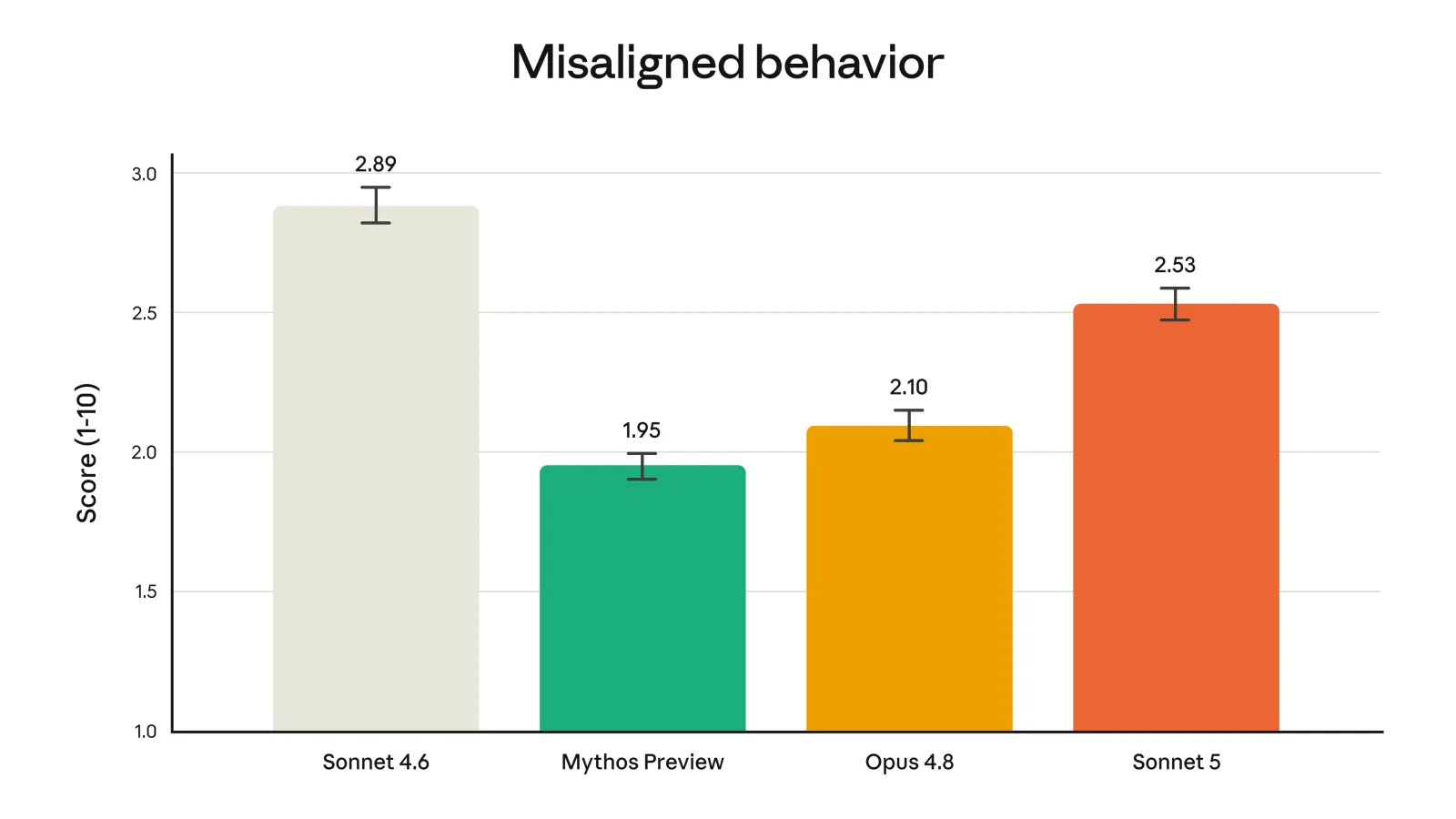
Official alignment and safety evals show fewer improper behaviors and stronger resistance to injection and malicious requests—suited as a Sonnet primary for scaled deploy.
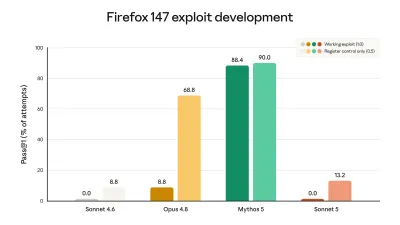
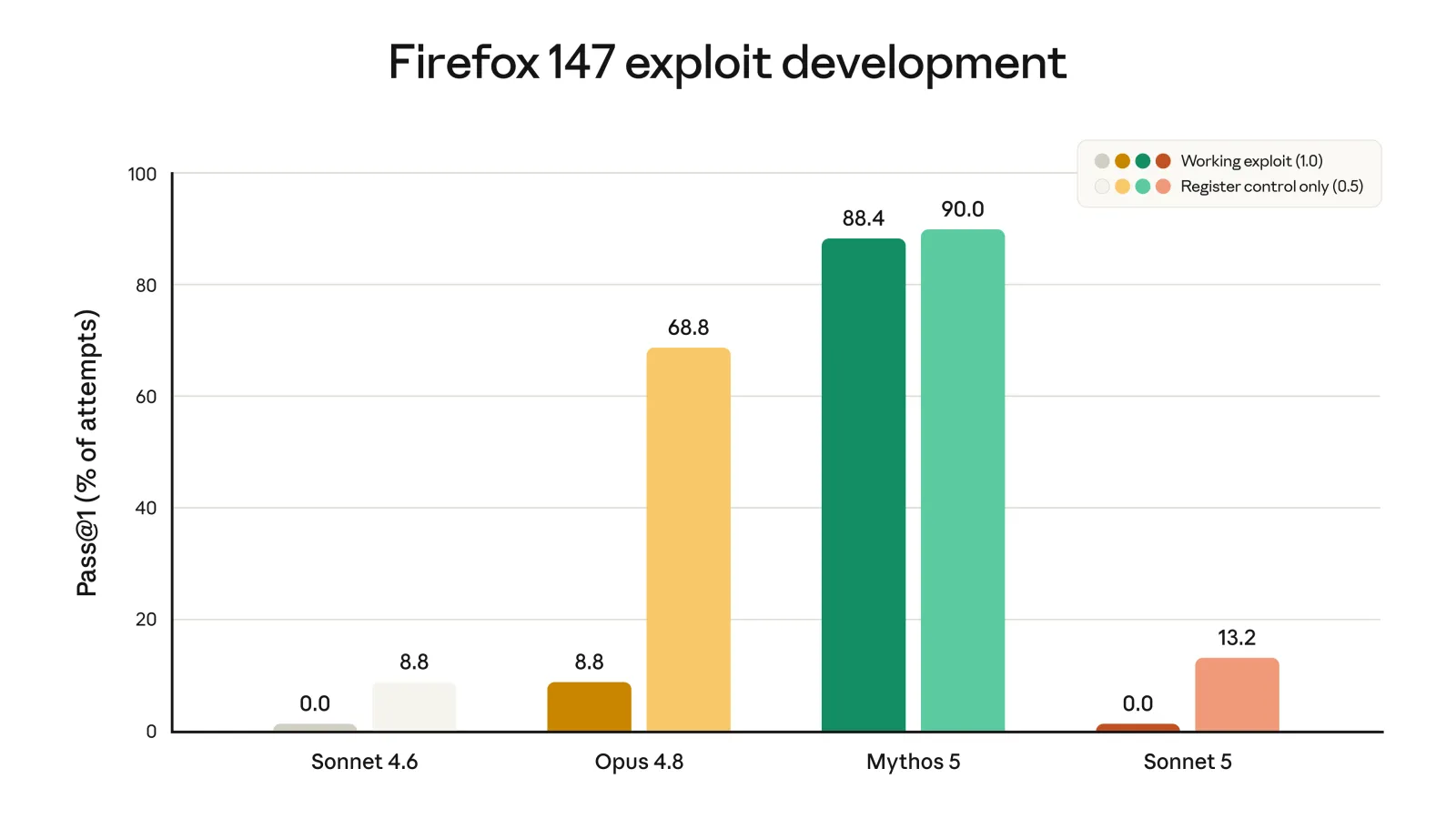
Results Anthropic published with Claude Sonnet 5, compared with Claude Sonnet 4.6 and Claude Opus 4.8—covering software engineering, multidisciplinary reasoning, computer use, and safety audits.
Claude Sonnet 5 fits high-frequency, scalable work that still needs reliable tool collaboration.
For routine feature work, test repair, and browser/terminal tool collaboration. Use it as the team’s everyday primary; leave ceiling long-horizon jobs for Opus 5.
For research summaries, table work, and constrained conclusions. Focus on stable format and checkable evidence.
For support assist, internal processes, and repetitive multi-step jobs. Pin success criteria and control latency via depth tiers.
All three are Claude workhorses. The differences are ceiling tier, high-frequency cost, and whether you need the current flagship.
| Dimension | Claude Sonnet 5 | Claude Opus 5 | Claude Opus 4.8 |
|---|---|---|---|
| Context | 1M tokens | 1M tokens | 1M tokens |
| Reasoning | Tunable depth tiers | Deep thinking built in, tunable | Usually high depth, tunable |
| Coding / agents | Scaled agents & everyday coding | Flagship primary for long-horizon coding & multi-step agents | Opus 4.8 ceiling |
| Long tool runs | Better as a high-frequency primary | Stronger goal holding and completion | Steady Opus-tier collaboration |
| Speed posture | Throughput and scale first | Completion quality first | Quality and experience in balance |
| Prefer when | New high-frequency agents and everyday coding | New long-horizon coding and knowledge-work flagship | Still bound to 4.8 workflows, or as a safety fallback |
Free quota, model naming, key specs, and how it differs from Opus.
Million-token context, tunable depth, built as a scaled-agent primary.
Open Claude Sonnet 5No Anthropic API key required.