Longer autonomous runs
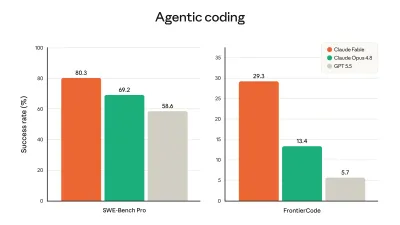
Anthropic emphasizes the longest autonomous-work posture among Claude releases so far; the more complex and longer the chain, the clearer the advantage over Opus 4.8 usually becomes.
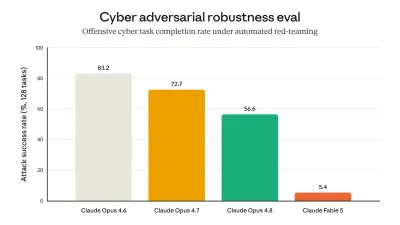
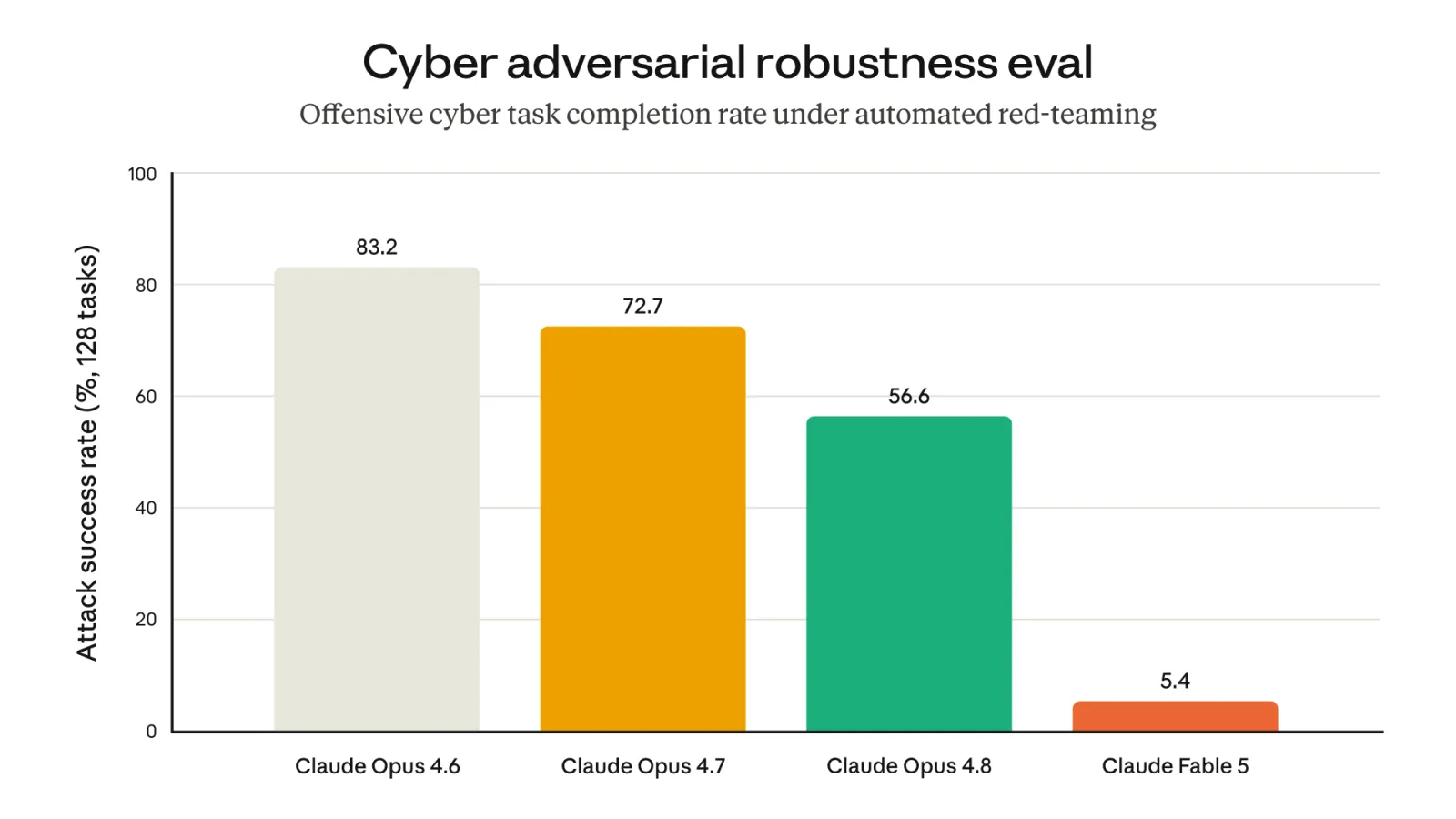
Claude Fable 5 is Anthropic’s Mythos-class public release from June 2026. It’s built for hours-long—or longer—autonomous knowledge work and coding: Anthropic says capability exceeds any previously public Claude. Some requests related to cybersecurity, biochemistry, or distillation may be handed to Claude Opus 4.8 by a safety classifier, with the user informed; most sessions still run fully on Fable 5. Everyday engineering primary more often stays on Claude Opus 5. On iMini Agent, pick Claude Fable 5 to use it.
Autonomy length, cross-domain ceiling, and long-context focus—what to check before stepping up to Fable.
Anthropic emphasizes the longest autonomous-work posture among Claude releases so far; the more complex and longer the chain, the clearer the advantage over Opus 4.8 usually becomes.
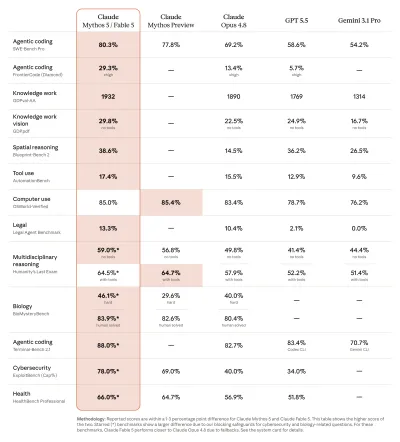
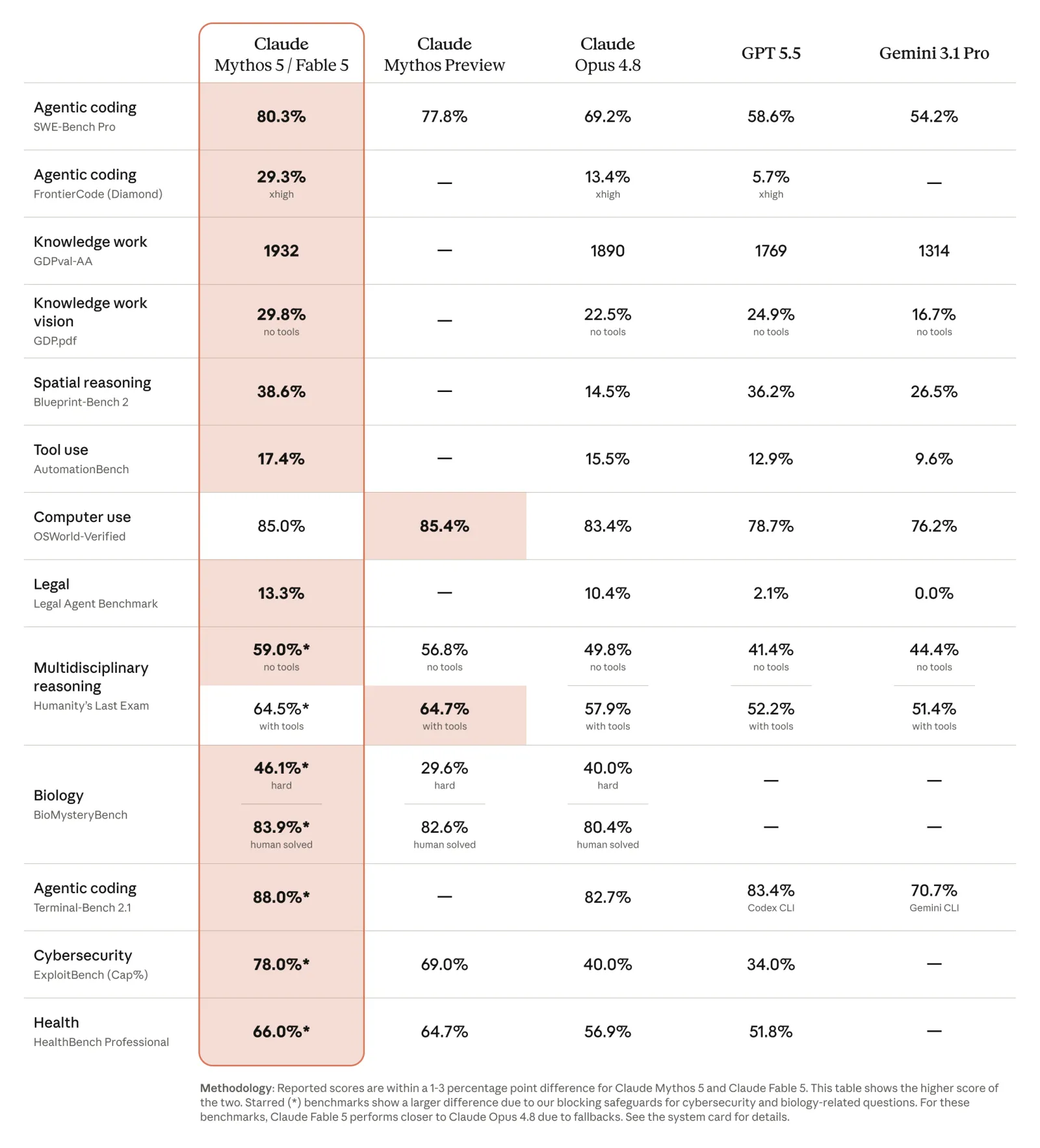
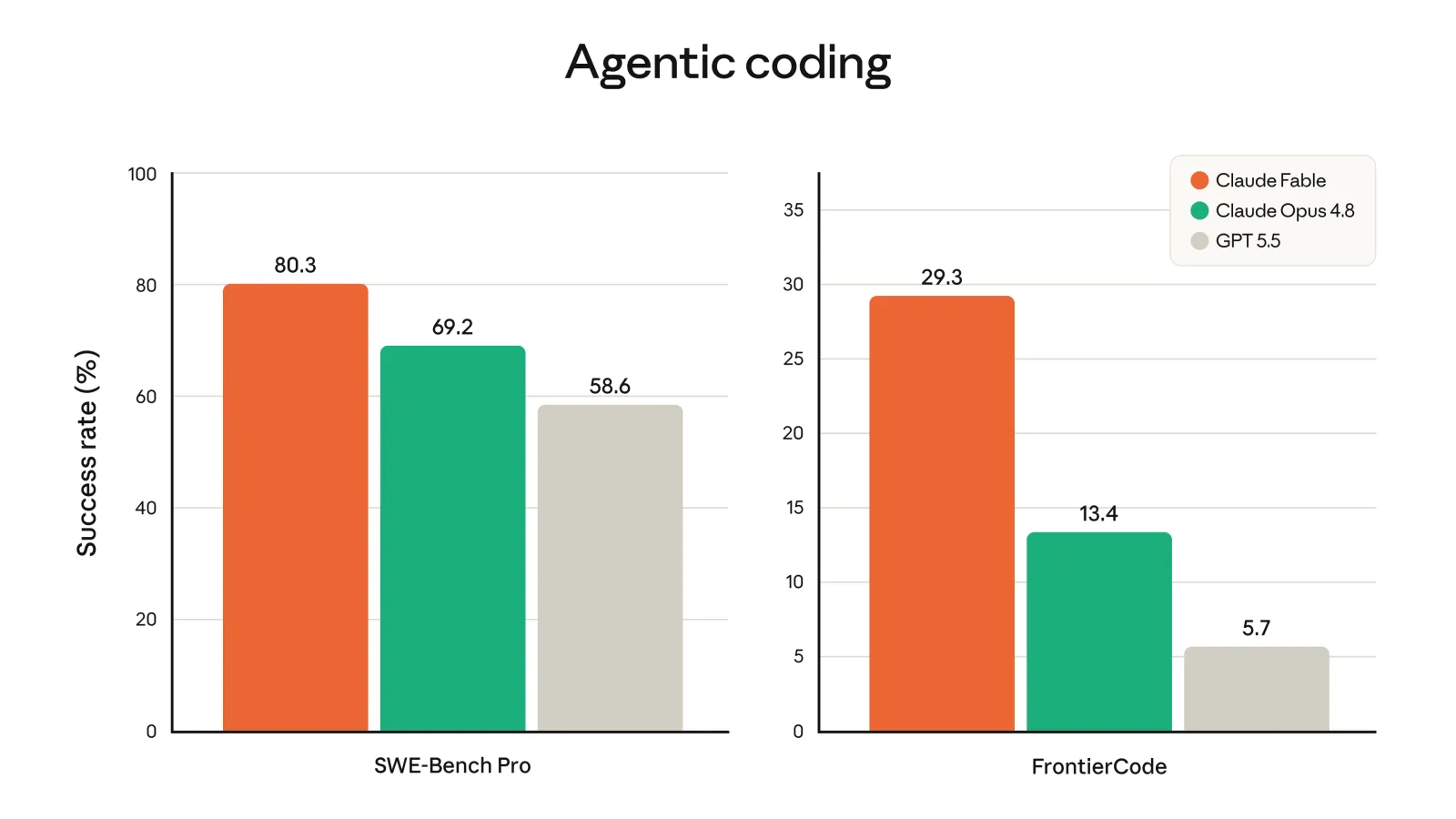
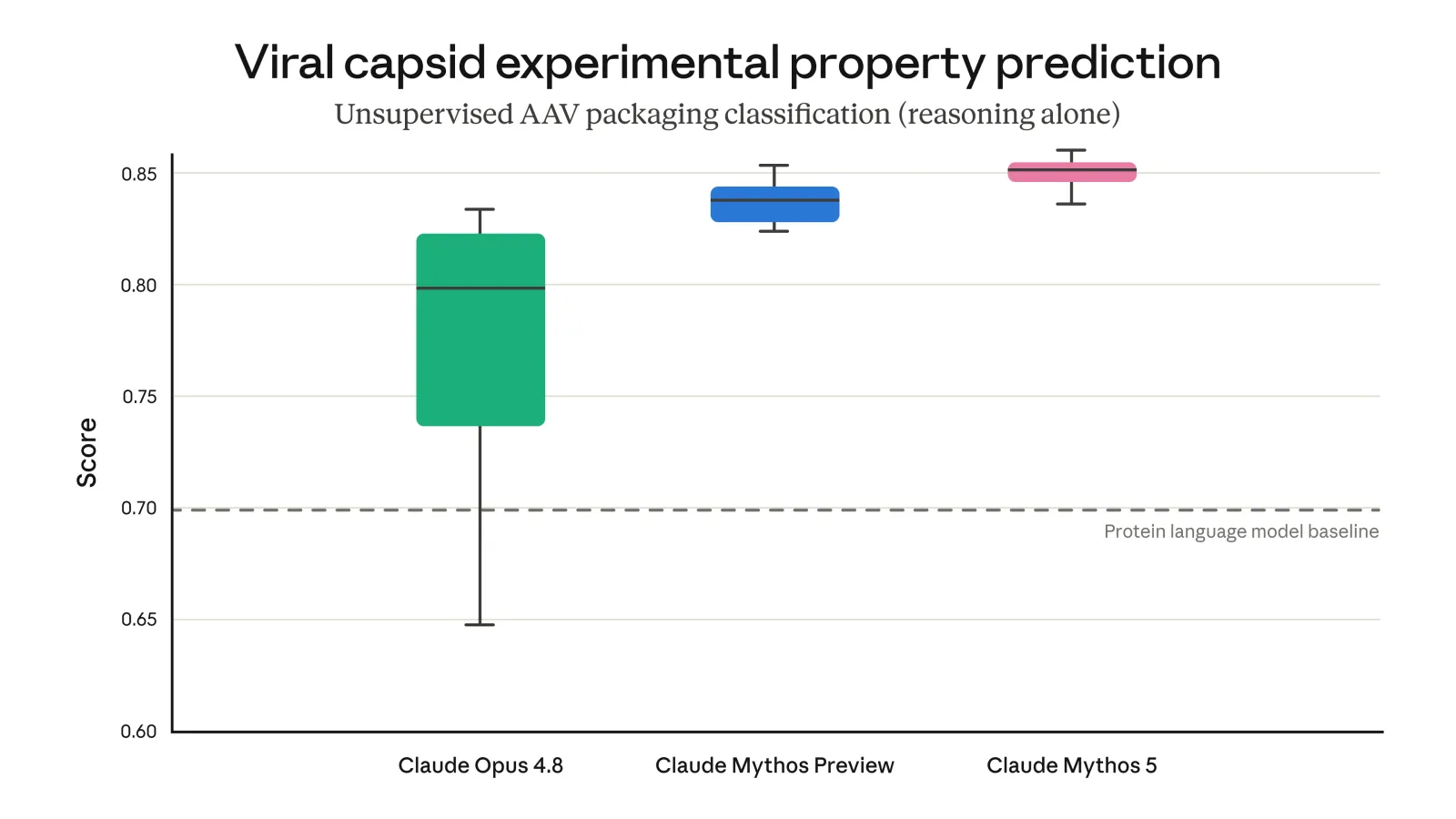
Official benchmarks lift across software engineering, knowledge work, vision, and research—suited to high single-shot investment and async wait times.
Million-token materials and long threads hold goals more easily; persistent file-memory style capabilities help long jobs.
Customer feedback and coding evals show reaching similar quality often needs fewer turns and steps—suited to heavy async workloads.
Results Anthropic published in the Claude Fable 5 / Mythos 5 launch materials. Most benchmark gaps between the two models are within 1–3 points; tables take the higher score. Starred cybersecurity and biology benches are safety-intercepted, so Fable 5 tracks closer to Claude Opus 4.8 there.
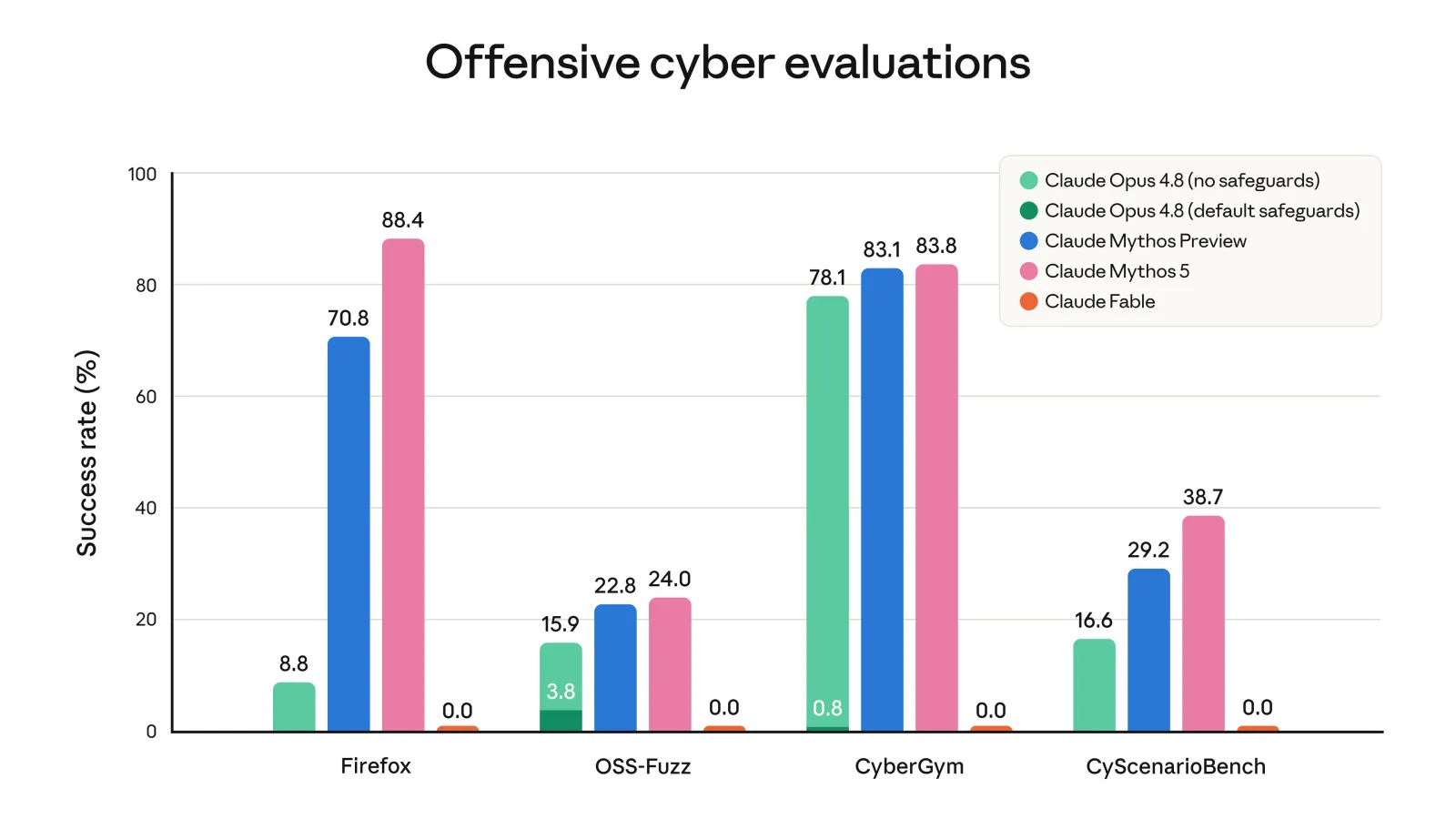
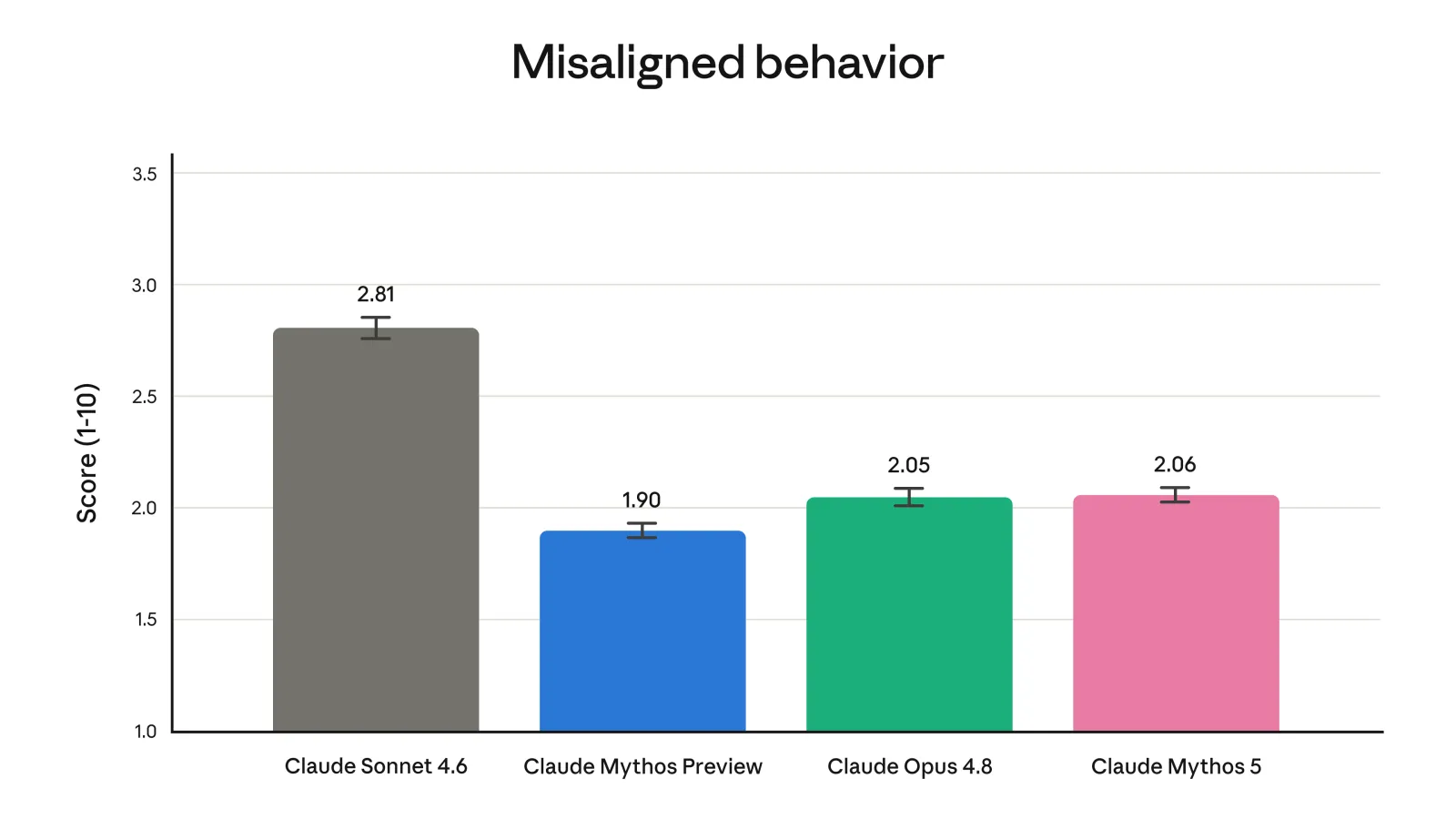
Claude Fable 5 fits high failure cost, async wait, and very long chains.
For migrations, refactors, and multi-day fixes across many files. Write success criteria clearly and accept longer runtimes.
For long-material reasoning, chart reading, and multi-source conclusions. Focus on checkable evidence and deliverable conclusions.
For understanding UIs from screenshots, rebuilding page structure, or reading scientific figures. Keep images and long instructions in one thread.
All three are current Claude models. The differences are ceiling capability, everyday primary cost, and safety-fallback experience.
| Dimension | Claude Fable 5 | Claude Opus 5 | Claude Sonnet 5 |
|---|---|---|---|
| Context | 1M tokens | 1M tokens | 1M tokens |
| Reasoning | Deeper on hard jobs, ceiling posture | Deep thinking built in, tunable | Tunable depth tiers |
| Coding / agents | Ultra-long, ultra-hard autonomous coding | Everyday flagship primary for long-horizon coding | Scaled agents & everyday coding |
| Long tool runs | Longest autonomous-run posture | Stronger goal holding and completion | Better as a high-frequency primary |
| Speed posture | Ceiling completion quality first | Quality and stability in balance | Throughput first |
| Prefer when | Single ultra-long, ultra-hard, async jobs | New long-horizon coding and knowledge work | New high-frequency agent primary |
Free quota, safety fallback, key specs, and how it differs from Opus and Sonnet.
Million-token context for ultra-long autonomous coding and knowledge work.
Open Claude Fable 5No Anthropic API key required.